Anglais

Anglais

De la théorie à la thérapie : les cliniciens utilisent déjà l'IA—Sans perdre le toucher humain

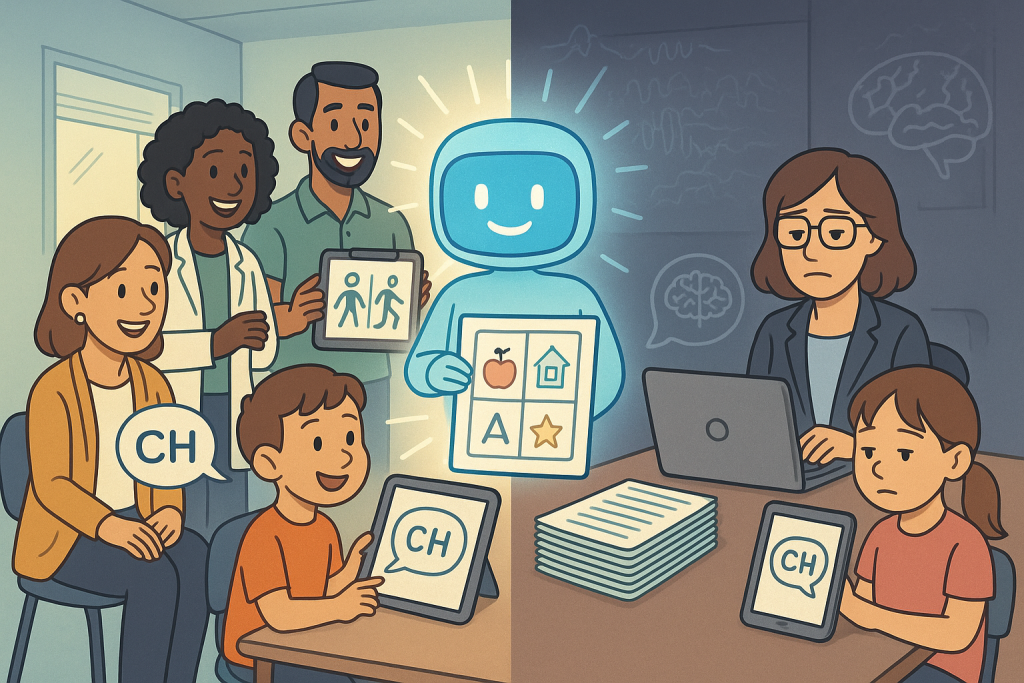
AI in Clinical Care—Already Here, Already Changing Practice Artificial Intelligence is no longer theoretical. It’s embedded in our therapy rooms, electronic records, and clinical tools. From speech-language pathology to neuropsychology, AI is reshaping how we assess, document, and intervene. The question is no longer whether therapists will use AI—but how they’re doing so already, and how to do it responsibly without compromising therapeutic presence or judgment. As highlighted in our previous issue, AI is influencing not only our tools, but our decisions. Many clinicians now use AI-supported platforms—sometimes unknowingly—raising important questions about transparency, ethics, and outcomes. Schubert et al. (2025) remind us that moving from passive use to informed application requires structured education. Knowing how AI works isn’t enough; we need to understand how to reason with it, critique it, and lead its ethical use. Where AI Is Already Supporting Therapy In real-world practice, AI is already making a difference: Jha and Topol (2024) note that such tools are improving efficiency in fields reliant on pattern recognition. AI can surface meaningful shifts, propose next steps, and adapt tasks in real time. But it cannot make clinical decisions. An algorithm may detect a phonological pattern or attentional lapse. Yet the therapist must decide: Is this clinically relevant? Is it consistent with the client’s goals, history, or needs? AI can suggest. The therapist must interpret. Why Clinical Judgment Still Leads AI handles large data sets—but it cannot read between the lines. It can’t recognize when a data point reflects fatigue, emotional strain, cultural difference, or an artifact. Clinical work is not just about data. It is about human context, developmental history, motivation, and values. AI cannot weigh competing goals or make value-based decisions. As Schubert and colleagues (2025) propose, responsible AI use develops across three levels: This framework positions clinicians as decision-makers—not passive tool users, but ethical leaders. Personalization Without Losing the Personal AI can make therapy more adaptive. Some apps modify pacing or feedback in real time—slowing exercises during stuttering episodes, or increasing visual prompts for distracted learners. These features enhance responsiveness. But adaptation alone isn’t therapy. It becomes meaningful only when interpreted and guided by a clinician. Therapists remain essential in deciding whether a pattern is significant, whether a tool supports or distracts from the goal, and how to communicate these decisions to clients and families. As Topol (2024) states, AI should inform—not replace—clinical reasoning. Will AI Replace Therapists? Not Likely. Concerns about AI replacing clinicians are understandable—but not supported by current evidence. The World Health Organization (2024) affirms that best outcomes occur when clinicians retain authority and AI acts as a support. AI enhances—not diminishes—the role of skilled professionals. Clinicians with AI literacy are better equipped to: By engaging with AI critically and ethically, therapists remain stewards of care—not spectators to technological change. AI Engagement Doesn’t Require Coding—It Requires Questions You don’t need programming skills to use AI well. But you do need to ask critical questions: Functional AI literacy includes understanding key concepts like algorithmic bias, training data, and model reliability. It also involves separating evidence-based innovation from marketing hype. As WHO (2024) reminds us: clinicians are responsible for the tools they choose, even when the AI is invisible. Coming Next: Evaluating AI Tools Before You Use Them In our next article, we’ll explore how to critically evaluate an AI product before introducing it to clients. With new technologies entering the field monthly, we must remain discerning. We’ll cover: AI can’t replace what makes therapy powerful—but when used well, it can enhance connection, clarity, and compassion. To find out more join our AI webinars for therapists! go to Courses to find out more details! References Jha, S., & Topol, E. J. (2024). Adapting clinical practice to artificial intelligence: Opportunities, challenges, and ethical considerations. The Lancet Digital Health, 6(3), e175–e183. https://doi.org/10.1016/S2589-7500(24)00020-9Schubert, T., Oosterlinck, T., Stevens, R. D., Maxwell, P. H., & van der Schaar, M. (2025). AI education for clinicians. eClinicalMedicine, 79, 102968. https://doi.org/10.1016/j.eclinm.2024.102968World Health Organization. (2024). Ethics and governance of artificial intelligence for health: Guidance and tools. https://www.who.int/publications/i/item/9789240077925

Anglais

Therapy in the Age of AI: Putting the EU AI Act 2024 into Practice

Under the Act, many AI systems used in therapy fall into the high-risk category. This classification demands that these tools meet stringent standards including:• Robust, diverse, and accurate data governance to minimize bias• Transparency so therapists can understand how AI tools generate recommendations• Human oversight to ensure therapists retain full responsibility for clinical judgment• Accountability and auditability, allowing systems to be reviewed and challenged as neededThese requirements safeguard patient welfare and help maintain trust in AI-assisted therapy. What Therapists Need to Ask Before Using AI ToolsBefore integrating any AI-supported tool into your practice, ask yourself critical questions: Is this tool approved under the EU AI Act or local regulations? What kind of data does it use, and where is it stored? Does the algorithm reflect diverse populations? Can you clearly understand and explain how it makes decisions? If the answers are unclear or unsatisfactory, it may be unwise or even unsafe to use that tool in clinical settings. The Irreplaceable Human Element in TherapyDespite the technical advances AI offers, it can never replace the deeply human elements of therapy. Empathy, cultural sensitivity, ethical reasoning, and clinical intuition remain irreplaceable skills that only therapists bring. AI is a powerful assistant—but therapists must continue to interpret AI outputs within the broader context of the client’s needs, ensuring all interventions remain person-centered and ethically grounded. Clear communication with clients about how AI tools are used is also essential to maintain transparency and trust. Collaboration and Digital Equity: Shaping the FutureThe summit highlighted the importance of collaboration between therapists and AI developers. Practitioners provide invaluable insights into real-world challenges and client diversity, helping guide innovation toward tools that are culturally competent, accessible, and effective. For example, speech-language therapists working with multilingual populations can advocate for AI systems that better handle linguistic diversity—a known limitation of many current models.Digital equity is another crucial aspect emphasized during the summit. Many clients face barriers to accessing AI-enhanced therapy due to age, socioeconomic status, disability, or geographic location. Ethical practice demands that therapists:• Offer alternatives for clients without access to AI tools• Educate clients on how to safely and effectively use digital resources• Consider hybrid models combining traditional and AI-supported therapyEnsuring no one is left behind helps make the benefits of AI truly inclusive. Key Updates from the 2025 EU AI SummitIn addition to these points, the 2025 EU AI Summit brought several key updates to light:• AI tools must undergo continuous auditing and improvements to address new risks and biases• Patients now have strengthened rights to be informed when AI plays a role in their care decisions• EU member states are working toward greater regulatory alignment to create a consistent framework across countries• A major focus on “explainable AI” aims to prevent opaque “black-box” algorithms from undermining clinical transparency Looking Forward: AI as a Partner in Ethical TherapyThe EU AI Act and the latest summit remind us that AI should augment therapists’ skills—not replace them. The future of therapy lies in balancing innovative tools with human judgment, ethical integrity, and cultural awareness. As therapists, staying informed about AI’s evolving landscape, critically evaluating tools before adoption, and actively engaging in their development allows us to lead the way in shaping ethical, person-centered AI care. Coming next: A closer look at how therapy clinics across Europe are implementing the EU AI Act in their daily practices—and the lessons we can all learn from their experiences.European Union. (2024). Regulation (EU) 2024/1689 of the European Parliament and of the Council of 13 June 2024 laying down harmonised rules on artificial intelligence and amending certain Union legislative acts (Artificial Intelligence Act). Official Journal of the European Union, L 168, 1–158. https://eur-lex.europa.eu/eli/reg/2024/1689/oj

Anglais

AI in Healthcare Is No Longer Optional—But Are Clinicians Ready?

A recent publication in eClinicalMedicine delivers a timely and urgent message: Artificial Intelligence (AI) is no longer a futuristic concept in healthcare—it is already reshaping clinical practice. From diagnostics and treatment planning to patient communication and workflow optimization, AI is increasingly present in how we work. But with its growing presence comes a vital question: are clinicians truly prepared to use it effectively and responsibly? The answer, for many, is no. Despite the rapid advancement of AI tools, healthcare professionals are often left with minimal training or support in how to use them. We need more than just exposure—we need structured, role-specific education that equips clinicians to understand, evaluate, and apply AI in a way that prioritizes patient safety and clinical integrity. A Practical Framework for AI Competency The article proposes a three-level framework for AI competency among clinicians—offering a roadmap for growth regardless of experience or specialty. At the basic level, clinicians should be able to use AI tools already integrated into their systems with confidence and safety. This includes knowing when an AI recommendation is helpful—and when clinical judgment must override it. The proficient level goes deeper, requiring the ability to critically assess AI outputs, recognize and explain ethical risks, and communicate clearly with patients about how AI is influencing their care. It’s about transparency and accountability. At the expert level, clinicians are not just users of AI—they become collaborators. They work with developers, contribute their field experience to guide innovation, and play an active role in shaping tools that reflect clinical realities rather than abstract models. No Need to Code, But a Need to Understand Clinicians don’t need to be programmers. But they do need to understand the foundations of how AI works: how it is trained, where bias can enter, and how outputs are generated. Without this understanding, there’s a risk of misuse—or worse, harm. Patients trust us to explain the care they’re receiving, including the role of AI. That means we must be able to break down complex processes into language that empowers and informs. Whether we’re discussing a speech analysis tool, a diagnostic prediction model, or a therapy planning assistant, we remain the point of accountability. Why This Matters for Every Health Professional This is especially relevant for therapists, neuropsychologists, educators, and other professionals whose roles may not traditionally intersect with technology. As AI tools begin to assist with assessments, track progress, and even suggest interventions, we need to be prepared. Not only to use these tools, but to recognize their limitations, question their suggestions, and advocate for patients when needed. In addition, AI literacy empowers clinicians to push for better tools. When we can articulate what works—and what doesn’t—we become partners in shaping the future of clinical technology. We ensure that AI evolves with human care at its core. Two More Reasons This Shift Matters First, equity in care is at stake. AI systems are only as good as the data they are trained on, and historical data can carry bias. Clinicians must be equipped to recognize these patterns and intervene when necessary to protect vulnerable populations. Second, the pace of change is accelerating. New tools are being released faster than guidelines can keep up. Without foundational AI knowledge, clinicians may struggle to keep pace—or worse, may become passive users in a system they don’t fully understand. The Shift Is Already Happening—Let’s Lead It Healthcare is undergoing a transformation, and AI is a key driver of that change. But technology alone cannot improve care. It takes knowledgeable, critically-minded clinicians to ensure that AI is used ethically, safely, and meaningfully. Whether you’re a student, a practicing clinician, or an educator training the next generation, this framework offers a roadmap—not just to catch up with the future, but to help lead it. AI is here. Education is not optional. It’s time to prepare—and to take part in shaping what comes next. In our next edition, we’ll explore how therapists across disciplines can begin to integrate AI tools into everyday practice—without losing the human connection that makes therapy so powerful. From digital progress tracking to personalized interventions, we’ll look at what’s already working—and what still needs to improve. Reference: Schubert, T., Oosterlinck, T., Stevens, R. D., Maxwell, P. H., & van der Schaar, M. (2025). AI education for clinicians. eClinicalMedicine, 79, 102968. https://doi.org/10.1016/j.eclinm.2024.102968ScienceDirect

Anglais

Supports visuels Generative AI-Driven en thérapie

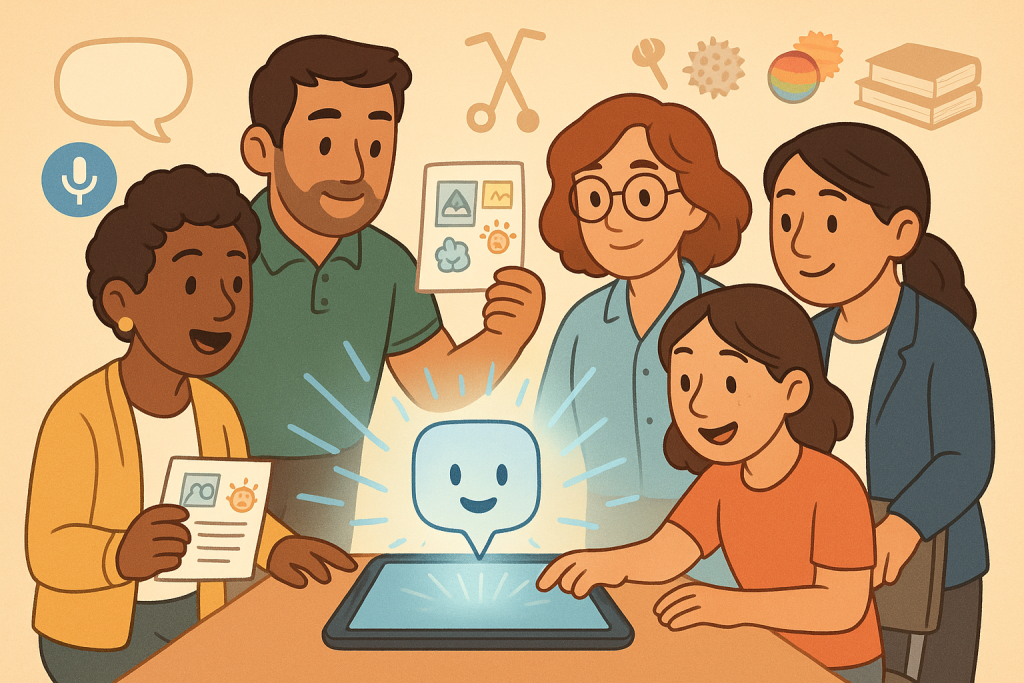
Visual supports have long been foundational tools across therapy domains. From Occupational Therapy (OT) to Speech and Language Therapy (SLT), these aids help clients—especially children—navigate routines, communicate needs, and participate meaningfully in therapy. Common tools include visual schedules, social stories, and augmentative and alternative communication (AAC) boards. These supports offer structure, clarity, and predictability, reducing anxiety and enhancing engagement. Traditionally, however, creating these supports has been a time-consuming task. Therapists often rely on pre-made clipart libraries or manually designed visuals, which may not fully represent a client’s cultural background, personal interests, or environment. For instance, a visual sequence for toothbrushing may only feature characters of a single ethnicity or depict routines unfamiliar to the child. This disconnect, while subtle, can impact the effectiveness and relatability of therapy materials. This is where generative AI offers a powerful solution. Tools like Midjourney, Veo 3, NightCafe Studio, Fotor AI Art Generator, Dream by Wombo, and StarryAI allow therapists to generate personalized, contextually relevant visuals in seconds. By simply entering a description—such as “a child brushing their teeth with diverse family members in a home bathroom”—therapists can instantly create visuals tailored to a client’s daily routines, preferences, and cultural identity. Benefits of Using Generative AI for Visual Supports: Time EfficiencyGenerative AI tools dramatically reduce the time needed to produce custom visuals, allowing therapists to spend more time on clinical work and less on material preparation. Personalization and Cultural RelevanceVisuals that reflect a client’s ethnicity, environment, or family structure foster stronger engagement. When children see themselves represented, their motivation and sense of connection increase. InclusivityClients from diverse linguistic, cultural, or neurodiverse backgrounds benefit from visual supports that are tailored to their realities—not just generic templates. FlexibilityWith generative AI, therapists can quickly adapt visuals to match changing therapy goals, environments, or client needs without being bound to a fixed image library. Client and Family EmpowermentBy involving clients and caregivers in describing the visuals they want to see, therapists promote collaboration, personalization, and a sense of ownership over the therapeutic process. How to Start Using Generative AI Tools for Visuals: Veo 3 – [deepmind.google/technologies/veo]Developed by Google DeepMind, Veo 3 generates cinematic, realistic, and context-aware video visuals—ideal for creating dynamic step-by-step guides or routine modeling. Midjourney – [midjourney.com]Operates via Discord and uses prompt commands such as:/imagine a boy brushing teeth in a colorful bathroom with Arabic designIt produces artistic, detailed visuals suitable for social stories or routine visuals. NightCafe Studio – [nightcafe.studio]User-friendly drag-and-drop interface, supports multiple AI models, includes mobile access, and offers free credits. Great for accessible and varied visual generation. Fotor AI Art Generator – [fotor.com]Part of an online photo editing suite. Allows beginner-friendly image generation in styles like cartoon, watercolor, or oil painting—ideal for younger clients. Dream by Wombo – [dream.ai]Mobile and web-based. Enter a prompt, pick an art style, and create an image—simple, intuitive, and quick for therapists on the go. StarryAI – [starryai.com]Offers customization (aspect ratio, detail level, style). Designed for easy social media sharing or integration into therapy boards and educational materials. Reflective Question How might culturally relevant, generative AI-created visuals improve client engagement and inclusion? When clients see characters who look like them, performing routines they recognize, visual supports become more than instructional tools—they become affirmations of identity. For non-verbal children using AAC, personalized image boards feel less clinical and more intuitive, encouraging spontaneous communication and deeper connection. As generative AI becomes increasingly accessible, therapists are uniquely positioned to revolutionize how visual supports are created and used. Embracing these tools thoughtfully can promote inclusion, engagement, and stronger therapeutic outcomes—while saving valuable time in the process.

Anglais

L'IA en thérapie : équilibrer l'innovation avec l'éthique

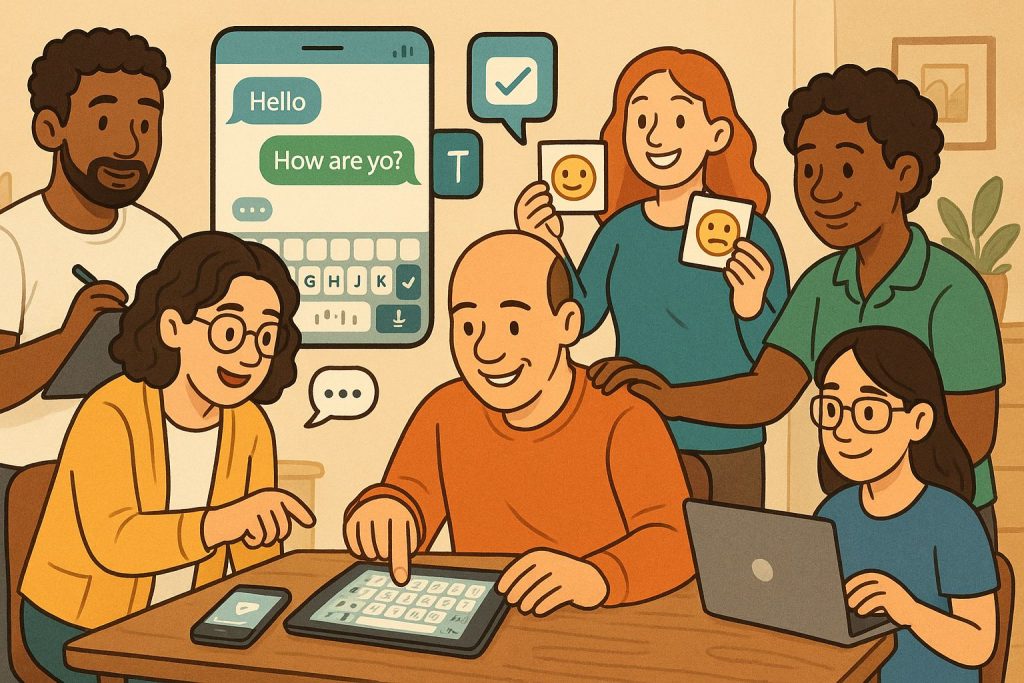
Artificial Intelligence (AI) is transforming the way we live—and therapy is no exception. From mental health applications and speech-language tools to diagnostic aids and virtual assistants, AI is beginning to play a significant role in how therapists assess and support individuals. While these innovations bring great potential, they also raise an important question: How can we integrate AI into therapy responsibly, without compromising ethical standards or human connection? What AI Brings to Therapy AI offers valuable support across many therapeutic settings. It can: • Help manage high caseloads• Track client progress over time• Generate tailored home-practice materials• Provide 24/7 access to therapeutic support through chatbots or apps For example, speech-language pathologists might use AI to monitor articulation improvement, while mental health professionals might employ it for guided self-help exercises between sessions. These tools can increase access, enhance personalization, and make services more efficient. But the promise of AI must be balanced with careful consideration of its limitations—especially regarding trust, ethics, and clinical decision-making. Data Privacy and Informed Consent Therapy involves the sharing of deeply personal information. When AI tools are introduced, they often collect and process sensitive data—ranging from language samples and therapy notes to emotional or behavioral indicators. This raises several questions:Where is this data stored? Who can access it? Is it secure? Therapists must ensure that any AI-based tools comply with data protection laws such as HIPAA (in the U.S.), GDPR (in Europe), or other local regulations. However, legality isn’t enough. Clients should receive clear explanations about how their information is collected, stored, and used. Informed consent should go beyond paperwork—it requires transparent and ongoing conversations. AI as a Support, Not a Substitute AI can process patterns, suggest interventions, and provide new insights—but it cannot think or feel. It lacks the human qualities essential to therapy: empathy, ethical judgment, cultural sensitivity, and the ability to understand complex social contexts. While AI can be a helpful aid, it must never replace the therapist. Professionals must remain fully responsible for interpreting AI output, making decisions, and ensuring that care remains client-centered and ethically sound. Bias, Fairness, and Cultural Sensitivity AI is only as reliable as the data it’s trained on. If the training data lacks diversity, the AI may produce biased or inaccurate results. For instance, a speech assessment tool trained primarily on monolingual children from a single background may fail to accommodate multilingual speakers or neurodivergent individuals. Similarly, mental health tools built around Western norms may be less effective—or even inappropriate—in other cultural contexts. Therapists must ask: Who was this tool designed for? Is it valid and reliable across different populations? Ethical practice means advocating for inclusivity and demanding that AI tools reflect the diverse needs of real clients. Digital Access and Equity Ethical therapy must consider not only how AI is used, but who has access to it. Not all clients have internet access, digital devices, or the technological literacy needed to engage with AI tools. Relying too heavily on digital interventions risks excluding those from underserved or rural communities, older adults, and families with limited resources. Therapists must consider these gaps and strive to ensure that technology does not widen disparities in care. Professional Responsibility and Oversight Therapists are accountable for every tool they use—digital or otherwise. Even when AI tools are widely accepted or marketed as effective, professionals must ask: • Is this tool evidence-based?• Is it appropriate for this client?• Am I monitoring its effects responsibly? Ethical standards set by professional associations like ASHA or APA need to evolve alongside technological change. In the meantime, therapists must take initiative to educate themselves and evaluate AI tools critically. Continual Reflection and Collaboration AI in therapy is still in its early stages. As the technology develops, therapists must stay informed, remain adaptable, and actively participate in shaping its future. This includes collaborating with developers, researchers, and policymakers to ensure that ethical values are embedded into the design of digital tools. Clinical insight, client feedback, and ongoing reflection are essential for aligning innovation with care. Conclusion: People First, Technology Second AI can be a powerful ally in therapy—saving time, improving access, and even enriching our understanding of client needs. But the heart of therapy remains unchanged: it’s about people, relationships, and trust. As we integrate AI into therapeutic practice, the real question is not just what can AI do—but how can we use it responsibly? When guided by ethics, empathy, and professional judgment, AI can enhance therapy without replacing the very human connection that makes it effective. A Glimpse Ahead: The EU AI Act 2024 As the integration of AI accelerates across all sectors, Europe has taken a landmark step with the AI Act 2024—the first major regulatory framework aimed at governing AI use with a strong emphasis on ethics, transparency, and human rights. This regulation classifies AI systems by risk level (from minimal to unacceptable) and places strict requirements on high-risk applications, such as those used in healthcare and therapy. Tools used in therapeutic contexts may need to meet higher standards for data handling, explainability, human oversight, and bias prevention. For therapists using or planning to adopt AI tools within the EU, the AI Act underscores the need to stay informed, ensure compliance, and prioritize ethical design and informed use. We’ll take a closer look at the implications of the AI Act 2024—and what it means for therapy—in our next issue.

Anglais

Votre documentation ne doit pas être douloureuse!

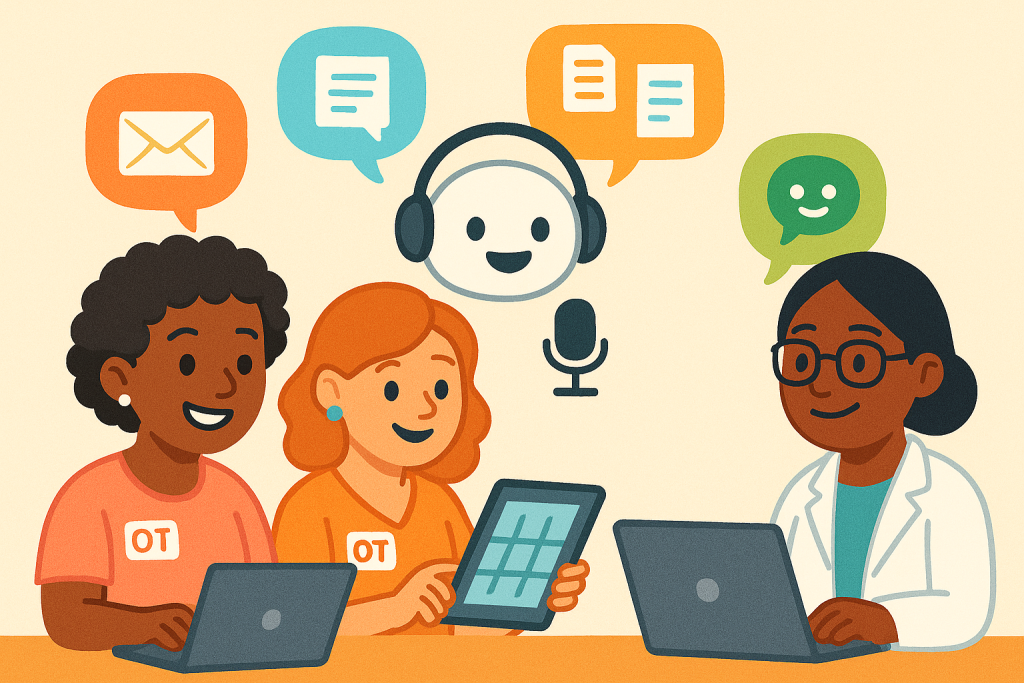
Comment l'IA révolutionne les notes, les rapports et la planification dans les domaines de la thérapie Soyons réels pour une seconde : la documentation est essentielle en thérapie — mais il peut se sentir complètement drainant. Qu'il s'agisse de faire des notes SOAP, de préparer des rapports d'étape, de mettre à jour les soignants ou de planifier les prochaines étapes, le côté administratif des soins a tendance à s'accumuler rapidement. Heureusement, nous ne sommes plus coincés avec le stylo et le papier. Des outils d'IA comme ChatGPT, Otter.ai et d'autres transforment la façon dont les thérapeutes documentent leurs sessions — rendre le processus plus rapide, plus léger et plus intelligent. Voici un guide étape par étape que je recommande de commencer à utiliser l'IA pour la documentation. Pas de formation technique nécessaire — juste un esprit curieux et votre expertise clinique. Étape 1: Capturez des idées clés avant d'oublierAprès une session, prenez votre téléphone et ouvrez une application de mémo vocal ou utilisez un outil comme Otter.ai ou Notta. Parlez naturellement — Pas besoin de phrases polies. L'objectif est de saisir votre perspicacité clinique pendant qu'il est encore frais. Exemple:"Sam a utilisé des paroles de 3 mots spontanément pendant le jeu libre. Besoin d'un soutien modéré pour le virage. Essai de nouvelle activité sensorielle—réponse positive. Présentera une minuterie visuelle la semaine prochaine. "Cette étape simple vous aide:• Verrouiller les observations subtiles mais importantes• Réduire le brouillard mental de fin de journée• Éviter l'horrible "ce qui s'est passé dans cette session à nouveau?" moment Étape 2 : Utilisez l'IA pour rédiger votre documentationOuvrir maintenant ChatGPT ou votre assistant AI préféré. Collez vos points de balle ou votre transcription, et donnez à l'IA des instructions claires et ciblées. Essayez des invites comme :• « Écrire une note SOAP pour une séance d'OT pédiatrique en utilisant le numéro suivant :

Anglais

Outils d'IA Remodeler les pratiques thérapeutiques

Comment ChatGPT soutient les SLP, les OT, les PT et les psychothérapeutes dans leur travail quotidien L'intelligence artificielle n'est plus seulement un mot à la mode — il devient un compagnon pratique dans les salles de thérapie, les cliniques et les écoles. L'un des outils les plus puissants à la tête de ce changement est le ChatGPT OpenAI. Que vous soyez orthophoniste (SLP), ergothérapeute (OT), physiothérapeute (PT) ou psychothérapeute, l'IA offre maintenant des moyens créatifs, efficaces et même thérapeutiques pour soutenir votre travail quotidien. De la documentation à la création d'outils à la collaboration, les possibilités s'étendent — et ils sont accessibles. Un assistant plus intelligent : la mémoire personnalisable de ChatGPT L'une des caractéristiques les plus changeantes de GPT-4-turbo est sa mémoire personnalisable. Cela permet à l'IA de conserver des préférences importantes et un contexte clinique dans vos interactions. Vous pouvez former ChatGPT pour vous souvenir de votre ton préféré, de votre charge de travail (p. ex. neurodéveloppement pédiatrique, neuro-réhabile adulte) ou de la façon dont vous structurez généralement vos notes. Exemples: Avec le temps, l'IA devient plus intuitive — vous aider à rédiger des documents, organiser des pensées et même suggérer des objectifs ou des modèles qui se sentent personnalisés et cliniquement pertinents. Visuel Thing: Image and File Uploads Une autre fonctionnalité puissante ? Vous pouvez maintenant télécharger des images, des PDF et d'autres fichiers directement dans ChatGPT. Voici à quoi cela peut ressembler: L'IA interprète, résume et propose des suggestions utiles en temps réel — un changement de jeu pour la préparation de session et la documentation. Documentation réinventée Laissez-la faire face: la documentation est nécessaire, mais il mange jusqu'à t

Anglais

Comment l'IA génétique transforme la parole et la thérapie linguistique—De l'évaluation au suivi

L'IA est en train de faire des vagues en orthophonie et en thérapie langagière, offrant des outils puissants qui soutiennent les thérapeutes à chaque étape de leur travail. Que ce soit pour préparer une évaluation, concevoir des plans thérapeutiques ou suivre les progrès du patient, l'IA devient un allié essentiel—gagner du temps, améliorer la précision et permettre aux thérapeutes de se concentrer sur ce qui compte le plus : leurs patients. Alors, comment exactement l'IA générative peut s'intégrer dans un flux de travail de thérapeutes ? Laisse tomber. De la préparation à l'évaluation aux choix d'essai plus intelligents Chaque bonne thérapie commence par une évaluation solide. Mais avant même de s'asseoir avec un patient, les thérapeutes doivent choisir les bons tests, préparer le matériel et s'assurer qu'ils captent les bonnes données. L'IA peut aider en: Recommander les tests les plus pertinents sur la base d'un profil de patient, en économisant du temps sur la recherche. Résumer les antécédents du patient pour mettre en évidence les principaux modèles de langage ou de langage avant même le début de l'évaluation. Traitement et analyse des données des sessions précédentes, aidant les thérapeutes à identifier les tendances plus rapidement. Il n'y a plus d'heures à passer sur les notes de cas—L'IA peut simplifier ce processus, laissant les thérapeutes entrer dans les évaluations avec des idées plus claires. Rendre les évaluations plus efficaces et plus éclairées Quand il est temps pour l'évaluation réelle, l'IA générative peut jouer un rôle encore plus grand. L'IA vocale peut transcrire les réponses des patients en temps réel, ce qui facilite l'analyse de la fluidité, de l'articulation et de la syntaxe. Les outils de notation alimentés par l'IA peuvent aider les thérapeutes à évaluer les échantillons d'élocution de façon plus uniforme, réduisant ainsi la subjectivité. Adaptatif

Panier