Author name: Dr. Rania Kassir

English

From Learning to Leading: What We Offer

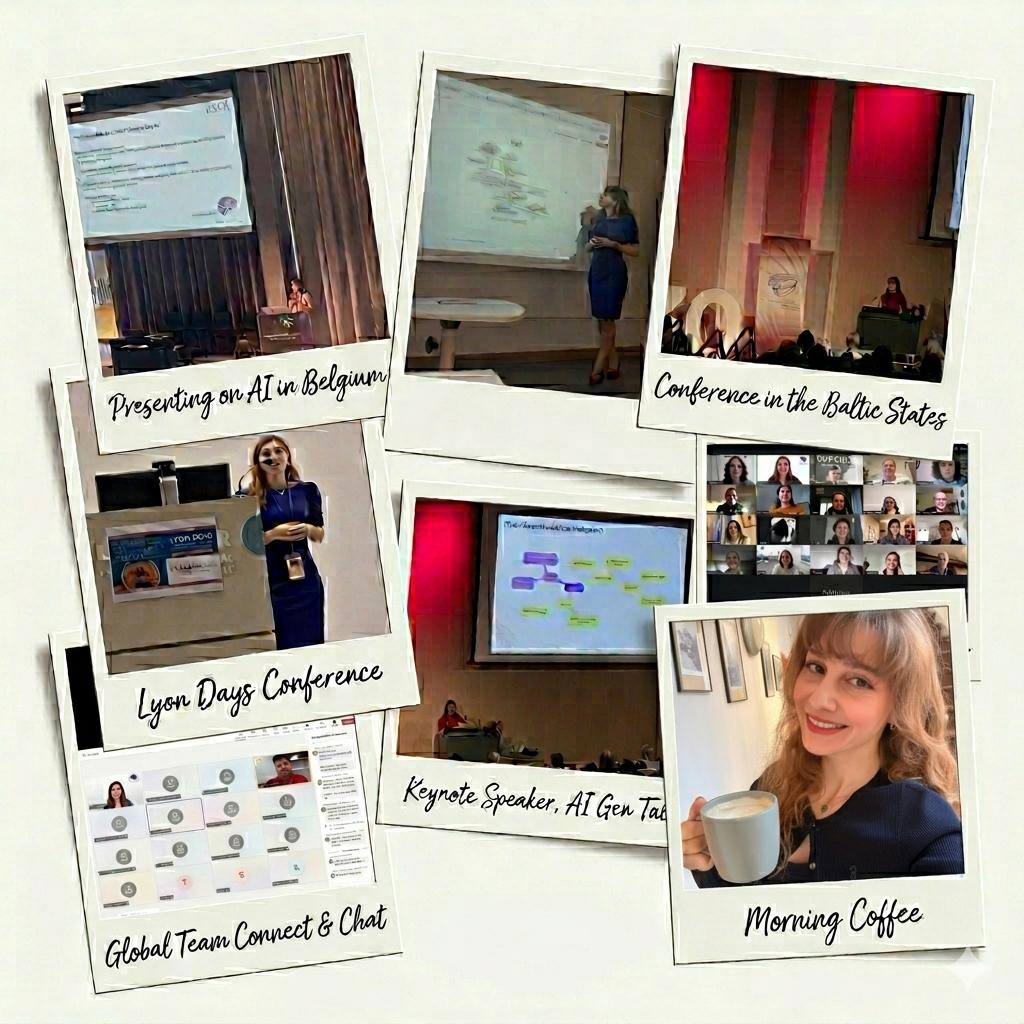
Happy Brain Training was built to move beyond theory and into real, hands-on transformation. Over the past year, my work has grown across borders, formats, and communities, guided by one clear goal: helping therapists use AI in ways that truly make a difference. What I do is simple in idea, but powerful in practice. I train therapists to use AI effectively in therapy, focusing on practical, real-world applications that improve efficiency, creativity, and clinical outcomes. My training programs are structured as a journey. Therapists begin by building a strong foundation, understanding generative AI and tools like ChatGPT, then progress to creating personalized therapy materials, and eventually move into advanced case studies and full therapy planning supported by AI. Each step is designed to build confidence, autonomy, and clinical impact. Throughout this journey, we also explore prompt engineering, productivity, and the use of AI as a support tool for patients. The programs have evolved from basic interactions to structured materials, techniques, and domain-specific applications tailored to each specialty. Targeted solutions are also designed for professionals who want to improve efficiency and streamline their workflow. Beyond structured programs, I offer one-to-one advisory sessions, providing personalized guidance tailored to each therapist’s challenges. My approach stays grounded in real therapy needs, from communication and language to complex disorders such as aphasia, dysarthria, and dysphagia. Learning doesn’t stay in one place. My in-person trainings have reached multiple cities, from Luxembourg and Vienna to the Baltic States, Lyon, and Belgium, each adding to a growing international movement. At the same time, webinars and e-learning programs connect therapists across continents. I’ve worked with professionals across Europe, the Middle East, North America, Asia, and Australia. Today, more than 2,500 therapists worldwide have trained with me, each contributing to a global shift in how therapy is practiced. Across all these countries, one thing stands out: we share the same challenges. While our ways of working may differ, our core needs are deeply similar uniting us in a shared purpose. My workshops and live events are interactive, practical, and immediately applicable. To support this learning, I’ve developed a prompt book, a ready-to-use resource for creating personalized therapeutic materials across ages and clinical needs. What makes this different is not just what I offer, but how I think. Everything is therapist-centered, grounded in AI expertise, and built for real-world use. This is more than learning AI. It’s learning how to lead with it.
English

Happy Brain Training: Where Therapy Meets Innovation

Happy Brain Training was built on a clear and ambitious vision: to rethink how therapy evolves in a world that is changing faster than ever. I founded it as a speech therapist and neuropsychologist with strong expertise in generative AI, bringing together clinical depth and technological innovation in a way that feels both grounded and forward-looking. What started as an idea has grown into something much more tangible. It is now a space where therapists come to explore, question, and reshape their practice. With my background in clinical work, research, and AI, the goal has never been to simply introduce new tools, but to help therapists use them with clarity, purpose, and clinical judgment. At its core, Happy Brain Training is driven by a simple yet powerful mission: to unlock the potential of both therapists and their patients through the thoughtful and responsible use of generative AI. This means equipping therapists with tools that genuinely support their work, helping them create more personalized and engaging materials, and making AI feel accessible rather than overwhelming. That is exactly why I created the Happy Brain Training newsletter: to keep therapists informed, inspired, and connected to the evolving landscape of both therapy and technology. Published weekly, it provides updates on new models, emerging possibilities, and key developments in the field. It also addresses essential topics such as data security, privacy, regulations, ethical considerations, and even the ecological impact of AI. In a field that is evolving rapidly, staying informed is no longer optional. The newsletter acts as a bridge between innovation and daily practice, offering insights, practical ideas, and reflections that therapists can directly apply in their work. Over time, this space has grown into a truly international and multidisciplinary community, with readers across Europe, the Middle East, Africa, North America, and beyond. It now connects professionals from Japan to Canada, reflecting how global this conversation has become. This diversity enriches the exchange of perspectives and strengthens a community grounded in real clinical practice. There is a strong commitment to bridging a gap many clinicians still feel. Technology can seem distant from the reality of therapy rooms, so the focus here is on making it practical, relevant, and aligned with real clinical needs, never abstract, but directly applicable. What defines this work is its focus on action. Therapists are not just learning about AI, but how to use it to save time, support clinical reasoning, and open new possibilities in their sessions, without compromising quality or depth. We explore areas such as prompt engineering, productivity, and how AI can support patients, always through concrete applications. For those who feel overwhelmed, especially by prompt engineering, I’ve developed structured solutions to make it simpler and more accessible. Today, I am proud to celebrate one year of the Happy Brain Training newsletter, one year of sharing ideas, learning together, and growing alongside a community of professionals who are curious, committed, and open to change. Throughout this journey, I’ve had the chance to meet inspiring therapists across different countries, and to meet you. These encounters continue to inspire me to adapt, evolve, and move forward. Even when the pace is intense, they remind me why this work matters. What started as a simple way to stay connected has become something far more meaningful: a space for reflection, inspiration, and progress.

English

Seeing the Unseen: Verifying AI-Generated Images in Clinical and Research Contexts

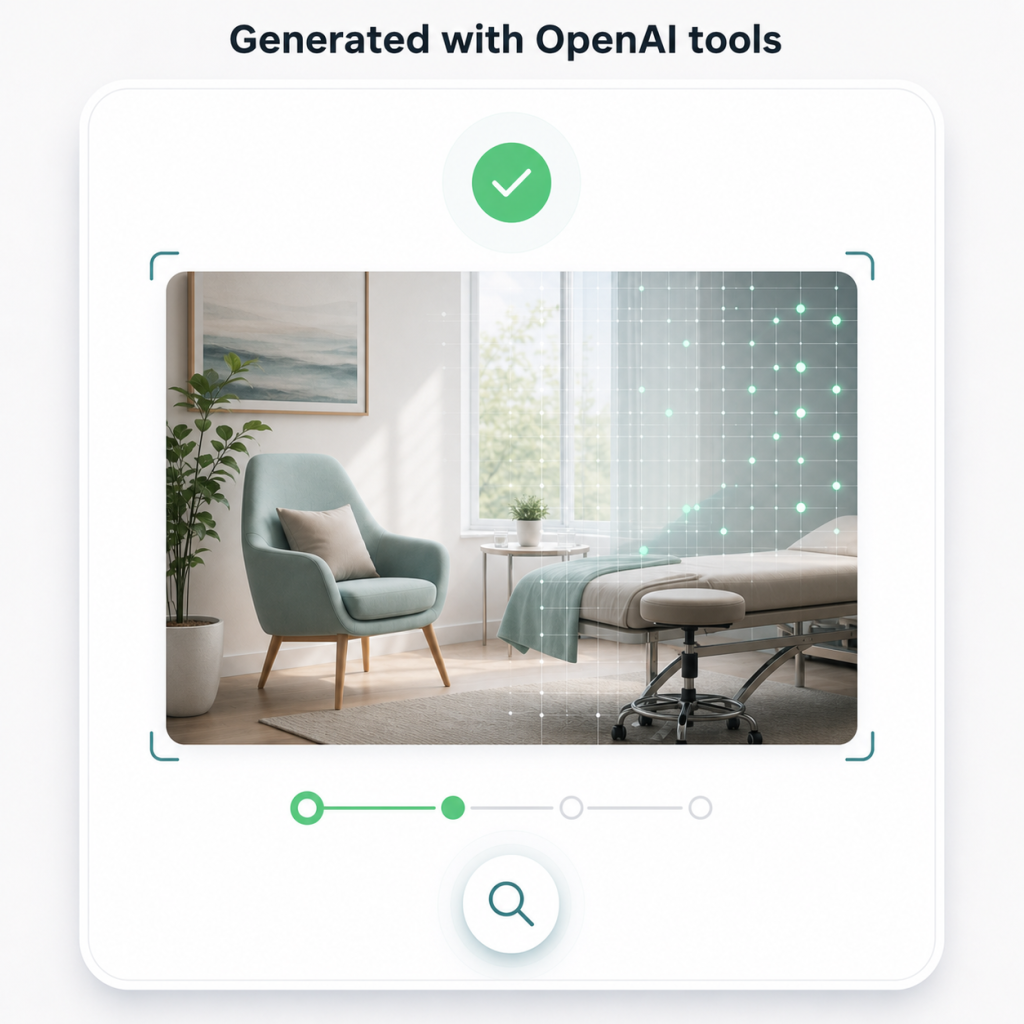
A therapist looking at an image often focuses on meaning, what it shows, how it feels, and how it connects to a client’s story. Until recently, we could also assume that most images reflected something real. Today, with the rise of AI-generated images, that assumption is less certain. New tools, such as OpenAI’s image verification system, are beginning to help us check where images come from and whether they were created by AI. This tool allows users to upload an image and see if it contains hidden signals linked to AI systems, such as metadata or digital watermarks. These signals can suggest that an image was generated using tools like ChatGPT or related APIs. For clinicians, this is less about technology itself and more about developing a habit of asking: “Can I trust the origin of this image?” In practical terms, using the tool is simple and does not require technical knowledge. You begin by going to the verification webpage and uploading the image you want to check. It is helpful to crop the image so that only the main picture is included, especially if it comes from a screenshot. After uploading, the tool analyzes the file and looks for known signals linked to AI generation. It will then show whether these signals are present. If they are, the image was likely created using AI tools. If not, the result is less certain, and further caution is still needed. This process takes only a few moments and can easily become part of routine checking when working with unfamiliar images. In everyday clinical work, images are used in many ways, psychoeducation, assessment, and even therapeutic exercises. When we assume an image is real, we may respond to it differently than if we knew it was created by AI. This makes it important to pause and reflect, especially when an image plays a role in clinical understanding or emotional processing. From a thinking perspective, this shift asks us to slow down. We often rely on quick impressions when we see an image, especially if it looks familiar or realistic. However, AI-generated images can look highly convincing. Verification tools can support us in moving from quick assumptions to more careful, reflective thinking. There are also learning implications. Students and early-career therapists often use visual materials to support memory and understanding. If an image is later found to be artificial, it may create confusion or reduce confidence. Knowing that verification tools exist can help build a more balanced approach, one that combines curiosity with healthy doubt. In research settings, the issue becomes even more important. Fields that depend on images, such as medical or rehabilitation sciences, require accurate and trustworthy data. If AI-generated images are used without clear labeling, this can affect the quality of research. Verification tools can support better data practices, but they are only one part of the process. It is also important to understand the limits of these tools. Not all AI-generated images contain detectable signals, and not all real images are easy to verify. A tool may suggest that an image is AI-generated, but it cannot fully explain how or why it was created. This means we should use these tools as support, not as final proof. In clinical practice, ethical questions naturally arise. If a therapist uses an AI-generated image, should they tell the client? In most cases, transparency helps maintain trust. Even if the image is helpful, its origin still matters. Being open about this can strengthen the therapeutic relationship rather than weaken it. Responsibility remains with the clinician or researcher. Tools can assist, but they do not replace professional judgment. This includes thinking carefully about how images are used, checking their sources when needed, and being honest about their origins. It also means being aware that AI systems can carry biases or produce misleading content. As these technologies become more common, clinicians and researchers will need to adapt without feeling overwhelmed. The goal is not to become an AI expert, but to stay thoughtful and attentive. By combining simple verification tools with good clinical judgment, we can continue to use images in ways that are both effective and responsible. Looking ahead, these tools may become a normal part of practice, much like checking references or reviewing data sources. They remind us that in a digital world, seeing is not always the same as knowing. What remains essential is our ability to reflect, question, and make careful decisions in the service of those we work with. To explore the verification tool, visit: https://openai.com/research/verify/

English

Your Brain on ChatGPT: What This Study Means for Clinical Thinking and Learning

A recent experimental study examined how tools like ChatGPT influence thinking during writing A recent experimental study by Kosmyna, N. et al. (2025), conducted at the MIT Media Lab, explores how tools like ChatGPT influence human thinking during writing tasks. The study, titled “Your Brain on ChatGPT: Accumulation of Cognitive Debt when Using an AI Assistant for Essay Writing Task,” examined how different levels of technological assistance shape cognitive engagement. The researchers recruited participants and divided them into three groups: one using an AI assistant (LLM group), one using a search engine, and one relying only on their own thinking (Brain-only group). Across three sessions, each group used the same method. In a fourth session, roles were reversed for some participants: those who had used AI were asked to work without it (LLM-to-Brain), while those who had worked independently were introduced to AI (Brain-to-LLM). The study combined EEG brain recordings, language analysis, essay scoring, and participant interviews to understand not just performance, but underlying cognitive processes. The results showed clear differences in how participants engaged cognitively. Brain activity, measured through neural connectivity, was strongest in the Brain-only group, moderate in the Search Engine group, and weakest in the LLM group. This suggests that as external support increased, internal cognitive engagement decreased. In parallel, language analysis revealed that essays produced with AI were more similar to each other, showing less variation in vocabulary and structure, while independently written essays were more diverse and distinct. Participants’ experiences also reflected these differences. Those in the LLM group reported a lower sense of ownership over their essays and had more difficulty recalling or quoting what they had just written. In contrast, the Brain-only group showed strong memory recall and a clear sense that the work belonged to them. Even when AI-assisted essays scored well, they often required minimal editing and remained close to default AI-generated responses, indicating lower levels of active processing. The fourth session provided some of the most important insights. Participants who moved from Brain-only to AI use (Brain-to-LLM) showed increased brain connectivity across multiple frequency bands, suggesting active integration of AI support with prior knowledge. They also performed well in terms of memory and structure. However, those who moved from AI use to independent writing (LLM-to-Brain) showed reduced neural engagement and did not return to the same level of cognitive activity as the original Brain-only group. Their writing also showed traces of AI-influenced vocabulary and structure, indicating a lingering effect of prior AI use. From a clinical perspective, these findings are highly relevant. Clinical reasoning depends on active engagement, organizing information, making connections, and reflecting on decisions. Writing is one of the main ways clinicians develop and refine this reasoning. If AI reduces the need for this effort, especially early in training, it may lead to what can be described as cognitive debt: a gradual weakening of the thinking processes that support clinical judgment. At the same time, the study suggests that AI can be beneficial when used after independent thinking has been established. The Brain-to-LLM group demonstrated that prior effortful engagement may allow clinicians or students to use AI in a more integrated and reflective way. This aligns with educational and clinical models where support tools are most effective when they build on an existing foundation rather than replace it. These findings also echo everyday clinical practice. Therapists often emphasize the importance of active participation and reflection in patients. Similarly, clinicians themselves rely on repeated, effortful thinking to build expertise. If AI tools begin to replace rather than support this process, there may be subtle but meaningful changes in how clinicians think, remember, and make decisions. The ethical implications are important. Clinicians remain responsible for their reasoning and documentation, even when AI is involved. The reported decrease in perceived ownership raises concerns about reduced critical engagement. If a clinician feels less connected to what they have written, they may be less likely to question it. There are also broader concerns about bias and accuracy, as AI-generated content may not always align with individual patient contexts or cultural considerations. For researchers and students, similar risks apply. High-quality writing is not only about clarity but about understanding. If AI assists in producing text without deep engagement, there is a risk of creating work that appears strong but lacks true comprehension. Maintaining intellectual integrity requires active involvement in the thinking process, not just the final output. Overall, this study offers an important early perspective on how AI tools like ChatGPT may shape cognition over time. For clinicians and therapists, it highlights the need for a balanced approach, one that uses AI as a support while preserving the effortful thinking that underpins clinical expertise. The goal is not to avoid these tools, but to use them in ways that strengthen, rather than replace, the cognitive processes at the heart of learning and practice.

French

Voir l’invisible : vérifier les images générées par l’IA en contexte clinique et de recherche

Lorsqu’un thérapeute observe une image, son attention se porte généralement sur sa signification : ce qu’elle montre, ce qu’elle suscite, et la manière dont elle s’inscrit dans l’histoire du patient. Jusqu’à récemment, il était également possible de supposer que la majorité des images renvoyaient à une réalité. Avec l’essor des images générées par l’IA, cette hypothèse devient moins certaine. De nouveaux outils, tels que le système de vérification d’images d’OpenAI, permettent désormais d’examiner l’origine des images et d’identifier si elles ont été produites par une IA. Cet outil permet de télécharger une image afin de détecter la présence de signaux invisibles associés aux systèmes d’IA, tels que des métadonnées ou des filigranes numériques. Ces éléments peuvent indiquer qu’une image a été générée à l’aide d’outils comme ChatGPT ou d’API associées. Pour les cliniciens, l’enjeu ne réside pas tant dans la technologie elle-même que dans l’acquisition d’un réflexe : s’interroger sur la fiabilité de l’origine d’une image. Sur le plan pratique, l’utilisation de cet outil est simple et ne nécessite pas de compétences techniques. Il suffit d’accéder à la page de vérification, de télécharger l’image à analyser, idéalement après l’avoir recadrée pour n’en conserver que le contenu principal, notamment lorsqu’elle provient d’une capture d’écran. L’outil analyse ensuite le fichier et recherche des signatures connues associées à la génération par IA. Il indique si ces signaux sont présents. Si tel est le cas, l’image a probablement été générée par une IA ; dans le cas contraire, l’incertitude demeure et la prudence reste de mise. Cette procédure ne prend que quelques instants et peut être intégrée aux pratiques de vérification courantes. Dans la pratique clinique quotidienne, les images sont utilisées à des fins variées : psychoéducation, évaluation, ou encore exercices thérapeutiques. Lorsque l’on suppose qu’une image est authentique, la manière d’y répondre peut différer de celle adoptée si son origine artificielle est connue. Il devient donc essentiel de marquer un temps d’arrêt et de réflexion, en particulier lorsque l’image contribue à la compréhension clinique ou au traitement émotionnel. Du point de vue des processus cognitifs, cette évolution invite à ralentir. Face à une image, nous avons tendance à nous appuyer sur des impressions rapides, surtout lorsqu’elle paraît familière ou réaliste. Or, les images générées par l’IA peuvent être extrêmement convaincantes. Les outils de vérification permettent de passer d’une impression immédiate à une analyse plus réfléchie et critique. Des implications existent également pour l’apprentissage. Les étudiants et les jeunes thérapeutes utilisent fréquemment des supports visuels pour soutenir la mémorisation et la compréhension. Si une image s’avère ultérieurement artificielle, cela peut générer de la confusion ou altérer la confiance. La connaissance de ces outils de vérification favorise une posture plus équilibrée, combinant curiosité et esprit critique. Dans le champ de la recherche, les enjeux sont encore plus marqués. Les disciplines reposant sur l’analyse d’images, notamment en médecine ou en rééducation, nécessitent des données fiables. L’utilisation d’images générées par l’IA sans identification explicite peut compromettre la qualité des travaux. Les outils de vérification contribuent à de meilleures pratiques, sans toutefois se substituer à une démarche rigoureuse. Il est également essentiel de reconnaître les limites de ces outils. Toutes les images générées par l’IA ne comportent pas de signaux détectables, et toutes les images authentiques ne sont pas aisément vérifiables. Un outil peut suggérer une origine artificielle sans pouvoir en expliquer précisément les modalités. Il convient donc de les utiliser comme des aides, et non comme des preuves définitives. En pratique clinique, des questions éthiques émergent naturellement. Lorsqu’un thérapeute utilise une image générée par l’IA, doit-il en informer le patient ? Dans la plupart des cas, la transparence contribue à maintenir la relation de confiance. Même si l’image est pertinente, son origine reste une information significative. L’expliciter peut renforcer, plutôt que fragiliser, l’alliance thérapeutique. La responsabilité demeure celle du clinicien ou du chercheur. Les outils peuvent assister, mais ne remplacent pas le jugement professionnel. Cela implique de réfléchir à l’usage des images, de vérifier leur origine lorsque nécessaire, et d’en expliciter les conditions d’utilisation. Cela suppose également d’être attentif aux biais potentiels ou aux contenus trompeurs produits par les systèmes d’IA. À mesure que ces technologies se diffusent, les cliniciens et les chercheurs devront s’y adapter sans se laisser submerger. L’enjeu n’est pas de devenir expert en IA, mais de rester attentif et réflexif. En combinant des outils de vérification simples avec un jugement clinique rigoureux, il est possible d’utiliser les images de manière à la fois efficace et responsable. À l’avenir, ces outils pourraient devenir aussi courants que la vérification des sources ou des références. Ils rappellent que, dans un environnement numérique, voir ne signifie pas nécessairement savoir. Ce qui demeure essentiel est notre capacité à réfléchir, à questionner et à prendre des décisions éclairées au service des personnes accompagnées. Pour accéder à l’outil de vérification : https://openai.com/research/verify/

French

Votre cerveau face à ChatGPT : implications pour le raisonnement clinique et l’apprentissage

Une étude expérimentale récente a examiné l’influence d’outils comme ChatGPT sur les processus de pensée lors de tâches d’écriture. L’étude, menée par Kosmyna, N. et al. (2025) au MIT Media Lab et intitulée « Your Brain on ChatGPT: Accumulation of Cognitive Debt when Using an AI Assistant for Essay Writing Task », analyse comment différents niveaux d’assistance technologique modulent l’engagement cognitif. Les chercheurs ont recruté des participants répartis en trois groupes : un groupe utilisant un assistant d’IA (groupe LLM), un groupe utilisant un moteur de recherche, et un groupe s’appuyant uniquement sur ses propres ressources cognitives (groupe Brain-only). Sur trois sessions, chaque groupe a conservé la même modalité de travail. Lors d’une quatrième session, les conditions ont été inversées pour certains participants : ceux ayant utilisé l’IA ont travaillé sans celle-ci (LLM-to-Brain), tandis que ceux ayant travaillé de manière autonome ont été introduits à l’IA (Brain-to-LLM). L’étude combinait enregistrements EEG, analyses linguistiques, évaluation des productions écrites et entretiens, afin d’explorer non seulement les performances, mais aussi les processus cognitifs sous-jacents. Les résultats mettent en évidence des différences nettes d’engagement cognitif. L’activité cérébrale, mesurée via la connectivité neuronale, était la plus élevée dans le groupe Brain-only, intermédiaire dans le groupe utilisant un moteur de recherche, et la plus faible dans le groupe LLM. Cela suggère qu’à mesure que le soutien externe augmente, l’engagement cognitif interne diminue. Parallèlement, l’analyse linguistique montre que les textes produits avec l’IA étaient plus homogènes, avec une moindre variabilité lexicale et structurelle, tandis que les productions autonomes étaient plus diversifiées et distinctes. L’expérience subjective des participants reflète ces différences. Les participants du groupe LLM rapportaient un moindre sentiment d’appropriation de leurs textes et davantage de difficultés à se souvenir ou à citer ce qu’ils venaient d’écrire. À l’inverse, le groupe Brain-only présentait une meilleure mémorisation et un sentiment clair de propriété du travail produit. Même lorsque les textes assistés par IA obtenaient de bons scores, ils nécessitaient peu de modifications et restaient proches des réponses générées par défaut, ce qui témoigne d’un niveau de traitement actif plus limité. La quatrième session apporte des éléments particulièrement éclairants. Les participants passés d’un travail autonome à l’usage de l’IA (Brain-to-LLM) ont montré une augmentation de la connectivité cérébrale sur plusieurs bandes de fréquence, suggérant une intégration active du soutien de l’IA aux connaissances préexistantes. Ils ont également obtenu de bonnes performances en termes de mémoire et de structuration. En revanche, les participants passés de l’IA à un travail autonome (LLM-to-Brain) présentaient une diminution de l’engagement neuronal et ne retrouvaient pas le niveau d’activité du groupe initial Brain-only. Leur production portait en outre des traces persistantes de vocabulaire et de structures influencés par l’IA. D’un point de vue clinique, ces résultats sont particulièrement pertinents. Le raisonnement clinique repose sur un engagement actif : organiser l’information, établir des liens, réfléchir aux décisions. L’écriture constitue un levier central pour développer et affiner ce raisonnement. Si l’IA réduit cet effort, notamment en début de formation, cela peut conduire à ce que l’on peut qualifier de « dette cognitive » : un affaiblissement progressif des processus de pensée soutenant le jugement clinique. Dans le même temps, l’étude suggère que l’IA peut être bénéfique lorsqu’elle intervient après une phase de réflexion autonome. Le groupe Brain-to-LLM montre que l’engagement préalable permet une utilisation plus intégrée et réflexive de l’IA. Cela rejoint les modèles pédagogiques et cliniques dans lesquels les outils sont d’autant plus efficaces qu’ils s’appuient sur des bases déjà construites plutôt qu’ils ne s’y substituent. Ces résultats font également écho à la pratique clinique quotidienne. Les thérapeutes soulignent l’importance de la participation active et de la réflexion chez les patients. De la même manière, les cliniciens développent leur expertise par une pensée répétée et exigeante. Si les outils d’IA viennent remplacer ce processus plutôt que le soutenir, cela pourrait modifier de manière subtile mais significative les modes de pensée, de mémorisation et de décision des cliniciens. Les implications éthiques sont importantes. Les cliniciens restent responsables de leur raisonnement et de leurs écrits, même en présence d’IA. La diminution du sentiment d’appropriation soulève des questions quant à l’engagement critique. Si un clinicien se sent moins lié à ce qu’il écrit, il peut être moins enclin à en questionner la validité. Des préoccupations existent également concernant les biais et l’exactitude, dans la mesure où les contenus générés peuvent ne pas correspondre aux contextes individuels ou culturels des patients. Des risques similaires concernent les chercheurs et les étudiants. Un texte de qualité ne repose pas uniquement sur la clarté, mais aussi sur la compréhension. Si l’IA facilite la production de textes sans engagement cognitif approfondi, il existe un risque de produire des contenus apparemment solides mais dépourvus de compréhension réelle. Préserver l’intégrité intellectuelle repose un engagement actif dans le processus de pensée, au-delà du résultat final. Dans l’ensemble, cette étude offre une perspective initiale importante sur la manière dont des outils comme ChatGPT peuvent influencer la cognition au fil du temps. Pour les cliniciens et les thérapeutes, elle souligne la nécessité d’une approche équilibrée, dans laquelle l’IA est utilisée comme un soutien, tout en préservant l’effort cognitif qui fonde l’expertise clinique. L’enjeu n’est pas d’éviter ces outils, mais de les utiliser de manière à renforcer, et non à remplacer, les processus cognitifs au cœur de l’apprentissage et de la pratique.

French

Quand l’IA peut traiter davantage d’informations : ce que les 2 millions de tokens de Gemini pourraient signifier pour les thérapeutes

Combien de fois avons-nous souhaité pouvoir tout garder en tête en même temps ? L’ensemble des rapports, des notes, des détails qui semblent pertinents mais restent dispersés entre différents documents et moments. Et si les outils que nous utilisons pouvaient réellement « retenir » advantage, non pas quelques pages, mais des trajectoires complètes ? Gemini, développé par Google, s’inscrit dans cette perspective. Avec une capacité de traitement pouvant atteindre 2 millions de tokens, il peut intégrer l’équivalent d’environ 1,5 million de mots. Cela peut inclure des notes cliniques, des évaluations, des vidéos, des entretiens et des articles scientifiques, simultanément. Pour les thérapeutes, cela fait écho à une réalité bien connue : notre travail repose rarement sur une information isolée, mais sur l’articulation de multiples éléments. Prenons l’exemple d’un enfant suivi sur plusieurs années. Différents professionnels interviennent, produisent des rapports et apportent des perspectives variées. Le clinicien navigue entre ces documents pour en construire une compréhension cohérente. Un tel système pourrait faciliter la centralisation de ces informations et mettre en évidence des régularités ou des zones d’ombre. Toutefois, cela ne signifie pas qu’il « comprend » l’enfant : il organise les données, sans en saisir le sens. En effet, en clinique, une accumulation de données ne garantit pas une compréhension plus fine. Le travail thérapeutique implique d’écouter, d’observer, de percevoir l’atmosphère relationnelle. Il s’agit de prêter attention à ce qui est exprimé, mais aussi à ce qui ne l’est pas. L’IA peut structurer l’information, mais elle ne fait pas l’expérience de la relation. Elle ne perçoit ni l’hésitation, ni la résistance, ni les variations de tonalité. Utilisé avec précaution, ce type d’outil peut néanmoins être utile. Il peut servir à comparer des rapports, à synthétiser des objectifs récurrents ou à identifier des incohérences. Il permet de préparer le travail clinique et de gagner du temps. Toutefois, l’interprétation, la décision et la responsabilité demeurent du ressort du clinicien. Cette rapidité peut également être séduisante. Lorsque les réponses sont immédiates, le risque est de s’y fier de manière excessive. Or, le raisonnement clinique nécessite du temps. Il se construit à travers le questionnement, la réflexion et l’acceptation de l’incertitude. Si l’IA accélère excessivement ce processus, elle peut en court-circuiter les étapes essentielles. Au-delà de la pratique, des enjeux éthiques se posent. Quelles données sont partagées ? Le consentement est-il respecté ? Les informations sont-elles protégées de manière adéquate ? Même si l’IA peut traiter davantage de données, la responsabilité de leur utilisation nous incombe. Dans le domaine de la recherche, cette capacité étendue peut faciliter l’analyse et l’organisation de volumes importants d’informations. Elle peut soutenir les revues de littérature et les premières phases d’analyse. Toutefois, elle ne se substitue ni à la rigueur méthodologique ni au raisonnement scientifique. Elle accompagne le processus sans en garantir la qualité. Ainsi, la question ne se limite pas à la capacité de l’IA à retenir davantage d’informations, mais à l’usage qui en est fait. Favorise-t-elle une pensée plus claire, ou tend-elle à se substituer à elle ? En définitive, l’essentiel est que la personne accompagnée ne soit jamais réduite à une donnée parmi d’autres, mais demeure au centre de l’attention clinique.

French

L’apprentissage clinique à l’ère de l’intelligence artificielle

Un thérapeute reçoit un jeune adulte lors d’une séance de thérapie. Le patient devient soudain silencieux, puis exprime un sentiment de débordement sans pouvoir en identifier la cause. Un long silence s’installe. Le thérapeute perçoit la tension, la reconnaît avec délicatesse et laisse au patient l’espace nécessaire pour s’exprimer sans pression. Ces moments sont au cœur de la formation clinique. Ils rappellent que devenir clinicien ne repose pas uniquement sur des connaissances, mais aussi sur la manière de répondre aux émotions humaines réelles. L’IA fait déjà partie de l’apprentissage clinique, bien que son intégration varie selon les contextes. Dans de nombreuses universités et programmes de formation, elle est désormais présente à la fois dans l’enseignement initial et dans la formation continue. Aujourd’hui, de nombreux outils sont accessibles aux cliniciens et aux étudiants dans leur apprentissage : simulateurs de conversation, assistants à la rédaction de notes, plateformes de revue de cas. Il ne s’agit pas d’une évolution à venir, mais d’une transformation déjà en cours de nos modalités d’apprentissage. Ces outils peuvent être utiles. Ils permettent aux étudiants de s’exercer à des échanges, de recevoir des retours rapides et de répéter les exercices autant que nécessaire. Pour les apprenants bénéficiant de la répétition ou d’un rythme flexible, cela peut rendre la formation plus accessible et personnalisée. Cependant, apprendre avec l’IA n’est pas équivalent à apprendre avec des personnes réelles. L’IA peut simuler une conversation, mais elle ne ressent pas les émotions et ne répond pas avec une présence authentique. En situation clinique réelle, les patients peuvent être silencieux, submergés, résistants ou imprécis. Ces moments requièrent plus que des techniques : ils nécessitent une capacité d’accordage. Cela vaut également pour la formation elle-même. Un formateur ou un superviseur ne se limite pas à transmettre des informations. Il perçoit lorsqu’un étudiant est en difficulté, désengagé ou en incompréhension partielle. Il ajuste son accompagnement en temps réel : en ralentissant, en questionnant, en soutenant, ou simplement en étant présent. L’IA ne peut détecter l’indisponibilité émotionnelle, l’anxiété ou la déconnexion. Cette sensibilité humaine constitue un élément central de la formation clinique. Par exemple, un étudiant s’exerçant à une conversation difficile avec l’IA peut acquérir des formulations utiles. Toutefois, en supervision directe, un formateur peut repérer une hésitation dans la voix de l’étudiant ou un inconfort dans l’abord d’un sujet sensible. Il peut alors suspendre l’échange, poser des questions réflexives et accompagner l’exploration des processus internes. Cet apprentissage dépasse la performance : il développe la conscience clinique. Il existe également un risque de dépendance excessive à l’IA. Si les étudiants s’y réfèrent systématiquement pour obtenir des réponses, ils peuvent ne pas développer pleinement leur raisonnement clinique. Un bon clinicien ne se limite pas à répondre : il questionne, réfléchit et tolère l’incertitude. L’IA peut produire des réponses rapides, mais elle ne remplace pas la pensée approfondie qui se construit par l’expérience et la réflexion guidée. Cela étant, l’IA peut soutenir l’apprentissage lorsqu’elle est utilisée avec discernement. Les étudiants peuvent s’exercer en amont de situations réelles, comparer les réponses générées par l’IA avec des modèles théoriques, puis en discuter en supervision. Dans cette perspective, l’IA devient un outil au service de la pensée critique, et non un substitut. Il est également essentiel de reconnaître que l’IA n’est pas neutre. Elle est entraînée à partir de vastes ensembles de données susceptibles d’inclure des biais. Par conséquent, elle peut ne pas refléter avec précision la diversité des expériences culturelles, linguistiques ou individuelles. En clinique, où la compréhension du contexte singulier de chaque patient est essentielle, cela constitue une limite majeure. La responsabilité demeure celle du clinicien. Même en présence de l’IA, les étudiants et les professionnels doivent être en mesure de justifier leurs décisions et de comprendre le raisonnement qui les sous-tend. L’IA doit soutenir l’apprentissage, sans se substituer au jugement professionnel. Pour les formateurs, cette évolution transforme les modalités de conception et de mise en œuvre de la formation. Les programmes s’adaptent, non seulement pour intégrer les outils d’IA, mais aussi pour enseigner leur utilisation de manière critique et éthique. Cela inclut la définition de limites, la protection de la confidentialité et l’accompagnement des étudiants dans la compréhension des forces et des limites de ces technologies. En définitive, l’IA peut soutenir la formation clinique, mais elle ne peut remplacer la relation humaine qui en constitue le cœur. En thérapie comme en formation, l’essentiel réside dans la présence, l’empathie et la capacité à percevoir ce qui se joue chez l’autre. Ces compétences ne sont pas uniquement techniques : elles relèvent de capacités relationnelles qui se développent au contact de l’expérience humaine réelle. À mesure que la formation évolue, l’enjeu n’est pas de savoir s’il faut utiliser l’IA, mais comment l’intégrer sans perdre ce qui fait la dimension profondément humaine du travail clinique.

English

When AI Can Remember More: What Gemini’s 2 Million Tokens Could Mean for Therapists

How many times have we wished we could hold everything at once? All the reports, all the notes, all the small details that seem important but are spread across files and moments. What if the system we use could actually “remember” more, not just a few pages, but entire histories? Google’s Gemini is moving in that direction. With the ability to process up to 2 million tokens, it can take in what would roughly equal 1.5 million words. That could include therapy notes, assessments, videos, interviews, and research, all at once. For therapists, this touches something very familiar: our work is rarely based on one piece of information, but on how many pieces come together. Think of a child followed over several years. Different professionals, different reports, different perspectives. We often move back and forth between documents, trying to connect them into a meaningful picture. A system like this could help bring everything into one place and highlight patterns or gaps. But even then, it is not “understanding” the child. It is organizing information, not sensing meaning. Because in clinical work, more data does not equal deeper understanding. We listen, we observe, we feel the atmosphere in the room. We notice what is said, but also what is not said. AI can gather and structure, but it does not experience the relationship. It does not feel the hesitation, the resistance, or the shift in tone. Used carefully, this kind of tool can still support us. We might ask it to compare reports, summarize repeated goals, or point out inconsistencies. It can help us prepare and save time. But the interpretation, the decision, the responsibility, all of that stays with us as clinicians. There is also something tempting here. When answers come quickly, we might rely on them too easily. But clinical thinking takes time. It is built through questioning, reflecting, and sometimes sitting with uncertainty. If AI moves too fast, we risk skipping that process. And beyond practice, there are ethical questions. What are we sharing? Do we have consent? Are we protecting the people behind the data? Even if AI can handle more information, we are still responsible for how that information is used. In research, this expanded “memory” may help us review and organize large amounts of material. But again, it does not replace careful reasoning or methodological rigor. It can support the process, not guarantee its quality. So maybe the question is not only whether AI can remember more. It is how we use that memory. Does it help us think more clearly, or does it think for us? In the end, what matters is that the person in front of us does not become just another piece of data, but remains at the center of our attention.

English

Clinical Learning in the Age of Artificial Intelligence

A therapist sits with a young adult during a counseling session. The client suddenly becomes quiet, then says they feel overwhelmed but cannot explain why. There is a long pause. The therapist notices the tension, gently acknowledges it, and gives the client space to speak without pressure. Moments like this are at the heart of clinical training. They remind us that learning to be a clinician is not only about knowledge, but also about how we respond to real human emotions. AI is already part of our clinical learning, but it is integrated in different ways across systems. In many universities and training programs, it is now included in both formal education and continuous professional development. Today, there are many tools that clinicians and students can use in their ongoing learning, from conversation simulators to note-writing assistants and case review platforms. This is not something coming in the future, it is already shaping how we learn. These tools can be helpful. They allow students to practice conversations, receive quick feedback, and repeat exercises as often as needed. For learners who benefit from repetition or flexible pacing, this can make education more accessible and personalized. However, learning with AI is not the same as learning with real people. AI can simulate a conversation, but it does not truly feel emotions or respond with genuine presence. In real clinical situations, patients may be silent, overwhelmed, resistant, or unclear. These moments require more than technique. They require attunement. The same applies to education itself. A trainer or supervisor does more than provide information. They sense when a student is struggling, disengaged, or not fully understanding. They adjust their teaching in real time, sometimes slowing down, sometimes challenging, sometimes simply being present. AI cannot sense when someone is emotionally unavailable, anxious, or disconnected. This human sensitivity is a key element of clinical training. For example, a student practicing a difficult conversation with AI might learn useful phrasing. But in a live supervision session, a trainer might notice hesitation in the student’s voice, or discomfort in how they approach a sensitive topic. The trainer can pause, ask reflective questions, and help the student explore what is happening internally. This kind of learning goes beyond performance, it builds clinical awareness. There is also a concern that students may rely too much on AI. If they consistently turn to it for answers, they may not fully develop their own clinical thinking. Good clinicians do more than respond, they question, reflect, and tolerate uncertainty. AI can generate quick answers, but it does not replace the deeper thinking that develops through experience and guided reflection. At the same time, AI can still support learning when used thoughtfully. Students can practice before real encounters, compare AI-generated responses with theoretical models, and discuss them with supervisors. In this way, AI becomes a tool that supports critical thinking rather than replacing it. It is also important to recognize that AI is not neutral. It is trained on large datasets that may include biases. As a result, it may not always reflect diverse cultural, linguistic, or personal experiences accurately. In clinical work, where understanding each individual context is essential, this is a significant limitation. Responsibility remains with the clinician. Even when AI is used, students and professionals must be able to justify their decisions and understand the reasoning behind them. AI should assist learning, not replace professional judgment. For educators, this moment is reshaping how we design and deliver training. Curricula are being adapted, not only to include AI tools, but also to teach how to use them critically and ethically. This includes setting boundaries, protecting confidentiality, and helping students understand both the strengths and the limits of these technologies. In the end, AI may support clinical education, but it cannot replace the human connection at its core. In both therapy and training, what matters most is presence, empathy, and the ability to sense what is happening in another person. These are not technical skills alone, they are relational capacities that develop through real human experience. As education continues to evolve, the challenge is not whether to use AI, but how to integrate it without losing what makes clinical work deeply human.

Shopping Cart