Author name: Dr. Rania Kassir

English

Talking to Spreadsheets: What It Really Means to Use ChatGPT for Excel Work That Must Stay Correct

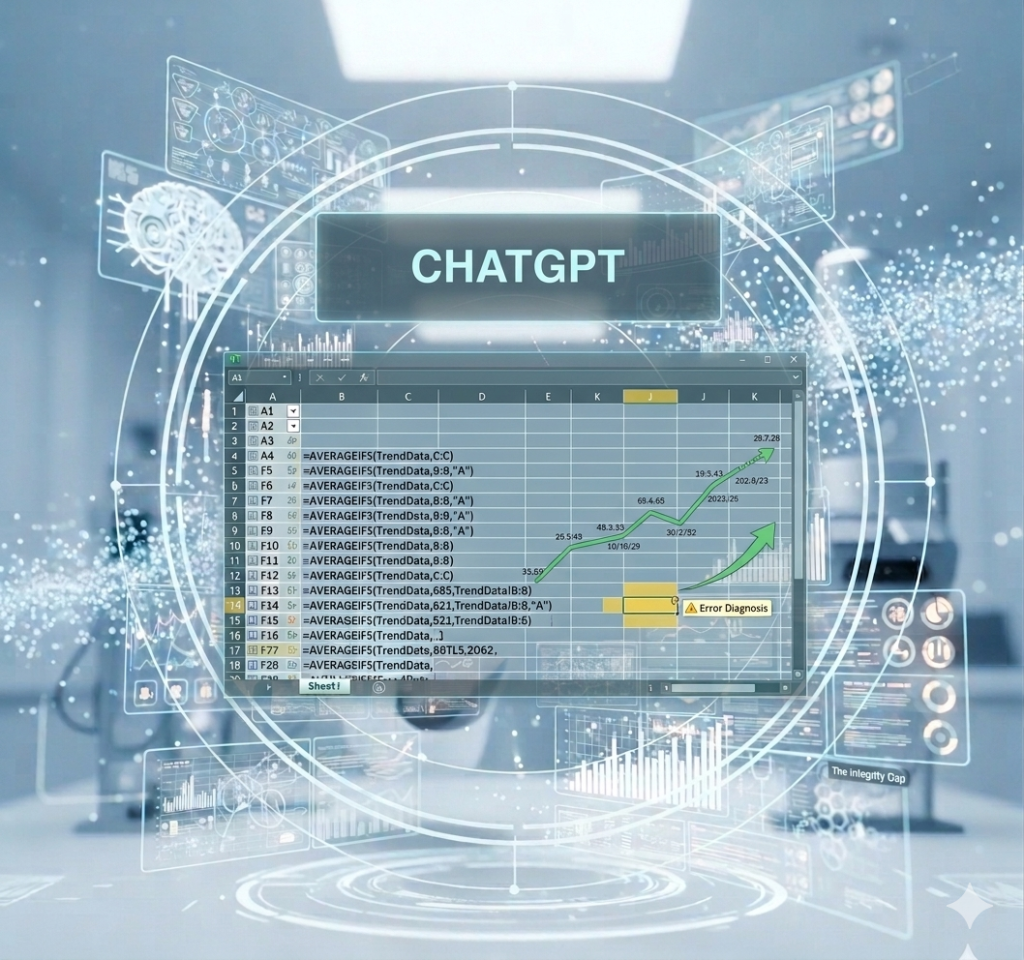
In research and clinical settings, Excel persists because it is fast, familiar, and flexible. Screening logs, adverse-event trackers, clinic volume summaries, and quality-improvement datasets often begin (and sometimes remain) as spreadsheets. What feels newly consequential is the possibility of working through language: describing what we want done and having an AI system build, update, analyze, or troubleshoot while leaving the spreadsheet’s layout and formulas largely intact. For teams already burdened by documentation and reporting cycles, that shift is not trivial. From the perspective of an experienced clinician-researcher, the appeal is less “automation” than the reduction of brittle, time-consuming micro-tasks. A surprising amount of spreadsheet labor involves extending a pattern across sheets, repairing references after columns change, harmonizing date and text formats, or generating consistent summaries under time pressure. Natural-language interaction can serve as a specification layer over formula work: “Add a flag for missed visits using our existing definition,” or “Extend this table to include the new site without changing the report format.” When it works, it allows attention to return to design decisions rather than keystrokes. The preservation of formatting, formulas, and structure matters more than it may sound. Many real-world spreadsheets encode institutional memory in their structure: color conventions, locked cells, named ranges, hidden calculation tabs, and formulas that implement local definitions. An AI assistant that edits aggressively, rebuilding tables, flattening formulas, or rearranging columns, can break downstream use even if the “answer” looks correct. The practical requirement, therefore, is not only correctness of outputs but respect for the spreadsheet as a system with dependencies. Building and updating are often the safest entry points. Adding new calculated columns, generating data-validation rules, or creating a summary sheet can be done in ways that are auditable and reversible, especially if the assistant is instructed to place changes in a new tab or clearly marked area. In clinical audit work, for instance, a natural-language request to create a monthly run chart or pivoted summary can save time, but it should also produce formulas that are visible and checkable. The goal is not to hide the work, but to make it quicker to draft and easier to review. Error diagnosis is where benefits and risks rise together. Spreadsheet errors are typically quiet: a mixed absolute/relative reference, a SUMIF range that fails to extend to the newest rows, a text-to-number conversion that quietly produces zeros, or a lookup that breaks when identifiers change format. An AI system can often propose plausible causes and minimal corrections, which is genuinely helpful when a deadline is near. Yet “minimal” is contextual; even a one-cell fix can alter denominators, eligibility flags, or baseline values in clinically meaningful ways. Analysis through natural language can also change who participates in interpretation. Not everyone in a multidisciplinary team reads nested formulas comfortably, and that gap can concentrate power in the hands of the person who “knows Excel.” If an assistant can translate a request, “Summarize no-show rates by site and month, and show how missing values were handled”, into transparent steps and clearly labeled outputs, the spreadsheet becomes more legible. That legibility has practical value: better peer review of calculations and fewer analytic choices hidden inside formulas. Still, there are tensions that cannot be solved by interface design alone. Natural language is ambiguous, while spreadsheets are literal; “clean the data” can mean anything from trimming spaces to redefining categories. AI-generated formulas may look convincing while being subtly wrong, and summaries can miss artifacts such as duplicated rows, shifted time windows, or changes in coding practice. For this reason, the most responsible use is procedural: versioning, before/after reconciliation totals, spot checks on known cases, and separation of raw data from transformed and reported outputs. Ethically, the central issues are transparency, privacy, and accountability rather than novelty. If patient-identifiable data are sent to an external tool without appropriate governance, no level of convenience justifies the breach of trust. Even in secure enterprise environments, teams should be explicit about where AI was used, what was changed, and who approved the final dataset or report. Data integrity is an ethical commitment: it requires an audit trail, a clear division of responsibility, and a refusal to treat AI output as self-validating. In practice, I have found it helpful to treat AI assistance as a junior collaborator: useful for drafting transformations, proposing checks, and explaining formula logic, but not a substitute for methodological judgment. Asking the system to show its work, formulas, assumptions, handling of missingness—and constraining it to preserve structure can reduce unintended disruption. The more consequential the spreadsheet (clinical decisions, regulatory reporting, publishable results), the more stringent the validation should be. Used this way, natural-language tools can support reliability rather than merely speed. Looking forward, the most meaningful shift may be cultural. Natural-language interaction encourages us to articulate definitions (“What counts as a missed visit?” “Which date anchors follow-up?”) before encoding them in formulas. If we pair that articulation with disciplined verification, we may end up with spreadsheets that are not only faster to maintain but also easier to audit, teach, and trust. In clinical research, that combination, clarity plus accountability, is the real promise.


English

When Evidence Meets Interface: Wiley–OpenEvidence and the Next Step in Clinical Knowledge Access

In clinic, the question that stalls us is rarely the “textbook” one. It is the oddly specific patient in front of us, the medication interaction that is plausible but not obvious, the guideline nuance that changed last year, the subgroup analysis we half-remember but cannot reliably quote. Against that reality, Wiley’s March 3, 2026 announcement of a partnership with OpenEvidence feels less like a technology headline and more like a workflow intervention: a major publisher is licensing a deep medical corpus into a point-of-care AI system designed to retrieve, synthesize, and cite biomedical evidence under time pressure. What is notable is not simply that “AI is coming to medicine”, we have lived with clinical search tools and decision supports for decades, but that this agreement explicitly centers a familiar truth: good answers depend on the quality and integrity of the underlying literature. Wiley frames the problem in terms every clinician recognizes, namely the expanding volume of research and the persistent lag between publication and practical uptake. OpenEvidence, in turn, positions itself around evidence-grounded answering, aiming to keep clinicians close to citable sources rather than drifting into untraceable summarization. The scope described in the announcement is not trivial. It includes access to Cochrane content such as the Cochrane Database of Systematic Reviews and Cochrane Clinical Answers, alongside hundreds of Wiley peer‑reviewed journals and a broad collection of journals and books spanning multiple specialties. In principle, this matters because systematic reviews and structured clinical answers sit closer to the “actionable middle” of evidence-based practice, where trainees and clinicians often need synthesis that remains tethered to methods and citations. At the same time, the partnership makes visible a constraint that many end users misunderstand: licensing full text for computation does not automatically mean full text can be freely displayed. In publisher ecosystems, the version of record is governed by copyright and sharing policies, and the practical result is often that a platform can analyze full text internally while presenting users with references, links, and limited quotations rather than reproducing articles in full. This arrangement protects intellectual property but also creates a pedagogical tension, because clinicians and learners may feel they are being asked to trust a summary without immediate access to the complete argument and methods. From a clinical workflow perspective, the promise is speed without surrendering traceability. If an AI tool can answer, “What is the evidence for X in population Y?” and immediately point us to the most relevant systematic review, pivotal trial, or clinical reference text, ideally with enough context to judge applicability, it can reduce the low-value time we spend searching across interfaces. In practice, the difference is not merely convenience: it can preserve cognitive bandwidth for the work that only humans can do, such as integrating comorbidities, patient values, feasibility, and local resource constraints. For medical students and trainees, we understand the instinct to begin with general-purpose chat systems. Tools like ChatGPT, Gemini, and Claude can be helpful for tutoring, clarifying concepts, and organizing study plans. The problem is that fluency can masquerade as reliability, and in medicine a plausible-sounding answer that cannot be audited is not a small error, it is a liability. The responsible posture is to treat general systems as drafting or learning aids, while treating evidence-seeking as a different category of task that demands citations, provenance, and the ability to verify claims against primary sources. This is where specialized platforms may be more appropriate, not because they are “perfect,” but because their design incentives can be better aligned with evidence-based practice. A system built for medical Q&A that is intended to ground responses in peer‑reviewed literature and expose a clear citation trail supports how we teach and practice: ask, acquire, appraise, apply, and reassess. In our teaching settings, we often emphasize that the goal is not an “answer” but an answer with an audit trail, something a learner can defend at the bedside and a clinician can revisit when circumstances change. We should also acknowledge the limitations and tensions that accompany publisher-integrated AI. Any licensed corpus has edges: what is included, what is excluded, which specialties are best represented, and which years or formats are more accessible. If a system’s strongest access is concentrated within particular publishing portfolios, the retrieval layer may preferentially surface those sources unless balancing is explicit and measurable. And, of course, the biomedical literature itself contains publication bias, changing standards, and uneven global representation, meaning that “more content” does not automatically produce better clinical judgment. Ethically, partnerships like this heighten responsibilities around transparency, accountability, and data integrity. We should expect clear communication about what content is being searched, how citations are selected, and how uncertainty is handled, particularly when evidence is weak or conflicting. We also need institutional clarity about privacy: trainees must not paste identifiable patient details into external tools unless the platform is formally approved, secured, and governed. The ethical north star is not to celebrate AI or reject it, but to demand that AI-supported workflows preserve human responsibility and keep the evidence chain visible. Looking forward, we can read this collaboration as an early signal of a broader shift: publishers recognizing that discovery is moving from static databases toward interactive evidence interfaces, and AI platforms recognizing that trust depends on licensed, curated, peer‑reviewed foundations. For clinicians, researchers, and graduate learners, the opportunity is real, faster access to better-grounded synthesis at the point of need. The obligation is equally real: to read beyond the summary when stakes warrant it, to appraise what we retrieve, and to insist that “AI-supported” never becomes a substitute for clinical reasoning or scholarly discipline.

French

Mots originaux, idées réutilisées : la réalité du plagiat dans la recherche générée par IA

Tout ce qui « a l’air » nouveau ne l’est pas vraiment. Les IA génératives peuvent réellement booster la productivité en recherche : plan détaillé, réécriture, traduction, et même remue‑méninges quand on est bloqué. Mais la même aisance qui rend ces sorties « publiables » peut aussi masquer un risque plus discret : des travaux générés par IA peuvent recycler, sans intention malveillante, des connaissances existantes, non pas forcément en copiant des phrases, mais en réutilisant des idées, des ossatures argumentatives familières, des logiques d’étude déjà vues, et une nouveauté de façade. C’est la réalité à laquelle beaucoup de chercheurs sont désormais confrontés : le problème d’intégrité n’est souvent pas un plagiat flagrant, mais une réutilisation cachée, où le texte est original dans la forme, tandis que l’apport intellectuel est mince, dérivé, ou trop proche de l’existant. Dans ces cas‑là, la « nouveauté » devient un effet de surface, et l’intégrité scientifique consiste moins à débusquer du texte copié qu’à protéger la véritable originalité, la traçabilité du raisonnement et l’honnêteté de la contribution. Un exemple éclairant vient de l’étude ACL 2025 de Gupta et Pruthi, All That Glitters is Not Novel: Plagiarism in AI Generated Research (Outstanding Paper à ACL 2025). Leur objet n’est pas le simple copier‑coller, mais une forme plus subtile : des textes de style recherche qui reformulent ou recombinent des travaux antérieurs de manière à paraître « neufs » lors d’une relecture rapide. Au lieu de demander aux évaluateurs de juger la nouveauté comme d’habitude, les auteurs ont conçu un dispositif piloté par des experts, explicitement chargés de rechercher des sources de plagiat. Ils ont fait évaluer 50 documents de recherche générés par LLM (y compris des documents issus de « The AI Scientist » et d’autres propositions publiques, ainsi que de nouvelles générations). C’est important, car les évaluations classiques supposent souvent la bonne foi et n’incitent pas à une chasse active aux sources. Ils ont aussi utilisé une grille claire : les notes les plus élevées correspondaient aux cas où l’on observe quasiment une correspondance un‑pour‑un entre la méthodologie générée et des travaux antérieurs, ou bien où des pans substantiels sont empruntés à un petit nombre d’articles précédents sans attribution. Autrement dit, il ne s’agit pas d’identifier des phrases identiques, mais de constater que l’ossature intellectuelle de la méthode et de la contribution est trop proche de quelque chose qui existe déjà. Le résultat clef est difficile à ignorer : les experts ont signalé 24 % des 50 documents comme plagiés (notes 4–5) après des vérifications comprenant le contact avec les auteurs originaux ; si l’on inclut les cas où la vérification n’a pas été possible (par ex. auteurs injoignables), le taux monte à 36 %. Cet écart compte, car il montre comment les cas « confirmés » peuvent rester sous‑estimés lorsque la vérification réelle est lente ou impossible. C’est précisément ce qui rend le plagiat à l’ère de l’IA si particulier : le risque se loge souvent au niveau des idées, du cadrage du problème, de la chaîne méthodologique et des revendications de contribution, plutôt que dans la phraséologie identique. Si une proposition est rédigée avec assurance, présentée par sections impeccables et saupoudrée de citations plausibles, elle peut passer un contrôle de surface, même si le concept sous‑jacent n’est pas vraiment original. L’étude met aussi en évidence un second problème : l’automatisation ne nous sauve pas (encore). Les auteurs rapportent que plusieurs approches automatisées, notamment la recherche par embeddings et un service commercial de détection de plagiat, se sont révélées insuffisantes pour repérer le plagiat dans ces propositions générées par LLM. C’est cohérent avec une réalité plus large : « l’emprunt sémantique » est bien plus difficile à détecter que le recouvrement de chaînes de caractères. Pour l’évaluation par les pairs, cela crée un compromis pénible en termes de charge de travail. Si l’IA augmente le volume de soumissions très polies tout en accroissant la probabilité d’emprunts cachés, les relecteurs doivent passer davantage de temps en travail d’enquête : fouiller la littérature, cartographier les méthodes, vérifier si les « contributions originales » ne sont pas de simples versions renommées d’idées connues. Cette pression ne fait pas que ralentir la revue ; elle peut aussi pousser les évaluateurs vers des heuristiques superficielles, rendant le système encore plus facile à contourner. Pour les auteurs qui utilisent l’IA de manière éthique, l’état d’esprit le plus sûr est : l’IA peut vous aider à exprimer vos idées, mais elle ne doit pas être la source de votre contribution. Gardez une « trace de provenance » : ce que vous avez lu, ce que vous avez copié dans vos notes (entre guillemets), et ce que vous avez décidé vous‑même. Si l’IA suggère une méthode ou un cadrage, traitez‑les comme des indices non fiables ; puis vérifiez en recherchant les travaux antérieurs et en ajoutant des citations explicites là où votre idée se rattache à la littérature existante. Pour les universités, les revues et les conférences, la réponse ne doit pas être la panique, mais la mise à niveau des processus. Exigez une divulgation transparente de l’usage d’IA, renforcez les contrôles de nouveauté (surtout au niveau des idées/méthodes), et donnez aux relecteurs des outils et du temps pour mener des recherches ciblées de sources quand quelque chose paraît « trop propre ». Surtout, récompensez la citation soignée et le positionnement honnête (« ceci est une extension de X ») plutôt que la sur‑vente de la nouveauté ; car à l’ère de l’IA, il est plus facile de fabriquer une nouveauté apparente que du véritable progrès scientifique. Enfin, c’est précisément là que les relecteurs humains et le jugement humain restent essentiels, et où la responsabilité ne peut pas être externalisée. Parce que la réutilisation au niveau des idées est subtile, il faut souvent une expertise de domaine pour repérer quand une « nouvelle » chaîne de traitement n’est en réalité qu’une version renommée ou légèrement réarrangée d’un travail établi. Autrement dit, l’intégrité à l’ère de l’IA repose moins sur des alertes automatisées que sur

French

Quand les algorithmes rencontrent l’interaction : lecture critique d’une clinicienne-chercheuse du document de position 2026 de l’ESLA sur l’IA

Dans la réalité quotidienne d’une semaine d’orthophonie chargée, l’IA n’apparaît pas comme un débat abstrait. Elle se manifeste plutôt comme une série de points de friction : peut-on faire confiance à la transcription automatique pour un enfant multilingue ? faut-il tester une application de dépistage pour réduire les listes d’attente ? un outil génératif peut-il rédiger des consignes de programme à domicile sans s’éloigner des données probantes ? Le document de position de l’ESLA, Shaping the Future of Speech and Language Therapy with Artificial Intelligence, publié le 6 mars 2026, s’inscrit pleinement dans cette réalité. Il reconnaît que l’intelligence artificielle transforme rapidement les soins de santé et rappelle que l’orthophonie repose avant tout sur l’interaction humaine, le contexte et le jugement clinique. Le document évite deux extrêmes fréquents : adopter les technologies simplement parce qu’elles sont nouvelles, ou les rejeter parce qu’elles semblent risquées. Il propose une posture professionnelle équilibrée : l’IA doit soutenir les thérapeutes, et non les remplacer, tout en respectant les droits humains, la dignité, la diversité et l’inclusion. Mais une difficulté apparaît rapidement : ces principes sont justes, mais restent parfois trop généraux pour guider les décisions du quotidien. En pratique, « soutenir sans remplacer » devrait se traduire par des limites clairement définies : quelles tâches peuvent être automatisées ? lesquelles doivent rester sous responsabilité directe du clinicien ? quel niveau de supervision humaine est réellement suffisant dans des services déjà sous tension ? Sans ces repères, le risque est que le document devienne un socle de valeurs largement partagé, tandis que les pratiques réelles évoluent sous l’influence des fournisseurs de technologies, des contraintes budgétaires ou du manque de temps. L’ESLA évoque plusieurs opportunités prometteuses : dépistage, soutien à l’évaluation, planification des interventions, suivi des résultats, personnalisation des soins, modalités hybrides et amélioration de l’accès aux services. Cependant, le texte aurait pu aller plus loin dans certaines questions pratiques. Une réalité parfois inconfortable mérite d’être discutée : la « personnalisation » technologique peut facilement se transformer en optimisation pour la majorité. Cette question concerne particulièrement certains groupes : enfants multilingues, dialectes minorisés, utilisateurs de CAA, profils de handicap complexes ou normes communicationnelles culturellement situées. Si l’équité constitue un objectif central, il devient nécessaire de préciser les attentes minimales en matière de preuve scientifique : quels niveaux de validation sont nécessaires pour les systèmes de reconnaissance vocale multilingue ? quelles tailles d’échantillon sont requises ? quels accents ou variétés linguistiques doivent être testés ? quels taux d’erreur sont acceptables, et pour qui ? Sans ces critères, l’équité reste davantage une intention qu’une exigence mesurable. Le document apparaît particulièrement solide sur son socle éthique : confidentialité, consentement, propriété des données, biais algorithmiques, accès inégal et risque de dépendance excessive. Mais une position éthique forte ne se traduit pas automatiquement par une utilisabilité clinique. C’est là que de nombreux cliniciens pourraient exprimer la même frustration : les principes sont pertinents, mais les recommandations restent trop générales. La profession aurait probablement bénéficié d’orientations plus concrètes : des listes de « à faire / à éviter », des outils pratiques, ou des garde-fous applicables dans les flux de travail réels. Par exemple, un document plus opérationnel pourrait inclure : une classification des usages vert / orange / rouge, une check-list de vérification de la confidentialité, des standards minimaux d’évaluation scientifique, une liste de questions à poser aux fournisseurs avant l’achat d’un outil. Sans ces outils, chaque service se retrouve à élaborer ses propres règles, souvent dans l’urgence et avec des niveaux de protection très variables. La conclusion de l’ESLA appelle à une adoption réfléchie, collaborative et éthique de l’IA afin de renforcer la participation, la dignité et l’inclusion. C’est une direction pertinente. Mais la prochaine étape devrait consister à transformer ces valeurs en recommandations concrètes pour la pratique. La profession n’a pas seulement besoin d’une permission d’explorer l’IA. Elle a besoin d’un cadre structuré pour le faire en toute sécurité. Dans l’état actuel, le document de l’ESLA constitue une prise de position éthique solide. Mais il ne représente pas encore la boussole pratique que de nombreux cliniciens espéraient.

English

Original words, reused ideas: the reality of AI‑generated research plagiarism

Not everything that looks new is truly new. Generative AI can be a real productivity boost in research, useful for outlining, rewriting, translating, and even brainstorming when you’re stuck. But the same fluency that makes AI outputs feel “publishable” can also hide a quieter risk: AI-generated work can unintentionally recycle existing scholarship, not always through copied sentences, but through reused ideas, familiar argumentative scaffolds, replicated study logic, and look‑alike novelty. This is the reality many researchers are now facing: the integrity problem is often not blatant plagiarism, but hidden reuse, where the writing is original in wording while the intellectual contribution is thin, derivative, or too close to what already exists. When that happens, “novelty” becomes a surface effect, and research integrity becomes less about catching copied text and more about protecting genuine originality, traceable reasoning, and honest contribution. A strong example comes from Gupta and Pruthi’s ACL 2025 study, All That Glitters is Not Novel: Plagiarism in AI Generated Research (an Outstanding Paper award at ACL 2025). Their focus isn’t simple copy-paste plagiarism, but a more subtle kind: research-style text that rephrases or recombines prior work in ways that can look “new” during a fast review process. Instead of asking reviewers to judge novelty in the usual way, the authors designed an expert-led setting where participants were explicitly tasked to look for plagiarism sources. They had experts evaluate 50 LLM-generated research documents (including documents from “The AI Scientist” and other public proposals, plus newly generated ones). This matters because typical evaluations often assume good faith and don’t incentivize active source-hunting. They also used a clear rubric: the top scores corresponded to cases where there’s essentially a one-to-one mapping between the generated methodology and earlier work, or where substantial parts are borrowed from a small set of prior papers without credit. In other words, it’s not about identical sentences, it’s about the intellectual skeleton of the method and contribution being too close to something that already exists. The headline result is hard to ignore: experts flagged 24% of the 50 documents as plagiarism (scores 4–5) after verification steps that included contacting original authors; if you also count cases where verification wasn’t possible (e.g., authors unreachable), the rate rises to 36%. That gap is important, because it shows how “confirmed” cases may still be an undercount when real-world verification is slow or impossible. This is exactly why AI-era plagiarism can feel different: the risk often sits at the idea level, problem framing, method pipeline, and contribution claims, rather than in identical phrasing. If a proposal is written confidently, packaged with clean sections, and sprinkled with plausible citations, it can pass a quick surface check even when the underlying concept is not truly original. The study also highlights a second problem: automation doesn’t save us (yet). The authors report that several automated approaches, including embedding-based search and a commercial plagiarism service, were inadequate for detecting plagiarism in these LLM-generated proposals. That’s consistent with a broader reality: “semantic borrowing” is much harder to catch than overlapping strings of text. For peer review, this creates a nasty workload tradeoff. If AI increases the volume of polished submissions while also increasing the probability of hidden borrowing, reviewers must spend more time doing detective work, searching literature, mapping methods, and checking whether “novel contributions” are just renamed versions of known ideas. That pressure doesn’t just slow review; it can also push reviewers toward shallow heuristics, which makes the system even easier to game. For writers who use AI ethically, the safest mindset is: AI can help you express your ideas, but it should not be the source of your contribution. Keep a “provenance trail”: what you read, what you copied into notes (with quotes), and what you personally decided. If AI suggests a method or framing, treat it like an untrusted hint, then verify by searching for prior work and adding explicit citations where your idea connects to existing literature. For universities, journals, and conferences, the response shouldn’t be panic, it should be process upgrades. Require transparent disclosure of AI use, strengthen novelty checks (especially at the idea/method level), and give reviewers tools/time to do targeted source-searching when something feels “too clean.” Most importantly, reward careful citation and honest positioning (“this is an extension of X”) rather than over-marketing novelty, because in the AI era, exaggerated novelty is becoming easier to manufacture than real research progress. Finally, this is where human reviewers and human judgment remain essential, and where responsibility can’t be outsourced. Because idea-level reuse is subtle, it often takes domain expertise to notice when a “new” pipeline is really a renamed or lightly rearranged version of established work. In other words, integrity in the AI era depends less on automated flags and more on careful reading, source-checking, and accountable editorial processes. The same caution applies in clinical contexts: many AI tools on the market are still not reliable enough to be treated as clinical-grade systems, and they can produce confident but wrong, biased, or unsafe outputs. In therapy settings especially, we should treat AI as supportive workflow software, not an authority, keeping clinicians firmly responsible for interpretation, decisions, and client safety.

English

When Algorithms Meet Interaction : A Clinician‑Researcher’s Critical Reading of ESLA’s 2026 AI Position Paper

In a busy speech and language therapy week, “AI” doesn’t arrive as a philosophical debate. It arrives as a friction point: Can we trust automated transcription for a multilingual child? Should we trial a screening app to reduce waiting lists? Can a generative tool draft home-program instructions without drifting beyond evidence? ESLA’s position paper, Shaping the Future of Speech and Language Therapy with Artificial Intelligence (published March 6, 2026), lands right in this reality. It acknowledges that AI is rapidly reshaping healthcare, and it correctly frames SLT as a profession built on interaction, context, and judgement. The problem is that when clinicians turn to a position paper, many of us aren’t only looking for a vision, we’re looking for direction. To ESLA’s credit, the paper avoids the two common extremes: adopting tools because they’re new, or rejecting them because they feel risky. It states a sensible professional stance: AI should support rather than replace therapists, and implementation must respect human rights, dignity, diversity, and inclusion. But here’s the tension: those principles are true, and still too general to steer day-to-day decisions. In practice, “support not replace” needs to translate into operational boundaries: Which tasks are acceptable to automate? Which tasks must remain clinician-led? What level of human oversight is “enough” in real services under pressure? Without that, the document risks becoming a shared set of values that everyone agrees with, while actual practice drifts in whichever direction vendors, budgets, or time constraints push it. ESLA outlines opportunities (screening, assessment support, intervention planning, outcome monitoring, personalised care, hybrid delivery, access). Again, plausible, and in many areas, exciting. Yet the paper could have pushed further into the uncomfortable practicalities: the reality that “personalisation” can become “fit to the majority,” especially for multilingual children, minoritised dialects, AAC users, complex disability profiles, and culturally specific communication norms. If ESLA’s goal is equity, we need stronger statements on minimum evidence expectations, not just aspirations. What counts as sufficient validation for multilingual speech recognition? What sample sizes? What types of accents/dialects? What error rates are acceptable and acceptable for whom? Otherwise, “equity” stays a hope rather than a measurable requirement. Where the paper feels strongest is its ethical backbone, privacy, consent, data ownership, bias, unequal access, and over-reliance. But ethically strong does not automatically mean clinically usable. This is where many clinicians will say: It’s nice, but… c’est flou encore. We wanted more “what to do / what not to do.” We wanted a toolkit. We wanted ESLA to name the concrete risks that show up in real workflows: staff uploading voice samples into unknown cloud services; student clinicians pasting identifiable details into chatbots; managers adopting “AI screening” because it’s cheaper, then letting it quietly become gatekeeping. A position paper can’t solve everything, but it can draw bright lines and this one often speaks in principles where the field is asking for guardrails. What would make this paper more actionable is a clinician-facing set of guidelines that reads like a decision support tool, not a manifesto. For example: a “red / amber / green” use-case list (e.g., green = admin summarisation with de-identified data; amber = draft therapy materials with clinician review; red = automated diagnosis/eligibility decisions). A privacy verification checklist (Where is data stored? Is it used to train models? Can we opt out? Who is the data processor/controller? Is encryption stated? What is retention/deletion policy? Can we get a Data Processing Agreement? Is there audit logging?). A minimum evaluation standard (evidence thresholds, bias testing expectations, multilingual performance reporting, disclosure requirements). And even a “vendor questions” one-pager managers can use before procurement. Without these, professional leadership remains a principle, but clinicians and services are left to invent policy locally, inconsistently, and often under time pressure. ESLA’s conclusion calls for deliberate, collaborative, ethical adoption so AI strengthens participation, dignity, and inclusion. That’s a good direction. But the next step should be explicit: an implementation appendix that turns values into practice. Because the profession doesn’t just need permission to engage with AI, we need structure to do it safely. Until then, ESLA’s paper functions as a strong ethical positioning statement, but not yet as the practical compass many of us hoped for. In other words, the paper is important, timely, and well-intentioned, but it still needs more actionable guidance for real-world practice.

English

ChatGPT 5.3 (“Instant”) vs 5.4 (“Thinking”) for Therapists: What Helps, What Hurts, and What Must Come First

In research and in therapy, the hardest part of the week is often not the “clinical moment” or the “research idea” itself. It’s the accumulation of in-between work: turning rough notes into coherent formulations, translating technical concepts into language a client can live with, and documenting care in a way that is both faithful and legible. Against that reality, the most useful way to approach ChatGPT 5.3 and 5.4 is not as a question of novelty, but as a question of workflow. What can these tools responsibly reduce, and what new risks do they introduce? Before you compare speed or “intelligence,” ask the compliance question readers actually need answered: is this tool HIPAA‑approved for PHI, or not? HIPAA doesn’t officially certify software as “approved”; in practice, the baseline is whether you can get a Business Associate Agreement (BAA) and enforce the right retention/access controls. OpenAI states that using its API with PHI requires a BAA, and that a BAA for ChatGPT is currently available only to sales‑managed ChatGPT Enterprise or Edu customers, not to ChatGPT Business. So if you can’t contractually and operationally defend how patient data is handled, you shouldn’t treat the system as an extension of your clinical workspace, whether you’re in the U.S. under HIPAA or elsewhere under professional ethics and local privacy expectations. Once guardrails are clear, the 5.3/5.4 split becomes genuinely useful. ChatGPT 5.3 (“Instant”) reads like a model tuned for everyday flow: fast, smooth, and often excellent at turning messy ideas into clean language. In a clinical workflow, that matters because it targets the small tasks that become overwhelming at scale, drafting psychoeducation, rewriting intake instructions, simplifying coping-skill explanations, or making client-facing language less technical. It can also quickly produce several variants so you can choose the tone that fits a client’s age, culture, and readiness. The clinical value is real, but it’s also deceptively easy to misuse. When a model produces confident prose quickly, it can blur the boundary between translation (changing style while preserving meaning) and invention (quietly filling gaps with plausible-sounding content). That boundary matters because clinical documents are not just “writing”, they’re records that shape continuity of care, reimbursement, supervision, and how clients are understood by other systems. If you use 5.3 for notes or summaries, the safest stance is: it drafts language; you own the facts. ChatGPT 5.4 (“Thinking”) tends to be most helpful when the task has internal structure, where you need the tool to keep track of dependencies across steps rather than just rewrite a paragraph. In research, that might mean tightening a methods section without changing meaning, drafting a transparent analysis-plan template, or turning scattered meeting notes into a protocol outline you can critique. In clinical contexts, it can help you generate alternative hypotheses, map maintaining factors, or create decision-tree prompts for your own reflection. The benefit isn’t “it knows therapy,” but that it can help you organize complexity when you’re fatigued. That same coherence, however, introduces a specific kind of risk: a “complete-sounding” narrative that feels psychologically compelling even when it’s not accountable to the actual relationship, the client’s culture, or your observed data. 5.4 can produce formulations that read impressively integrated, yet still be subtly wrong, overly confident, or prematurely interpretive. In therapy, that can show up as false precision: labels that land too early, causal stories that are too tidy, or summaries that inadvertently overwrite the client’s own meanings. The more elegant the output, the more vigilant the clinician needs to be. Pricing matters because it quietly determines who uses what, how often, and under which safeguards, and that, in turn, shapes clinical risk. OpenAI’s consumer tiers are commonly framed as Go (~ $ 8/month in the U.S.), Plus ( $ 20/month), and Pro ( $ 200/month), while ChatGPT Business is listed at ** $ 25 per user/month billed annually** (and the pricing page advertises “Try for free”). Prices can also be region-dependent, so what you see in Lebanon may differ from U.S. stickers. The honest clinical question, then, is not “Which is cheapest?” but: Which plan aligns with our confidentiality requirements and governance? Lower-cost personal tiers can nudge clinicians toward “quick personal account” use (often with weaker admin controls), while Business/Enterprise tiers are designed for organizational controls, yet they still come with practical constraints (e.g., “unlimited” is typically subject to abuse guardrails, and some tiers have product/feature caveats; Go may include ads). A realistic way to use these tools well is to divide tasks by risk level. Low-stakes, high-value uses include drafting client handouts (without identifiers), rewriting psychoeducation, generating multiple wording options for a message you will review, or creating session structure templates. Higher-risk areas, diagnosis, risk assessment, duty-to-warn decisions, and definitive case formulation, should remain human-led, with the tool used only to support clarity of communication, not clinical judgment. The goal is not to “ban” the tool; it’s to keep it in a role that improves quality without quietly shifting responsibility. If there’s one operational lesson, it’s that these tools are best treated like exceptionally fluent interns: fast, helpful, and sometimes brilliant at presentation, but not accountable for truth. They can reduce friction and widen your drafting bandwidth, especially during heavy weeks, but only if you design a workflow where verification is normal rather than optional. In other words, the right question is not “Can it write this?” but “Can I audit what it wrote, and can I defend it ethically and clinically?” Ethically, the most important moment is often when the tool feels easiest to use. Transparency is not only a client-facing issue (“AI helped draft this handout”) but a professional integrity issue: what was delegated, what was verified, and what data entered the system. Responsibility means refusing to outsource clinical judgment, risk assessment, diagnosis, or case formulation, to a tool that cannot carry a duty of care. Data integrity, in turn, means keeping documentation anchored to observed clinical facts and the client’s words, and using governance-minded frameworks to decide what is appropriate to automate, what must remain human,

English

When “It Feels Private” Isn’t the Same as “It Is Private”: Teens, Chatbots, and the New Privacy Gap

In our clinical and research work with adolescents, privacy is not a side issue, it is a developmental workspace where autonomy, identity, and boundaries are tested in real time. The American Psychological Association (APA) has emphasized that wanting privacy is normal and healthy in adolescence, especially when teens are exploring identity, relationships, and new emotions. When privacy is treated as inherently suspicious, we often intensify secrecy rather than strengthen judgment. At the same time, we are seeing a shift in where privacy is practiced. Many teens now process questions and feelings in conversations with AI chatbots. As Dr. Joshua Goodman notes, “Conversations with AI chatbots can feel like a safe space” for adolescents to discuss things they would not feel safe bringing to parents or others. In practice, that “safe space” feeling often comes from immediacy, lower embarrassment, and the absence of visible adult worry. The interface can feel calm, nonreactive, and available, especially for teens who expect criticism or conflict. From a therapist’s standpoint, this is precisely why we cannot treat chatbot use as a trivial trend or a purely parental concern. We have a professional responsibility to follow adolescents’ real help-seeking pathways, including the digital ones, and to make sure that what feels private is not mistaken for what is protected. If a teen is using a “kid chatbot” as their primary container for shame, identity questions, sexual concerns, trauma narratives, or self-harm thoughts, then chatbot use becomes clinically relevant behavior. It belongs in assessment, formulation, and ongoing treatment planning the same way we track sleep, peer relationships, substance use, and social media exposure. The central clinical concern is simple: perceived safety is not the same as real safety. Dr. Mary Alvord states it directly: “Perceived safety isn’t the same as real safety.” When a chatbot feels validating and discreet, teens may assume it is confidential in the way a therapeutic relationship is meant to be. But teens often use the word “private” to mean “no one will judge me,” “no one will get angry,” or “no one will make it awkward.” Data privacy asks different questions: who can access the content, whether it is stored, whether it is analyzed, and how it might be reused. This is where our clinical role is not to frighten teens, but to clarify reality. Psychoeducation about privacy is not a parent lecture; it is a therapeutic intervention. Just as we help adolescents build mental models of consent, emotional regulation, risk, and relationships, we can help them build a mental model of digital disclosure. A chatbot can be emotionally comfortable while still being structurally nonconfidential. An interface can feel intimate without offering the protections we associate with private human relationships. Importantly, the therapist’s task is not only to warn; it is to understand the function the chatbot serves. In sessions, we can ask: What platform do you use? When do you turn to it? What do you ask it for—comfort, advice, distraction, validation, “permission,” reassurance? How do you feel afterward—relieved, calmer, more distressed, more confused, more dependent on reassurance? These questions help us assess whether the chatbot is supporting coping or quietly strengthening avoidance, rumination, or isolation. They also help us identify a common pattern in adolescence: the teen is not necessarily choosing a chatbot over people; they may be choosing it over anticipated judgment. Because we hold a duty of care, we also have a responsibility to name the “privacy gap” explicitly: many adolescents do not know what happens to their data. They may assume that because the interaction is one-on-one and “sounds caring,” it is private in the same way that a clinician’s office is private. Our role is to bring the invisible layer into view, gently, concretely, and repeatedly, so that teens can make informed choices rather than emotionally-driven assumptions. This is especially important with younger users and “kid” versions of chatbots, where the design may inadvertently amplify the sense of safety while the teen’s understanding of data practices is still developing. One effective approach is to translate privacy into a skill-building exercise rather than a moral warning. In practice, we can guide adolescents to sort what they might share with a chatbot into clear categories: low-stakes content (study help, hobbies, neutral questions), personally identifying details (full name, school, address, phone number, account handles), and high-sensitivity disclosures (sexual content, self-harm thoughts, trauma narratives, family conflict, screenshots of private messages, and medical or mental health details). The goal is not to ban curiosity or punish disclosure. The goal is to build discrimination: which topics can tolerate a lower-protection environment, and which topics deserve a safer channel—trusted adults, clinicians, or crisis supports when needed. From there, we can teach a practical rule that adolescents can actually use: the more specific and identifiable the details are, the higher the potential cost if the content is stored, misunderstood, shared, or later accessed. We can also strengthen what developmental psychology already tells us adolescents are practicing: “future-self thinking.” We can ask: How would you feel if a parent, peer, school, or future partner saw this? Would you still want it written down somewhere? Could it be taken out of context? This anticipatory reflection is developmentally appropriate because foresight and risk appraisal are still consolidating in adolescence. Practiced regularly, it turns privacy from an abstract value into a usable decision-making habit. An ethical reflection is unavoidable because the issue is not only teen behavior, but also system design and adult responsibility. Teens and caregivers deserve transparent explanations of what chatbots can and cannot promise, especially when the interface feels intimate. As clinicians, we cannot outsource clinical judgment, or the protection of vulnerable disclosures, to systems without human accountability and professional ethics. Yet we also have to hold complexity: some teens have limited access to responsive adults, and chatbots may function as a temporary bridge. Our responsibility, then, is not to deliver blanket approval or bans. It is to stay close to adolescents’ real lives, to ask about chatbot use without shaming, to clarify the

French

ChatGPT 5.3 (« Instant ») vs 5.4 (« Thinking ») pour les thérapeutes : ce qui aide, ce qui nuit, et ce qui doit passer en premier

En recherche comme en thérapie, la partie la plus difficile de la semaine n’est souvent ni le « moment clinique » ni « l’idée de recherche » en soi. C’est l’accumulation du travail intermédiaire : transformer des notes brutes en formulations cohérentes, traduire des concepts techniques dans un langage avec lequel un patient peut réellement vivre, et documenter les soins de manière à la fois fidèle et lisible. Face à cette réalité, la manière la plus utile d’aborder ChatGPT 5.3 et 5.4 n’est pas sous l’angle de la nouveauté, mais sous celui du flux de travail. Que peuvent raisonnablement alléger ces outils, et quels nouveaux risques introduisent‑ils ? Avant de comparer la vitesse ou « l’intelligence », posez la question de conformité dont les lecteurs ont réellement besoin : cet outil est‑il approuvé HIPAA pour des PHI (informations de santé protégées), ou non ? La HIPAA ne « certifie » pas officiellement des logiciels comme « approuvés » ; en pratique, le socle est de savoir si vous pouvez obtenir un Accord d’association d’affaires (BAA: Business Associate Agreement) et faire appliquer les bons contrôles de conservation/accès. OpenAI indique que l’utilisation de son API (interface de programmation d’applications) avec des PHI requiert un BAA, et qu’un BAA pour ChatGPT est actuellement disponible uniquement pour les clients Enterprise ou Edu gérés par l’équipe commerciale (« sales managed »), et non pour ChatGPT Business. Donc si vous ne pouvez pas défendre, contractuellement et opérationnellement, la manière dont les données patients sont traitées, vous ne devriez pas considérer le système comme une extension de votre environnement clinique, que vous soyez aux États‑Unis sous HIPAA ou ailleurs sous l’éthique professionnelle et les attentes locales en matière de confidentialité. Une fois les garde‑fous clarifiés, la distinction 5.3/5.4 devient réellement utile. ChatGPT 5.3 (« Instant ») se lit comme un modèle réglé pour le flux quotidien : rapide, fluide, et souvent excellent pour transformer des idées brouillonnes en langage net. Dans un flux clinique, cela compte parce que cela cible les petites tâches qui deviennent écrasantes à grande échelle : rédiger de la psychoéducation, réécrire des consignes d’admission, simplifier l’explication des compétences d’adaptation, ou rendre le langage destiné aux patients moins technique. Il peut aussi produire rapidement plusieurs variantes afin que vous choisissiez la tonalité adaptée à l’âge, à la culture et à la disponibilité du client. La valeur clinique est réelle, mais l’abus peut être insidieux. Lorsqu’un modèle produit rapidement une prose assurée, il peut brouiller la frontière entre traduction (modifier le style en préservant le sens) et invention (combler discrètement des vides avec du contenu plausible). Cette frontière est cruciale, car les documents cliniques ne sont pas de la simple « écriture » : ce sont des dossiers qui façonnent la continuité des soins, la facturation, la supervision, et la manière dont les patients sont compris par d’autres systèmes. Si vous utilisez 5.3 pour des notes ou des synthèses, la posture la plus sûre est : il rédige la langue ; vous possédez les faits. ChatGPT 5.4 (« Thinking ») a tendance à être le plus utile lorsque la tâche a une structure interne, c’est‑à‑dire quand vous avez besoin que l’outil garde la trace des dépendances d’une étape à l’autre plutôt que de simplement réécrire un paragraphe. En recherche, cela peut signifier resserrer une section « Méthodes » sans en changer le sens, rédiger un canevas de plan d’analyse transparent, ou transformer des notes de réunion éparses en un plan de protocole que vous pourrez critiquer. En clinique, il peut vous aider à générer des hypothèses alternatives, à cartographier des facteurs de maintien, ou à créer des invites d’arbres décisionnels pour votre propre réflexion. L’intérêt n’est pas « il connaît la thérapie », mais qu’il peut vous aider à organiser la complexité lorsque vous êtes fatigué. Cette même cohérence introduit toutefois un type de risque spécifique : un récit « qui paraît remarquablement cohérent», psychologiquement convaincant, même s’il n’est pas redevable à la relation réelle, à la culture du patient, ou à vos données observées. Le 5.4 peut produire des formulations qui paraissent remarquablement intégrées, tout en restant subtilement erronées, excessivement confiantes ou prématurément interprétatives. En thérapie, cela peut se manifester par une fausse précision : des labels posés trop tôt, des récits causaux trop lisses, ou des synthèses qui écrasent involontairement les propres significations du patient. Plus la sortie est élégante, plus le clinicien doit être vigilant. La tarification compte, parce qu’elle détermine discrètement qui utilise quoi, à quelle fréquence et avec quelles garanties, ce qui, à son tour, façonne le risque clinique. Les paliers grand public d’OpenAI sont couramment présentés comme Go (~ 8$ /mois aux États‑Unis), Plus (20 $/mois) et Pro (200 $/mois), tandis que ChatGPT Business est affiché à 25$ par utilisateur/mois facturé annuellement (et la page de tarification propose « Essayer gratuitement »). Les prix peuvent également dépendre des régions, de sorte que ce que vous voyez au Liban peut différer des tarifs américains. La vraie question clinique n’est donc pas « Quel est le moins cher ? », mais : Quel plan s’aligne sur nos exigences de confidentialité et de gouvernance ? Des paliers personnels à moindre coût peuvent pousser des cliniciens vers un usage « compte personnel rapide » (souvent avec des contrôles administratifs plus faibles), tandis que les paliers Business/Enterprise sont conçus pour des contrôles organisationnels, tout en comportant encore des contraintes pratiques (par ex., l’« illimité » est généralement soumis à des garde‑fous contre les abus, et certains paliers comportent des réserves produit/fonctionnalités ; Go peut inclure de la publicité). Une manière réaliste d’utiliser correctement ces outils est de répartir les tâches selon le niveau de risque. Les usages à faible enjeu et à forte valeur comprennent la préparation de supports destinés aux patients (sans identifiants), la réécriture de contenus de psychoéducation, la génération de plusieurs formulations pour un message que vous allez relire, ou la création de gabarits de structuration de séance. Les zones à risque élevé diagnostic, évaluation du risque, décisions de obligation d’alerte (« duty to warn ») et

English

Quand « ça semble privé » n’est pas la même chose que « c’est privé » : adolescents, chatbots et le nouvel écart de confidentialité

Dans notre travail clinique et de recherche auprès des adolescents, la vie privée n’est pas une question annexe ; c’est un espace de développement où l’autonomie, l’identité et les limites sont testées en temps réel. L’American Psychological Association (APA) a souligné que le désir d’intimité est normal et sain à l’adolescence, en particulier lorsque les jeunes explorent leur identité, leurs relations et de nouvelles émotions. Lorsque la confidentialité est considérée comme intrinsèquement suspecte, nous avons souvent pour effet d’accroître le secret plutôt que de renforcer le jugement. Dans le même temps, nous observons un déplacement des lieux où s’exerce cette intimité. Beaucoup d’adolescents traitent désormais leurs questions et leurs émotions dans des conversations avec des chatbots d’IA. Comme le note le Dr Joshua Goodman, « Les conversations avec des chatbots d’IA peuvent donner aux adolescents l’impression d’un espace sûr » pour aborder des sujets qu’ils n’oseraient pas apporter à leurs parents ou à d’autres. En pratique, ce sentiment « d’espace sûr » vient souvent de l’immédiateté, d’une moindre gêne et de l’absence d’inquiétude visible chez l’adulte. L’interface peut paraître calme, non réactive et disponible, surtout pour des adolescents qui s’attendent à de la critique ou au conflit. Du point de vue du thérapeute, c’est précisément pourquoi nous ne pouvons pas traiter l’usage des chatbots comme une tendance anodine ou une préoccupation uniquement parentale. Nous avons la responsabilité professionnelle de suivre les véritables voies de recherche d’aide des adolescents, y compris numériques, et de nous assurer que ce qui « semble » privé n’est pas confondu avec ce qui est protégé. Si un adolescent utilise un « chatbot pour enfants » comme principal contenant pour la honte, les questions d’identité, les préoccupations sexuelles, les récits de traumatismes ou les pensées d’auto‑agression, alors l’usage du chatbot devient un comportement cliniquement pertinent. Il a sa place dans l’évaluation, la formulation et la planification thérapeutique continue, tout comme nous suivons le sommeil, les relations avec les pairs, l’usage de substances et l’exposition aux réseaux sociaux. La préoccupation clinique centrale est simple : la sécurité perçue n’est pas la sécurité réelle. La Dre Mary Alvord le dit clairement : « La sécurité perçue n’est pas la sécurité réelle. » Lorsqu’un chatbot paraît validant et discret, les adolescents peuvent supposer qu’il est confidentiel comme une relation thérapeutique est censée l’être. Or, les adolescents emploient souvent le mot « privé » pour signifier « personne ne me jugera », « personne ne se mettra en colère » ou « personne ne rendra la situation gênante ». La protection des données pose d’autres questions : qui peut accéder au contenu, s’il est stocké, s’il est analysé et comment il pourrait être réutilisé. C’est ici que notre rôle clinique n’est pas d’effrayer les adolescents, mais d’éclairer la réalité. La psychoéducation sur la confidentialité n’est pas une leçon parentale ; c’est une intervention thérapeutique. De la même manière que nous aidons les adolescents à construire des modèles mentaux du consentement, de la régulation émotionnelle, du risque et des relations, nous pouvons les aider à bâtir un modèle mental de la divulgation numérique. Un chatbot peut être confortable sur le plan émotionnel tout en restant non confidentiel sur le plan structurel. Une interface peut sembler intime sans offrir les protections que nous associons aux relations humaines privées. Il est important de rappeler que la tâche du thérapeute n’est pas seulement de mettre en garde ; il s’agit aussi de comprendre la fonction que sert le chatbot. En séance, nous pouvons demander : Quelle plateforme utilises‑tu ? À quels moments y recours‑tu ? Qu’en attends‑tu réconfort, conseils, distraction, validation, « permission », rassurance ? Comment te sens‑tu ensuite, soulagé, plus calme, plus en détresse, plus confus, plus dépendant de la rassurance ? Ces questions nous aident à évaluer si le chatbot soutient l’adaptation ou, insidieusement, renforce l’évitement, la rumination ou l’isolement. Elles nous aident aussi à repérer un schéma fréquent à l’adolescence : le jeune ne choisit pas nécessairement un chatbot plutôt que des personnes ; il le choisit plutôt pour éviter un jugement anticipé. Parce que nous avons une obligation de protection, nous avons aussi la responsabilité de nommer explicitement « l’écart de confidentialité » : nombre d’adolescents ignorent ce qu’il advient de leurs données. Ils peuvent supposer que, parce que l’interaction est en tête‑à‑tête et « donne une impression de bienveillance », elle est privée au même titre qu’un cabinet de clinicien. Notre rôle est de rendre cette dimension invisible plus concrète, avec douceur, concrètement et de façon répétée, afin que les adolescents puissent faire des choix éclairés plutôt que de s’en remettre à des suppositions dictées par l’émotion. Cela est particulièrement important chez les plus jeunes utilisateurs et dans les versions « enfant » des chatbots, où la conception peut involontairement amplifier le sentiment de sécurité alors même que la compréhension des pratiques de données est encore en développement. Une approche efficace consiste à traduire la confidentialité en un exercice de développement de compétences plutôt qu’en un avertissement moral. En pratique, nous pouvons guider les adolescents pour trier ce qu’ils pourraient partager avec un chatbot en catégories claires : contenus à faible enjeu (aide aux devoirs, loisirs, questions neutres), éléments personnellement identifiants (nom complet, établissement scolaire, adresse, numéro de téléphone, identifiants de comptes) et divulgations hautement sensibles (contenu sexuel, pensées d’auto‑agression, récits de traumatismes, conflits familiaux, captures d’écran de messages privés, ainsi que données médicales ou de santé mentale). L’objectif n’est pas d’interdire la curiosité ni de culpabiliser les jeunes lorsqu’ils partagent trop. L’objectif est de développer le discernement : quels sujets peuvent un environnement moins protecteur, et quels sujets méritent un canal plus sûr, adultes de confiance, cliniciens, ou dispositifs de crise si nécessaire. À partir de là, nous pouvons enseigner une règle pratique réellement utilisable par les adolescents : plus les détails sont précis et permettent d’identifier la personne, plus le risque potentiel est élevé si le contenu est stocké, mal compris, partagé ou consulté ultérieurement. Nous pouvons également renforcer ce que la psychologie du développement nous apprend déjà que les adolescents exercent :

Shopping Cart