
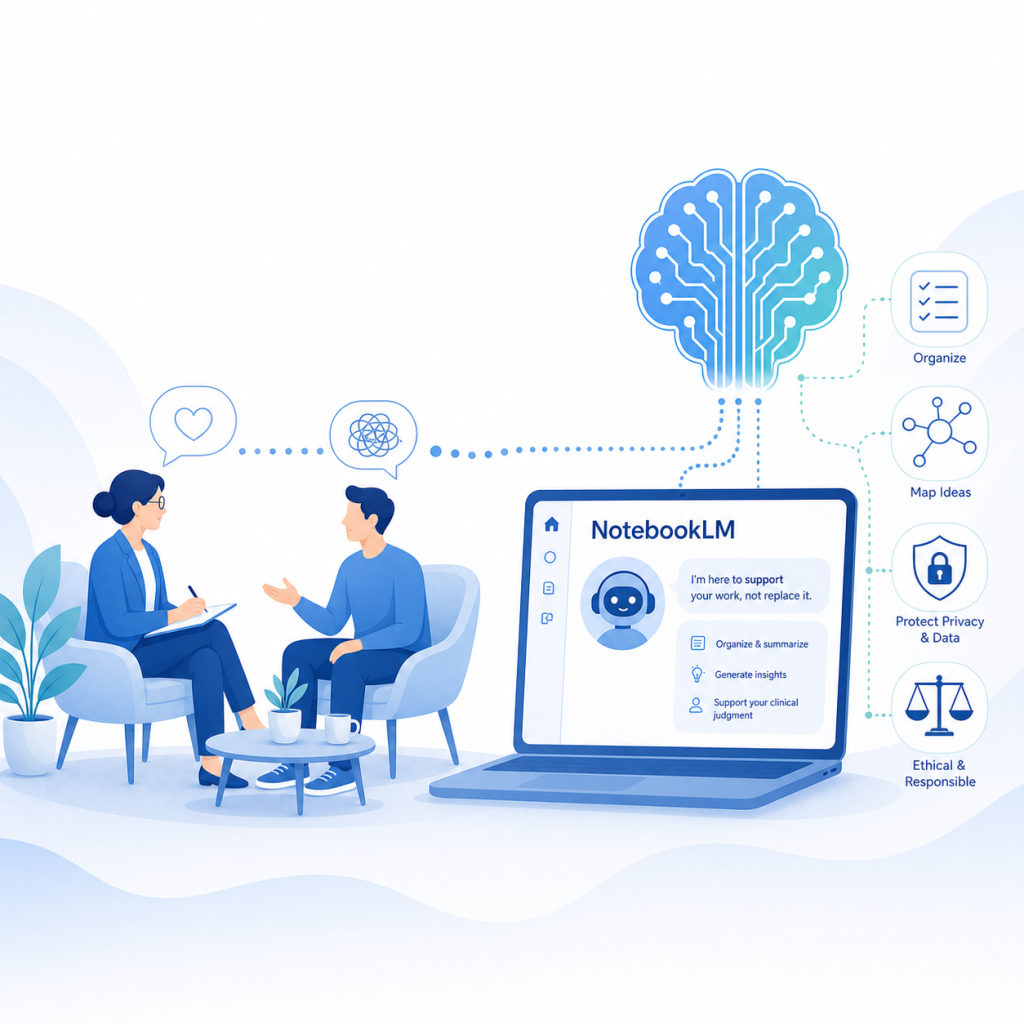
Think about the last time you sat with a complex clinical case, notes spread out, different possibilities in mind, trying to make sense of it all. That process usually asks for time, patience, and a kind of quiet reflection. With tools like NotebookLM, something is shifting. The tool now helps organize what we see, brings forward connections, and sometimes even nudges our reasoning forward. It starts to feel less like a tool we use and more like something we think alongside.
As these systems become more capable, they move through information quickly and offer structured, clear insights. This can be genuinely helpful, especially when the workload is heavy. But it also changes our relationship with knowledge. When answers come faster and more neatly, we may find ourselves spending less time sitting with the uncertainty that often leads to deeper understanding.
Some of the newer features make this even more noticeable. The ability to run analyses, process data, and generate results in one space removes many of the usual barriers. Tasks that once required effort and multiple steps now unfold smoothly. While this opens new possibilities, it can also create a bit of distance from the “how” behind the results.
The same applies when it comes to producing reports or presentations. Turning ideas into something structured has become much easier, which can support communication in meaningful ways. Still, there is a subtle question that lingers, when something comes together so quickly, where did the deeper thinking take place?
Even the way we begin our work is changing. Instead of carefully gathering and selecting sources, we can start with a simple question and let the system do the rest. It saves time, but it also touches on a core clinical and research skill: learning how to choose, question, and critically engage with information.
This matters for learning as well. Growth often happens when we stay involved in the process, when we test ideas, reflect, and sometimes struggle a bit. If too much of that process is handled for us, we might still reach good conclusions, but without the same depth of understanding.
In practice, this becomes very real. Working with patients asks for more than accurate answers. It asks for presence, sensitivity, and the ability to navigate uncertainty with care. AI can support parts of this journey, but it cannot step into the human side of the work.
There are also responsibilities that remain firmly ours. Making sense of information, questioning its accuracy, and staying aware of biases are still essential parts of the role. Being clear about how decisions are made becomes even more important when these tools are involved.
In the end, this shift is less about replacement and more about how we adapt. The challenge is to stay engaged in our own thinking, to remain curious, and to use these tools in a way that supports rather than replaces our clinical voice. When we hold onto that, technology can deepen our work without taking away what makes it meaningful.