Author name: Dr. Rania Kassir

French

IA et thérapeutes : naviguer en santé mentale à l’ère des chatbots

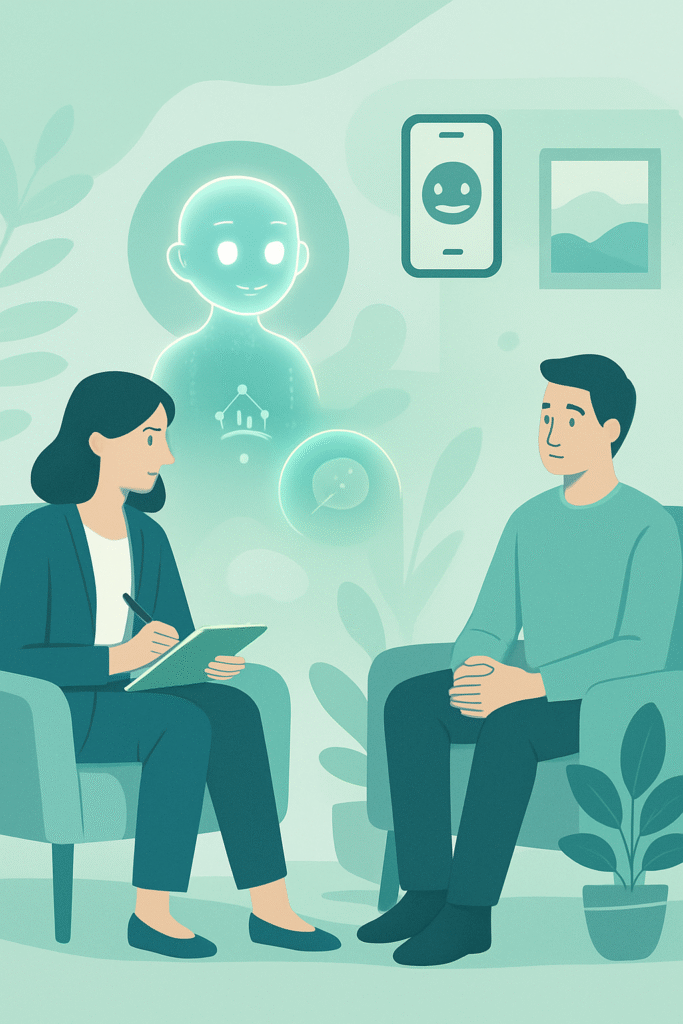
Quand l’IA intervient… et quand elle franchit les limites Ces derniers mois, les chatbots d’IA comme ChatGPT ont gagné en popularité comme source de soutien en santé mentale, grâce à leur accessibilité, leur coût réduit et leur réactivité immédiate. Bien que ces outils puissent offrir une aide précieuse, des incidents préoccupants ont révélé leurs limites et rappelé qu’ils ne sauraient se substituer à des professionnels de santé mentale formés. Des cas réels qui alertent Des événements récents ont mis en lumière les dangers d’une IA non supervisée en santé mentale : Ces exemples rappellent de manière saisissante que, si l’IA peut simuler une empathie, elle manque cruellement de compréhension nuancée, de jugement éthique et de capacité à gérer les crises des compétences intrinsèques à une prise en charge humaine. Les avantages… et l’équilibre nécessaire Malgré ces risques, les outils d’IA présentent des bénéfices réels : Cependant, ces avantages dépendent d’un usage encadré, de limites claires et d’une supervision professionnelle. Risques et enjeux éthiques Les limites de l’IA sont évidentes : Face à ces défis, plusieurs États ont commencé à réglementer l’usage thérapeutique de l’IA, exigeant: Les développeurs ont aussi un rôle clé : Les thérapeutes, quant à eux, doivent : Synthèse : l’IA, un outil et non un remplaçant Les chatbots présentent un potentiel pour élargir l’accès aux ressources en santé mentale, notamment au bénéfice des populations sous‑desservies. Cependant, des événements récents ont souligné les dangers liés à une utilisation non encadrée. Il est donc crucial de mettre en place une régulation appropriée, d’impliquer les cliniciens, d’adopter une conception éthique et de sensibiliser le public, afin que l’intelligence artificielle complète, sans supplanter, la relation humaine, fondement de l’efficacité thérapeutique. Références

French

L’IA et les maladies neurodégénératives : de la détection précoce à des soins plus intelligents et humains

Les maladies neurodégénératives, telles que la maladie d’Alzheimer et la maladie de Parkinson, représentent un défi croissant à l’échelle mondiale, notamment avec le vieillissement des populations. La détection précoce est essentielle : plus ces affections sont identifiées tôt, plus les interventions peuvent être efficaces. L’intelligence artificielle (IA) émerge rapidement comme un allié transformateur pour les cliniciens — non pour remplacer leur expertise, mais pour améliorer la prise de décision, l’efficacité et la qualité des soins centrés sur le patient. Un domaine en pleine expansion : l’IA dans la recherche sur les maladies neurodégénératives La recherche sur les applications de l’IA dans les maladies neurodégénératives a connu une croissance exponentielle au cours de la dernière décennie. Une revue bibliométrique analysant plus de 1 400 publications de 2000 à début 2025 révèle une augmentation significative des études depuis 2017, portée par les avancées en apprentissage profond, réseaux de neurones et intégration de données multimodales. Les États-Unis et la Chine dominent en nombre de publications, tandis que le Royaume-Uni produit les études les plus citées (Zhang et al., 2025). Cette dynamique montre que l’IA n’est plus une innovation lointaine, mais qu’elle redéfinit activement la recherche et la pratique clinique aujourd’hui. Détection précoce : révéler des signaux subtils L’une des contributions les plus prometteuses de l’IA réside dans l’identification précoce des maladies neurodégénératives, souvent avant l’apparition des signes cliniques traditionnels. L’Alzheimer’s Disease Neuroimaging Initiative (ADNI) a démontré que l’application de l’apprentissage profond aux scanners IRM et autres biomarqueurs permet de détecter la maladie d’Alzheimer avec une précision supérieure à 95 %, et les troubles cognitifs légers avec une précision de plus de 82 % (ADNI, 2025). Des revues narratives suggèrent que les modèles multimodaux et longitudinaux surpassent les approches unimodales, offrant des perspectives pronostiques puissantes. Cependant, leur intégration en pratique clinique et l’amélioration de leur interprétabilité restent des défis majeurs pour les chercheurs (Rudroff et al., 2024). L’intelligence artificielle est également appliquée de façon non invasive et innovante. Par exemple, l’imagerie ophtalmologique assistée par IA peut détecter l’amincissement de la couche des fibres nerveuses rétiniennes, un biomarqueur de la maladie de Parkinson, avec une précision diagnostique atteignant une AUC de 0,918 (Tukur et al., 2025). L’intégration de données génétiques, d’imagerie et cliniques via l’IA pourrait révolutionner la détection et la prise en charge, permettant aux cliniciens d’intervenir plus tôt et avec plus de précision (Mikić et al., 2025). Au-delà de la détection : soutenir les cliniciens et améliorer les soins L’apport de l’IA ne se limite pas au diagnostic. Les tâches administratives, en particulier la documentation, contribuent fortement à l’épuisement professionnel des cliniciens, réduisant le temps disponible pour les patients. L’IA permet d’optimiser ces processus. Par exemple, une étude réalisée par le Mass General Brigham a révélé que l’utilisation de systèmes de documentation ambiante assistés par intelligence artificielle diminuait l’épuisement professionnel des médecins de 21,2 %, parallèlement à une amélioration de 30,7 % du bien-être associé à la documentation sur une période de quelques mois (Mass General Brigham, 2025). De même, les assistants de rédaction IA du Permanente Medical Group ont permis d’économiser près de 15 800 heures de documentation en un an, permettant aux cliniciens de se concentrer davantage sur les soins aux patients (Permanente Medical Group, 2025). La Cleveland Clinic a rapporté que l’IA a réduit le temps moyen de documentation de deux minutes par consultation, améliorant les interactions sans compromettre la précision (Cleveland Clinic, 2025). Ces exemples illustrent un principe central : l’IA ne remplace pas les soins humains, mais les renforce, libérant l’énergie mentale des cliniciens pour les aspects relationnels et empathiques de la thérapie. L’IA risque-t-elle de ralentir l’activité clinique ? Certains experts mettent en garde contre une dépendance excessive à l’IA, qui pourrait éroder les compétences diagnostiques ou réduire la transparence des décisions cliniques (Patel, 2025). Pourtant, la neuroscience offre une analogie utile : comme le cerveau s’adapte à la maladie en se réorganisant en réseaux neuronaux plus efficaces, l’IA agit en prenant en charge les tâches répétitives, permettant aux cliniciens de conserver leurs ressources cognitives pour le raisonnement critique, l’empathie et la connexion thérapeutique. Une supervision par des professionnels formés garantit que l’IA reste un outil, et non un substitut. Intégrer l’IA de manière réfléchie et éthique Pour que l’IA tienne ses promesses de manière responsable, certains standards doivent être respectés : Lors de l’instauration de mécanismes de contrôle appropriés, l’intelligence artificielle agit comme un amplificateur de l’expertise humaine plutôt que comme un substitut, en assistant les cliniciens dans la prestation de soins à la fois plus précis, plus efficaces et plus empathiques. Conclusion L’IA transforme progressivement le paysage des soins neurodégénératifs — de la détection précoce et la modélisation prédictive à la réduction de la charge administrative. Son objectif n’est pas de remplacer les cliniciens, mais de les outiller pour détecter les maladies plus tôt, travailler plus efficacement et maintenir une approche centrée sur le patient. En intégrant l’IA de manière réfléchie dans la pratique clinique, nous pouvons préserver l’aspect le plus important de la thérapie : la connexion entre le clinicien et le patient. Références Alzheimer’s Disease Neuroimaging Initiative. (2025). Diagnosis and prediction of Alzheimer’s from neuroimaging using deep learning. Wikipedia. https://en.wikipedia.org/wiki/Alzheimer%27s_Disease_Neuroimaging_Initiative Cleveland Clinic. (2025, August). Less typing, more talking: AI reshapes clinical workflow at Cleveland Clinic. Cleveland Clinic Consult QD. https://consultqd.clevelandclinic.org/less-typing-more-talking-how-ambient-ai-is-reshaping-clinical-workflow-at-cleveland-clinic Mass General Brigham-led study. (2025, August 21). Ambient documentation technologies reduce physician burnout and restore ‘joy’ in medicine. Mass General Brigham Press Release. https://www.massgeneralbrigham.org/…burnout Mikić, M., et al. (2025). Public hesitancy for AI-based detection of neurodegenerative disorders. Scientific Reports. https://www.nature.com/articles/s41598-025-11917-8 Patel, A. (2025). The case for slowing down clinical AI deployment. Chief Healthcare Executive. https://www.chiefhealthcareexecutive.com/…deployment-viewpoint Permanente Medical Group. (2025, June). AI scribes save 15,000 hours—and restore the human side of medicine. AMA News Wire. https://www.ama-assn.org/…medicine Rudroff, T., Rainio, O., & Klén, R. (2024). AI for the prediction of early stages of Alzheimer’s disease from neuroimaging biomarkers—A narrative review of a growing field. arXiv. https://arxiv.org/abs/2406.17822 Tukur, H. N., et al. (2025). AI-assisted ophthalmic imaging for early detection of neurodegenerative diseases. International Journal of

French

HUMAIN AI : L’Arabie Saoudite franchit un cap dans l’intelligence artificielle en arabe

Dans le monde en constante évolution de l’intelligence artificielle (IA), la langue a toujours représenté bien plus qu’un simple outil de communication : elle constitue un véritable pilier culturel. Or, jusqu’à récemment, la majorité des systèmes d’IA de grande envergure étaient dominés par l’anglais et d’autres langues largement diffusées, laissant les communautés arabophones sous-représentées. Ce déséquilibre a engendré des défis non seulement dans l’usage quotidien de l’IA, mais également dans ses applications éducatives, cliniques et professionnelles au sein du monde arabe.L’Arabie saoudite a récemment franchi une étape décisive dans la réduction de cette disparité en lançant HUMAIN AI, un modèle de langage de grande taille innovant, conçu spécifiquement pour l’arabe et développé dans le Royaume. Ce lancement dépasse la simple prouesse technologique : il incarne une vision plus large de souveraineté numérique, de préservation culturelle et d’autonomisation des communautés arabophones à l’échelle mondiale. Pourquoi HUMAIN AI est important Inclusivité linguistique. L’arabe, cinquième langue la plus parlée dans le monde avec plus de 400 millions de locuteurs, a longtemps été marginalisé dans le domaine de l’IA. HUMAIN AI place cette langue au centre du développement technologique en intégrant l’arabe standard (fuṣḥā), les dialectes régionaux et leurs nuances culturelles.Autonomie régionale en IA. HUMAIN AI illustre une innovation locale qui réduit la dépendance aux systèmes occidentaux. Il positionne l’Arabie saoudite comme un acteur majeur de la recherche et du développement en IA au Moyen-Orient, en cohérence avec la stratégie Vision 2030 visant la transformation numérique.Applications cliniques et éducatives. Pour les professionnels de la santé, de l’éducation et de la rééducation — tels que les orthophonistes, psychologues, enseignants ou ergothérapeutes — HUMAIN AI pourrait devenir un outil transformateur. Il pourrait, par exemple, soutenir les interventions en littératie arabe, générer des contenus éducatifs culturellement adaptés ou encore aider les cliniciens à concevoir des supports thérapeutiques dans le dialecte natif de leurs patients. Des applications au-delà de la technologie Le potentiel de HUMAIN AI s’étend à de multiples secteurs : Éducation : création de plateformes d’apprentissage adaptatif en arabe, renforcement des compétences en littératie et en compréhension, tout en mettant à disposition des enseignants des ressources pédagogiques contextualisées.Santé et thérapie : développement d’outils numériques accessibles et culturellement adaptés, en particulier en orthophonie, où la structure linguistique et phonologique joue un rôle central.Entreprises et gouvernements : amélioration des services de traduction, de communication et de relation client pour les marchés arabophones, tout en réduisant la dépendance vis-à-vis de systèmes non centrés sur l’arabe.Culture et médias : soutien aux industries créatives arabes grâce à la génération de littérature, de poésie et de contenus médiatiques valorisant la richesse linguistique. Promesses et responsabilités Comme tout système d’IA, HUMAIN AI soulève des interrogations éthiques et pratiques majeures : Comment limiter les biais dans les données d’entraînement, notamment entre les divers dialectes arabes ?Quelles garanties assureront la fiabilité des réponses dans des domaines sensibles comme la santé ?Comment concilier innovation rapide et utilisation responsable ?Ces enjeux sont d’autant plus cruciaux que les systèmes d’IA influencent déjà des populations vulnérables, telles que les enfants, les patients ou les personnes présentant des troubles d’apprentissage. Perspectives Le lancement de HUMAIN AI ne représente pas seulement une avancée locale ; il constitue également un signal adressé à la communauté internationale de l’IA : les voix arabes doivent être entendues. En plaçant la langue, la culture et l’inclusivité au cœur de son développement, l’Arabie saoudite affirme un rôle de premier plan dans la redéfinition des équilibres linguistiques et culturels de l’intelligence artificielle.Pour les thérapeutes, enseignants et professionnels de la santé mentale, les perspectives ouvertes sont considérables. Une IA conçue nativement en arabe pourrait offrir des outils plus accessibles, des ressources enrichies et un ancrage culturel plus solide entre technologie et accompagnement humain.À mesure que HUMAIN AI évoluera, il sera essentiel d’observer sa capacité à s’intégrer dans la thérapie, l’apprentissage et la vie quotidienne du monde arabe. Ce modèle pourrait devenir un pilier, non seulement de l’usage de l’IA, mais aussi de l’affirmation d’une intelligence artificielle qui parle

French

GPT-5 et la thérapie : ce que cette nouvelle avancée de l’IA pourrait signifier pour notre pratique

Il n’a fallu que quelques jours après la sortie de GPT-5 par OpenAI pour que l’internet soit déjà rempli d’exemples surprenants, parfois même insolites, de ce que les gens réussissent à en faire. Du beatboxing à la conception de jeux, les premières démonstrations montrent à quel point ce modèle de nouvelle génération est puissant et polyvalent. Mais au-delà de ces expériences ludiques, que signifie cette évolution pour nous, orthophonistes, ergothérapeutes, psychologues et enseignants ? Les mêmes fonctionnalités qui permettent à GPT-5 de créer de la musique ou des jeux pourraient-elles également soutenir notre travail quotidien auprès des enfants et des familles ? Explorons quelques usages déjà évoqués et imaginons-les dans un contexte thérapeutique. Musique, rythme et entraînement à la prosodie Un exemple marquant concerne la capacité de GPT-5 à générer un rythme de beatbox. Cela peut sembler n’être qu’un divertissement créatif, mais les implications thérapeutiques sont réelles. La recherche montre que l’engagement musical et rythmique peut soutenir la prosodie, la fluidité et les compétences de communication sociale chez les enfants avec TSA ou trouble développemental du langage (Sharda et al., 2018). Imaginez pouvoir créer instantanément des pistes rythmiques adaptées à un enfant pour l’entraînement du rythme syllabique ou des schémas d’accentuation — GPT-5 rend cela possible. Construction interactive et raisonnement spatial Un autre utilisateur a conçu, avec GPT-5, un éditeur de construction procédurale permettant de déplacer, redimensionner et transformer des objets. En thérapie, des outils similaires pourraient renforcer les fonctions exécutives, la planification et les compétences de raisonnement spatial. Les enfants avec TDAH, par exemple, bénéficient souvent d’activités structurées et manipulatives qui stimulent la mémoire de travail et les capacités de séquençage (Diamond, 2013). Plutôt que d’utiliser des fiches statiques, les thérapeutes pourraient proposer des tâches interactives, pilotées par l’IA, qui s’adaptent en temps réel aux réponses de l’enfant. Transparence et confiance envers l’IA Un progrès majeur réside dans la meilleure gestion de l’incertitude par GPT-5. Contrairement aux modèles précédents, il reconnaît plus ouvertement lorsqu’il ne connaît pas une réponse, réduisant ainsi les « hallucinations ». Pour nous, cela améliore la fiabilité de l’IA comme soutien à la prise de décision clinique, à la communication avec les parents ou même à la recherche académique. La confiance est essentielle — et GPT-5 va dans la bonne direction. Gamification et motivation Des jeux complets, allant des « goblin shooters » à des clones de Pokémon, sont déjà générés par GPT-5. Cela peut sembler anecdotique, mais la gamification est un levier puissant en thérapie. Les études montrent que les jeux numériques peuvent améliorer de manière significative l’engagement et la motivation des enfants présentant un TSA, une dyslexie ou d’autres difficultés d’apprentissage (Whyte et al., 2015). Avec GPT-5, les thérapeutes pourraient créer en quelques minutes des jeux personnalisés — intégrant des cibles lexicales, des scénarios sociaux ou des questions de compréhension — le tout sous une forme ludique et motivante. Entraînement cognitif et rééducation Un autre constat frappant concerne la performance de GPT-5 en programmation compétitive, où il surpasse largement d’autres modèles d’IA. Or, la programmation n’est rien d’autre qu’un enchaînement de résolutions de problèmes — un pilier de nombreux programmes de rééducation cognitive pour adolescents et adultes avec atteintes neurologiques. La capacité de GPT-5 à générer des activités de résolution de problèmes structurées, mais stimulantes, pourrait être adaptée en thérapie pour travailler les fonctions exécutives, la mémoire de travail et la flexibilité cognitive. Avancer avec prudence : opportunités et limites Il est facile de s’enthousiasmer pour GPT-5, mais en tant que professionnels nous devons garder un équilibre entre enthousiasme et prudence : Conclusion Les premiers usages « insolites » de GPT-5 montrent que l’IA n’est plus seulement un outil de soutien en arrière-plan. Elle devient un véritable partenaire créatif — capable de générer musique, jeux, activités de résolution de problèmes et expériences interactives. Pour les thérapeutes et les éducateurs, cela ouvre la voie à des approches plus personnalisées, engageantes et adaptatives. Notre défi est désormais de canaliser cette puissance de manière réfléchie, en l’ancrant dans la science, l’éthique et l’empathie. Si nous y parvenons, GPT-5 pourrait nous aider à réinventer la thérapie pour la prochaine génération.

English

ChatGPT’s Latest Updates: Email Integration, Smarter Tools, and What It Means for Therapy Professions

ChatGPT has evolved significantly in recent months. From a powerful language assistant, it’s now becoming a fully integrated tool for productivity and clinical support. The latest releases—including robust email link capabilities, enhanced voice interactions, and improved reasoning models—offer real benefits to professionals in speech-language pathology (SLP), occupational therapy (OT), and psychology. 1. Email Linking & Productivity Plugins One of the most impactful updates is the ability to link ChatGPT with your email and other applications using tools like Zapier and new productivity integrations. Through ChatGPT’s email plugins, you can: This streamlines administrative workflows—an important gain for SLPs, OTs, and psychologists who often juggle paperwork, session planning, and caregiver communication. According to Sendboard, tools like Zapier plug-ins enable automation directly within ChatGPT, without requiring coding skills 2. Advanced Reasoning with o3‑pro Released in June 2025, o3‑pro enhances ChatGPT’s reasoning power. It’s stronger than earlier models and can handle complex multi-step tasks such as generating therapy plans, interpreting assessment data, or crafting detailed psychoeducational handouts For therapists, that means greater reliability and precision when using ChatGPT for: While responses may take slightly longer, the improved reliability in domains like science, coding, and detailed planning is well worth it 3. Enhanced Voice Mode Recent updates to Advanced Voice Mode have made ChatGPT’s spoken responses more natural and expressive—complete with nuanced intonation and empathetic tones. It also supports live translation between languages, expanding accessibility for non-native speakers. This opens up exciting opportunities for clinicians: These voice interactions make ChatGPT feel more conversational and human—ideal for therapeutic training, client role play, or voice modeling. 4. Smarter Projects & Context Management ChatGPT’s Projects feature, updated in June, now supports “deep research,” file uploads, and conversation sharing This allows clinicians to maintain context over long-term work—such as ongoing case notes, client resources, and clinical research—in a single workspace. For therapists: Overall, this supports richer case continuity and collaborative workflows. How Therapists Are Using ChatGPT in Smarter Ways Beyond emails and worksheets, ChatGPT’s newest updates—like memory, Projects, and advanced voice—unlock more dynamic clinical uses. Here are 5 smart ways SLPs, OTs, and psychologists are using AI in their practice: 1. Realistic Simulation for SupervisionUse ChatGPT to role-play challenging scenarios—like a child resisting transitions or a parent coping with difficult news. Great for training interns in safe, reflective ways. 2. Culturally Adapted Therapy ContentQuickly adapt stories, scripts, or visuals to reflect your client’s culture, language, or religion—boosting engagement and inclusion, especially for multilingual or neurodivergent clients. 3. Internal Script CoachingHelp clients build better self-talk for anxiety, transitions, or emotional regulation. Save and reuse personalized coping scripts across sessions for reinforcement. 4. Environment & Behavior Pattern AnalysisUpload photos or logs and ask ChatGPT to flag sensory challenges, behavior triggers, or inconsistencies across therapy settings—combining your insights with scalable pattern support.5. Assistive Tech Guides for FamiliesBreak down AAC options or executive function tools into family-friendly, visual guides. This empowers parents and teens to make informed, confident choices

English

From Trend to Therapy: What the Latest AI Innovations on Instagram Mean for SLPs, OTs, and Psychologists

Artificial intelligence (AI) is dominating social media platforms like Instagram, where rapid-fire reels, demos, and viral posts showcase exciting new AI-powered tools and breakthroughs daily. For therapists—speech-language pathologists (SLPs), occupational therapists (OTs), and psychologists—these trends offer a glimpse into the future of clinical practice. But with the constant flood of AI hype, how do you separate fleeting fads from game-changing innovations? More importantly, how can you leverage these latest AI trends to enhance your therapeutic impact ethically and effectively? This article unpacks the most viral AI updates currently buzzing on Instagram, translating them into practical insights for therapy professionals. 1. AI-Powered Video and Movement Analysis: Next-Level Remote Assessment One of the most exciting AI trends gaining traction on Instagram is real-time video analysis tools that track facial expressions, speech articulation, and fine motor movements. These tools use machine learning to provide detailed, objective data on client performance, even from recorded or live video sessions. For SLPs and OTs, this means more precise assessment and progress monitoring without needing in-person observation every time. Imagine AI algorithms flagging subtle changes in a client’s articulation or motor coordination patterns that might otherwise go unnoticed. While these platforms are still emerging and need clinical validation, they represent a promising adjunct for teletherapy and hybrid models—especially valuable given the increase in remote service delivery post-pandemic. 2. Chatbots and Virtual Assistants That Understand Emotion and Context Instagram reels are buzzing with AI chatbots demonstrating near-human conversational flow and emotional sensitivity. Advanced natural language processing (NLP) models now recognize not just words but the tone and emotional intent behind them. For psychologists and SLPs working on social skills, motivation, or emotional regulation, these AI-driven conversational agents can serve as engaging, low-stakes practice partners outside sessions. They offer clients opportunities to rehearse challenging conversations or receive immediate, non-judgmental feedback on communication attempts. However, it’s critical to view these tools as supplementary aids rather than replacements for human connection and clinical judgment. 3. Creative Content Generation: Saving Time, Boosting Engagement Social media trends highlight AI tools that instantly generate text, visuals, and even audio content tailored to user needs. Therapists can harness this to create culturally adapted stories, visual schedules, relaxation scripts, or interactive worksheets in minutes. For example, AI can transform a generic narrative retell task into a culturally relevant story for diverse client populations or produce calming mindfulness scripts aligned with a client’s language and spiritual background. By automating these time-consuming tasks, therapists free up more time to focus on individualized clinical work and relationship building. 4. Ethical Considerations: What Social Media Often Misses While Instagram showcases the shiny potential of AI, it rarely highlights the ethical complexities. Many trending AI tools operate with limited transparency on data privacy, algorithmic bias, and inclusivity. Therapists must critically evaluate new AI products by asking: Navigating these concerns ensures AI enhances care without inadvertently perpetuating inequities or privacy violations. 5. Staying Updated Without Overwhelm: Curate Your AI Learning With AI news flooding social media daily, it’s easy to feel overwhelmed or distracted by hype. To stay informed and clinically relevant: This intentional approach helps therapists keep pace with AI innovation without burnout or misinformation. Conlusion Instagram’s fast-moving AI trends reveal a dynamic future where therapy and technology increasingly intersect. By understanding and critically engaging with these viral updates, SLPs, OTs, and psychologists can adopt AI tools that truly enhance client care—balancing innovation with ethics and empathy. As AI evolves, therapists who blend technical curiosity with clinical wisdom will be best positioned to harness its full potential for meaningful, inclusive, and effective therapy.

English

From Policy to Practice: How Therapy Clinics Across Europe Are Implementing the EU AI Act

The EU Artificial Intelligence Act (Regulation 2024/1689), passed in June 2024, is already reshaping how AI is used in therapy. While the legislation outlines clear rules for transparency, risk classification, data governance, and human oversight, the real test lies in how clinics across Europe are putting these principles into action. Clinicians—especially those working in neurodevelopmental, rehabilitative, and mental health services—are asking a vital question: How do we comply with new AI regulations while preserving the human-centered nature of therapy? Translating Regulation Into Clinical Reality Across Europe, clinics are moving from high-level compliance to day-to-day operational changes in how AI tools are selected, monitored, and disclosed. In Belgium, for instance, a pediatric neurorehabilitation center has adopted a formal internal review process. Before any AI-assisted tool is used with children, teams assess the system’s training data, analyze its outcomes across diverse populations, and require therapists to demonstrate understanding of the AI model’s functionality and limits. These steps go beyond mere legal checklists. Under the AI Act, many digital therapy tools—including those used for speech analysis, attention monitoring, or adaptive content delivery—fall into the “high-risk” category. This classification requires clinics to apply standards of robustness, explainability, and human oversight (European Union, 2024). As a result, some clinics now treat AI tools like they would Class II medical devices: requiring structured evaluation, documentation, and clinician sign-off before use. Training the Clinician, Not Just the Tool In Denmark, a national therapy center network has launched mandatory AI ethics workshops. These don’t aim to turn therapists into data scientists but to equip them with foundational AI literacy. Therapists learn to ask critical questions: This emphasis on reflective practice aligns with WHO recommendations (2024), which stress that clinicians—not algorithms—must remain the final decision-makers. AI can suggest, but it cannot interpret. A fluency tracker may flag increased pause time, but it’s the therapist who determines whether the change reflects anxiety, illness, or simply a noisy environment. Training also now includes simulated case studies. For instance, therapists might explore how two similar speech samples receive different AI scores and must trace the model’s reasoning—a process that builds their confidence in evaluating AI reliability and limitations (Schubert et al., 2025). Embedding Transparency Into Client Care Clinics in the Netherlands, France, and Germany are leading on transparency. Informed consent now includes plain-language disclosures when AI tools are involved. Families are told if AI contributes to scoring, tailoring interventions, or flagging areas of concern. This kind of transparency, especially in pediatric and disability services, builds trust and satisfies Article 52 of the Act: patients have the right to know when AI is influencing care (European Union, 2024). Some platforms are going further: In the Netherlands, a widely used SLP support app now includes pop-up explanations showing how progress scores are generated and interpreted. This allows families to discuss uncertainties with therapists and contribute to decisions, rather than passively accepting algorithmic output. Addressing Access and Digital Equity While AI tools can optimize therapy, they may also widen the digital divide. In response, clinics in Poland, Slovakia, and Hungary are piloting hybrid care models—combining traditional therapy with AI-supported modules that require minimal hardware or bandwidth. These systems use offline-first design, printable practice modules, or text-based feedback to serve rural or low-resource areas. Furthermore, multilingual and cross-cultural validity is becoming a focus. As Pérez and Cheung (2025) point out, many existing AI tools have poor generalization beyond English or neurotypical data. SLPs and OTs across Europe are beginning to collaborate with developers to improve training datasets, ensuring tools work equitably across languages, dialects, and developmental profiles. Accountability and Oversight in Action Traceability—a core principle of the EU AI Act—is being operationalized via updated clinical documentation. In a multidisciplinary clinic in Munich, therapists now log every AI-assisted decision, whether in assessment, goal-setting, or therapy delivery. This includes: These records serve not only legal protection but also longitudinal quality review. For instance, if an AI tool routinely flags phonological issues in bilingual children where clinicians find none, the system may require retraining or discontinuation. As Topol (2024) emphasizes, human oversight is not a safeguard—it’s a necessity. Emerging Lessons from Early Implementation From these clinic-led efforts, several themes are emerging: AI as a Partner, Not a Replacement The EU AI Act is more than a regulatory hurdle—it’s a catalyst for ethical, inclusive innovation. By mandating transparency, clinician oversight, and data accountability, it challenges the therapy field to move slowly and wisely, even amid rapid technological change. European clinicians are not just adapting to AI—they are shaping it. By speaking up about equity gaps, demanding better training data, and insisting on tools that reflect clinical nuance, therapists are reclaiming their role as co-creators, not passive users. The future of AI in therapy will not be about automation—it will be about augmentation, grounded in clinical judgment and compassionate care. Coming Next How clinics are designing therapist-led systems to evaluate and audit AI tools—without overwhelming paperwork or technical complexity. To find out more join our AI webinars for therapists! go to Courses to find out more details! References

English

From Theory to Therapy: Clinicians Are Already Using AI—Without Losing the Human Touch

AI in Clinical Care—Already Here, Already Changing Practice Artificial Intelligence is no longer theoretical. It’s embedded in our therapy rooms, electronic records, and clinical tools. From speech-language pathology to neuropsychology, AI is reshaping how we assess, document, and intervene. The question is no longer whether therapists will use AI—but how they’re doing so already, and how to do it responsibly without compromising therapeutic presence or judgment. As highlighted in our previous issue, AI is influencing not only our tools, but our decisions. Many clinicians now use AI-supported platforms—sometimes unknowingly—raising important questions about transparency, ethics, and outcomes. Schubert et al. (2025) remind us that moving from passive use to informed application requires structured education. Knowing how AI works isn’t enough; we need to understand how to reason with it, critique it, and lead its ethical use. Where AI Is Already Supporting Therapy In real-world practice, AI is already making a difference: Jha and Topol (2024) note that such tools are improving efficiency in fields reliant on pattern recognition. AI can surface meaningful shifts, propose next steps, and adapt tasks in real time. But it cannot make clinical decisions. An algorithm may detect a phonological pattern or attentional lapse. Yet the therapist must decide: Is this clinically relevant? Is it consistent with the client’s goals, history, or needs? AI can suggest. The therapist must interpret. Why Clinical Judgment Still Leads AI handles large data sets—but it cannot read between the lines. It can’t recognize when a data point reflects fatigue, emotional strain, cultural difference, or an artifact. Clinical work is not just about data. It is about human context, developmental history, motivation, and values. AI cannot weigh competing goals or make value-based decisions. As Schubert and colleagues (2025) propose, responsible AI use develops across three levels: This framework positions clinicians as decision-makers—not passive tool users, but ethical leaders. Personalization Without Losing the Personal AI can make therapy more adaptive. Some apps modify pacing or feedback in real time—slowing exercises during stuttering episodes, or increasing visual prompts for distracted learners. These features enhance responsiveness. But adaptation alone isn’t therapy. It becomes meaningful only when interpreted and guided by a clinician. Therapists remain essential in deciding whether a pattern is significant, whether a tool supports or distracts from the goal, and how to communicate these decisions to clients and families. As Topol (2024) states, AI should inform—not replace—clinical reasoning. Will AI Replace Therapists? Not Likely. Concerns about AI replacing clinicians are understandable—but not supported by current evidence. The World Health Organization (2024) affirms that best outcomes occur when clinicians retain authority and AI acts as a support. AI enhances—not diminishes—the role of skilled professionals. Clinicians with AI literacy are better equipped to: By engaging with AI critically and ethically, therapists remain stewards of care—not spectators to technological change. AI Engagement Doesn’t Require Coding—It Requires Questions You don’t need programming skills to use AI well. But you do need to ask critical questions: Functional AI literacy includes understanding key concepts like algorithmic bias, training data, and model reliability. It also involves separating evidence-based innovation from marketing hype. As WHO (2024) reminds us: clinicians are responsible for the tools they choose, even when the AI is invisible. Coming Next: Evaluating AI Tools Before You Use Them In our next article, we’ll explore how to critically evaluate an AI product before introducing it to clients. With new technologies entering the field monthly, we must remain discerning. We’ll cover: AI can’t replace what makes therapy powerful—but when used well, it can enhance connection, clarity, and compassion. To find out more join our AI webinars for therapists! go to Courses to find out more details! References Jha, S., & Topol, E. J. (2024). Adapting clinical practice to artificial intelligence: Opportunities, challenges, and ethical considerations. The Lancet Digital Health, 6(3), e175–e183. https://doi.org/10.1016/S2589-7500(24)00020-9Schubert, T., Oosterlinck, T., Stevens, R. D., Maxwell, P. H., & van der Schaar, M. (2025). AI education for clinicians. eClinicalMedicine, 79, 102968. https://doi.org/10.1016/j.eclinm.2024.102968World Health Organization. (2024). Ethics and governance of artificial intelligence for health: Guidance and tools. https://www.who.int/publications/i/item/9789240077925

English

Therapy in the Age of AI: Putting the EU AI Act 2024 into Practice

Under the Act, many AI systems used in therapy fall into the high-risk category. This classification demands that these tools meet stringent standards including:• Robust, diverse, and accurate data governance to minimize bias• Transparency so therapists can understand how AI tools generate recommendations• Human oversight to ensure therapists retain full responsibility for clinical judgment• Accountability and auditability, allowing systems to be reviewed and challenged as neededThese requirements safeguard patient welfare and help maintain trust in AI-assisted therapy. What Therapists Need to Ask Before Using AI ToolsBefore integrating any AI-supported tool into your practice, ask yourself critical questions: Is this tool approved under the EU AI Act or local regulations? What kind of data does it use, and where is it stored? Does the algorithm reflect diverse populations? Can you clearly understand and explain how it makes decisions? If the answers are unclear or unsatisfactory, it may be unwise or even unsafe to use that tool in clinical settings. The Irreplaceable Human Element in TherapyDespite the technical advances AI offers, it can never replace the deeply human elements of therapy. Empathy, cultural sensitivity, ethical reasoning, and clinical intuition remain irreplaceable skills that only therapists bring. AI is a powerful assistant—but therapists must continue to interpret AI outputs within the broader context of the client’s needs, ensuring all interventions remain person-centered and ethically grounded. Clear communication with clients about how AI tools are used is also essential to maintain transparency and trust. Collaboration and Digital Equity: Shaping the FutureThe summit highlighted the importance of collaboration between therapists and AI developers. Practitioners provide invaluable insights into real-world challenges and client diversity, helping guide innovation toward tools that are culturally competent, accessible, and effective. For example, speech-language therapists working with multilingual populations can advocate for AI systems that better handle linguistic diversity—a known limitation of many current models.Digital equity is another crucial aspect emphasized during the summit. Many clients face barriers to accessing AI-enhanced therapy due to age, socioeconomic status, disability, or geographic location. Ethical practice demands that therapists:• Offer alternatives for clients without access to AI tools• Educate clients on how to safely and effectively use digital resources• Consider hybrid models combining traditional and AI-supported therapyEnsuring no one is left behind helps make the benefits of AI truly inclusive. Key Updates from the 2025 EU AI SummitIn addition to these points, the 2025 EU AI Summit brought several key updates to light:• AI tools must undergo continuous auditing and improvements to address new risks and biases• Patients now have strengthened rights to be informed when AI plays a role in their care decisions• EU member states are working toward greater regulatory alignment to create a consistent framework across countries• A major focus on “explainable AI” aims to prevent opaque “black-box” algorithms from undermining clinical transparency Looking Forward: AI as a Partner in Ethical TherapyThe EU AI Act and the latest summit remind us that AI should augment therapists’ skills—not replace them. The future of therapy lies in balancing innovative tools with human judgment, ethical integrity, and cultural awareness. As therapists, staying informed about AI’s evolving landscape, critically evaluating tools before adoption, and actively engaging in their development allows us to lead the way in shaping ethical, person-centered AI care. Coming next: A closer look at how therapy clinics across Europe are implementing the EU AI Act in their daily practices—and the lessons we can all learn from their experiences.European Union. (2024). Regulation (EU) 2024/1689 of the European Parliament and of the Council of 13 June 2024 laying down harmonised rules on artificial intelligence and amending certain Union legislative acts (Artificial Intelligence Act). Official Journal of the European Union, L 168, 1–158. https://eur-lex.europa.eu/eli/reg/2024/1689/oj

English

AI in Healthcare Is No Longer Optional—But Are Clinicians Ready?

A recent publication in eClinicalMedicine delivers a timely and urgent message: Artificial Intelligence (AI) is no longer a futuristic concept in healthcare—it is already reshaping clinical practice. From diagnostics and treatment planning to patient communication and workflow optimization, AI is increasingly present in how we work. But with its growing presence comes a vital question: are clinicians truly prepared to use it effectively and responsibly? The answer, for many, is no. Despite the rapid advancement of AI tools, healthcare professionals are often left with minimal training or support in how to use them. We need more than just exposure—we need structured, role-specific education that equips clinicians to understand, evaluate, and apply AI in a way that prioritizes patient safety and clinical integrity. A Practical Framework for AI Competency The article proposes a three-level framework for AI competency among clinicians—offering a roadmap for growth regardless of experience or specialty. At the basic level, clinicians should be able to use AI tools already integrated into their systems with confidence and safety. This includes knowing when an AI recommendation is helpful—and when clinical judgment must override it. The proficient level goes deeper, requiring the ability to critically assess AI outputs, recognize and explain ethical risks, and communicate clearly with patients about how AI is influencing their care. It’s about transparency and accountability. At the expert level, clinicians are not just users of AI—they become collaborators. They work with developers, contribute their field experience to guide innovation, and play an active role in shaping tools that reflect clinical realities rather than abstract models. No Need to Code, But a Need to Understand Clinicians don’t need to be programmers. But they do need to understand the foundations of how AI works: how it is trained, where bias can enter, and how outputs are generated. Without this understanding, there’s a risk of misuse—or worse, harm. Patients trust us to explain the care they’re receiving, including the role of AI. That means we must be able to break down complex processes into language that empowers and informs. Whether we’re discussing a speech analysis tool, a diagnostic prediction model, or a therapy planning assistant, we remain the point of accountability. Why This Matters for Every Health Professional This is especially relevant for therapists, neuropsychologists, educators, and other professionals whose roles may not traditionally intersect with technology. As AI tools begin to assist with assessments, track progress, and even suggest interventions, we need to be prepared. Not only to use these tools, but to recognize their limitations, question their suggestions, and advocate for patients when needed. In addition, AI literacy empowers clinicians to push for better tools. When we can articulate what works—and what doesn’t—we become partners in shaping the future of clinical technology. We ensure that AI evolves with human care at its core. Two More Reasons This Shift Matters First, equity in care is at stake. AI systems are only as good as the data they are trained on, and historical data can carry bias. Clinicians must be equipped to recognize these patterns and intervene when necessary to protect vulnerable populations. Second, the pace of change is accelerating. New tools are being released faster than guidelines can keep up. Without foundational AI knowledge, clinicians may struggle to keep pace—or worse, may become passive users in a system they don’t fully understand. The Shift Is Already Happening—Let’s Lead It Healthcare is undergoing a transformation, and AI is a key driver of that change. But technology alone cannot improve care. It takes knowledgeable, critically-minded clinicians to ensure that AI is used ethically, safely, and meaningfully. Whether you’re a student, a practicing clinician, or an educator training the next generation, this framework offers a roadmap—not just to catch up with the future, but to help lead it. AI is here. Education is not optional. It’s time to prepare—and to take part in shaping what comes next. In our next edition, we’ll explore how therapists across disciplines can begin to integrate AI tools into everyday practice—without losing the human connection that makes therapy so powerful. From digital progress tracking to personalized interventions, we’ll look at what’s already working—and what still needs to improve. Reference: Schubert, T., Oosterlinck, T., Stevens, R. D., Maxwell, P. H., & van der Schaar, M. (2025). AI education for clinicians. eClinicalMedicine, 79, 102968. https://doi.org/10.1016/j.eclinm.2024.102968ScienceDirect

Shopping Cart