
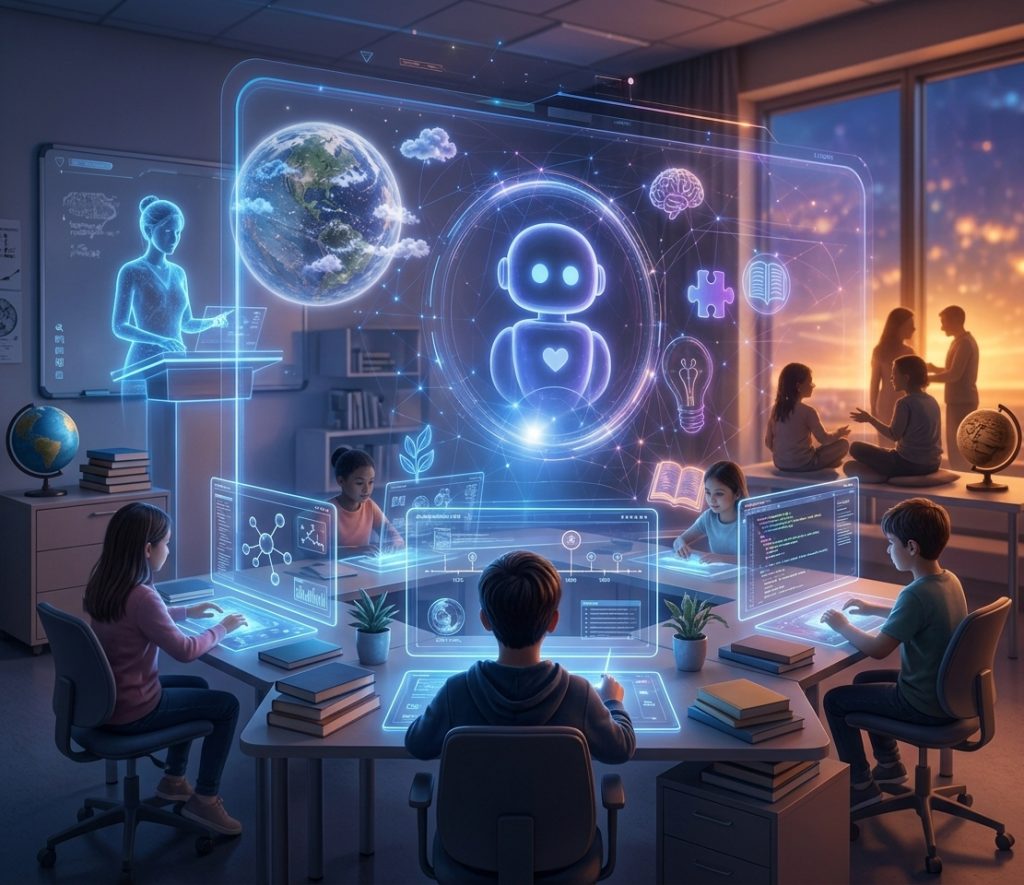
Artificial intelligence is already entering classrooms, universities, and clinical training. Students use it to write, translate, study, and receive feedback, while teachers and therapists may use it to organise information and support learners. Yet the central question is not whether AI will replace teachers, it is how we want AI to fit into education.
Today, different education systems are taking very different approaches. Some schools and education platforms are integrating AI into teaching and learning, while others are restricting or temporarily banning student-facing generative AI. Tools such as Khanmigo by Khan Academy support tutoring, guided learning, lesson planning, and other educational tasks, while MagicSchool helps educators with classroom activities and teaching support. This contrast creates an important debate about whether students should be protected from AI or taught to use it responsibly.
From a therapist’s perspective, education is closely connected to attention, motivation, communication, emotional development, and confidence. AI can provide explanations, generate ideas, and support students with disabilities or language difficulties. However, learners still need opportunities to think independently, make mistakes, communicate, collaborate, and develop their own reasoning.
Assessment may also need to change. A student can submit an impressive AI-generated assignment without truly understanding the ideas. Educators may therefore need to evaluate reasoning, reflection, discussion, and the ability to apply knowledge, not only the final answer.
AI systems can make mistakes, reinforce bias, and misunderstand students from different cultural, linguistic, or social backgrounds. An AI recommendation should never be treated as a diagnosis or final decision. Therapists and educators must consider the individual’s history, environment, communication style, and lived experience.
Privacy and equality are equally important. Not every student has the same access to technology, internet, or guidance. Educational institutions must explain how information is collected and used, while ensuring that AI does not increase discrimination or exclude vulnerable learners.
The debate should not be reduced to “AI or no AI.” We should ask what students need to learn without AI, what they can learn with it, and where human guidance must remain central. Teaching, empathy, creativity, ethical reasoning, and meaningful relationships cannot be replaced by automated answers.
The algorithm is already in the room. We should neither fear it nor follow it blindly. The goal is to help teachers, therapists, students, and AI work together while ensuring that technology supports the learning process.