
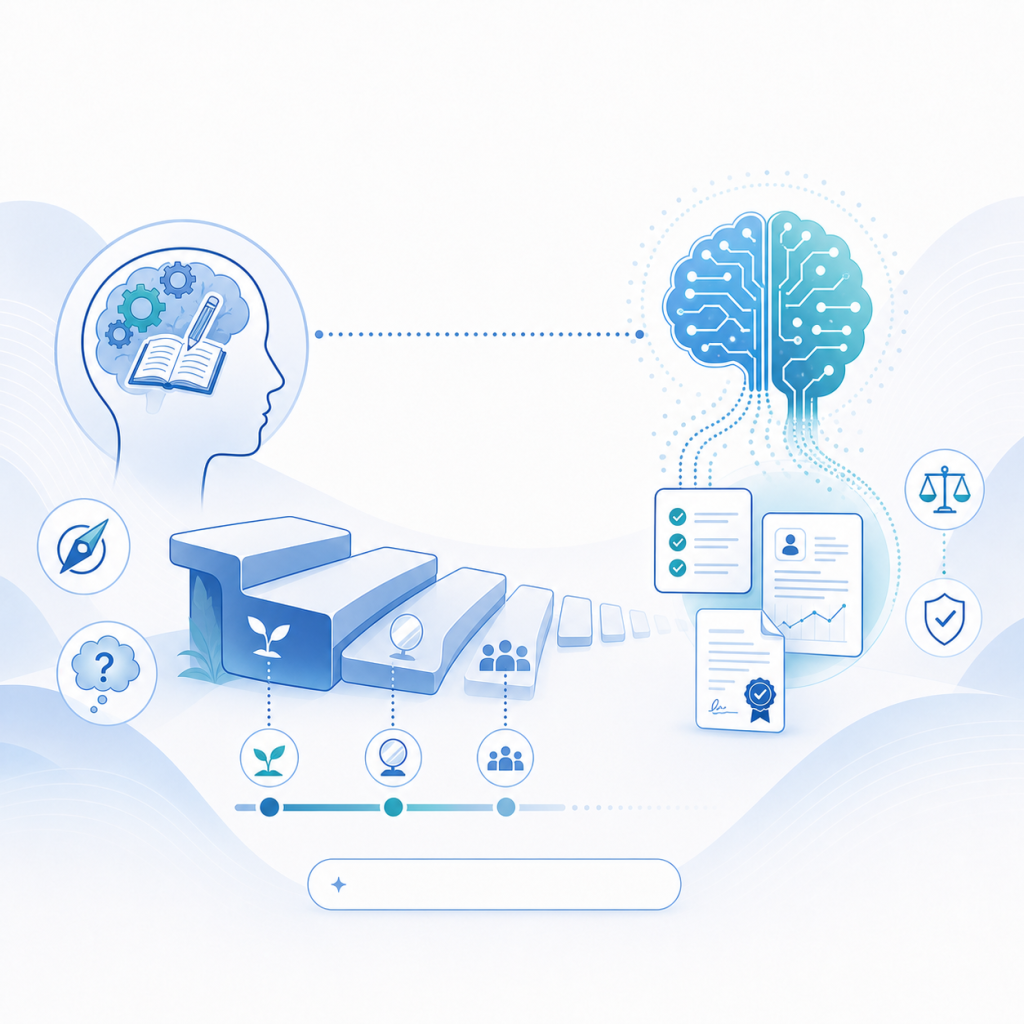
Something subtle is changing in training environments. Tasks that used to belong to beginners, writing first drafts, organizing ideas, suggesting interventions, can now be done quickly with AI. The output often looks polished, even impressive. But it brings up a quiet, uncomfortable question: if these early steps fade away, where does real learning take place?
For a long time, learning a clinical or research role meant going through imperfect stages. You tried, got things wrong, adjusted, and tried again. It could be frustrating at times, but that was part of the process. Those early efforts weren’t just practice, they were where clinical judgment began to form. Gradually, with enough exposure, you started to recognize patterns, sit with uncertainty, and think in more flexible ways.
Now, many of those early tasks can be handled by AI. A study by Dell’Acqua and colleagues (2025), involving 776 employees at Procter & Gamble, showed that one person using AI could reach results similar to an entire team working without it. If this direction continues, it’s not hard to imagine workplaces hiring fewer junior staff and instead looking for people who can do a bit of everything with AI support.
This shift touches something important about how we learn. Psychological research has been clear on this for a while: learning deepens when we are actively involved, especially when we struggle a little, make mistakes, and reflect on them. When that effort disappears, understanding can become thinner. You might arrive at the right answer, but without really grasping how you got there.
In clinical work, that difference matters. It’s not only about reaching a correct conclusion—it’s about the thinking behind it. Take something like writing a case formulation. It asks you to bring together complex pieces, weigh possibilities, and make careful decisions. When an answer is readily available, there’s a risk of relying on it without fully developing that internal process.
At the same time, it’s not all negative. Used thoughtfully, AI can support learning. It can offer alternative perspectives, point out things we might have missed, or even act as a kind of reflective partner. The difference lies in how we use it—whether we stay engaged, question what we see, and compare it with our own thinking, or whether we simply accept what is given.
This also makes assessment more complicated. If someone produces strong work with AI, it becomes harder to tell what they actually understand. Training and supervision may need to shift focus, paying more attention to how people think rather than only what they produce.
There’s a broader concern as well. If fewer entry-level opportunities exist, or if early tasks are largely automated, future clinicians and researchers may have fewer chances to build their skills step by step. Over time, this could shape not just individual careers, but the depth of expertise across the field.
The ethical side remains just as important. Even with AI involved, responsibility does not shift away from the clinician. It still matters to question the output, to understand its limits, and to stay aware of potential biases. Being transparent about how these tools are used is part of maintaining trust.
Similar questions appear in research and training. AI can help with writing or generating ideas, but it cannot replace critical thinking. Keeping that boundary clear is essential if we want to preserve the quality and integrity of the work.
In the end, AI isn’t removing the need for expertise, it’s reshaping how it grows. The challenge now is to create spaces where learning stays active, where curiosity and effort still have a place. What may matter most going forward is not just what we can produce, but how deeply we are still able to think.