
Microsoft has made a new 3D-generation system available as open source. This means that researchers, developers, and studios can access the model, its code, and its training information. They can run it locally and adapt it for different projects. The system can create three-dimensional objects from images and export them for use in programs such as Blender and Unreal Engine.
The system is also very fast. Microsoft reports that it can create a 5123 3D object (a highly detailed 3D model made using a grid of 512 × 512 × 512 small points, called voxels) in about three seconds when using a powerful NVIDIA H100 computer. Larger and more detailed objects may take between 17 and 60 seconds. However, this technology requires expensive equipment, Linux, and an NVIDIA graphics card with at least 24 GB of memory.
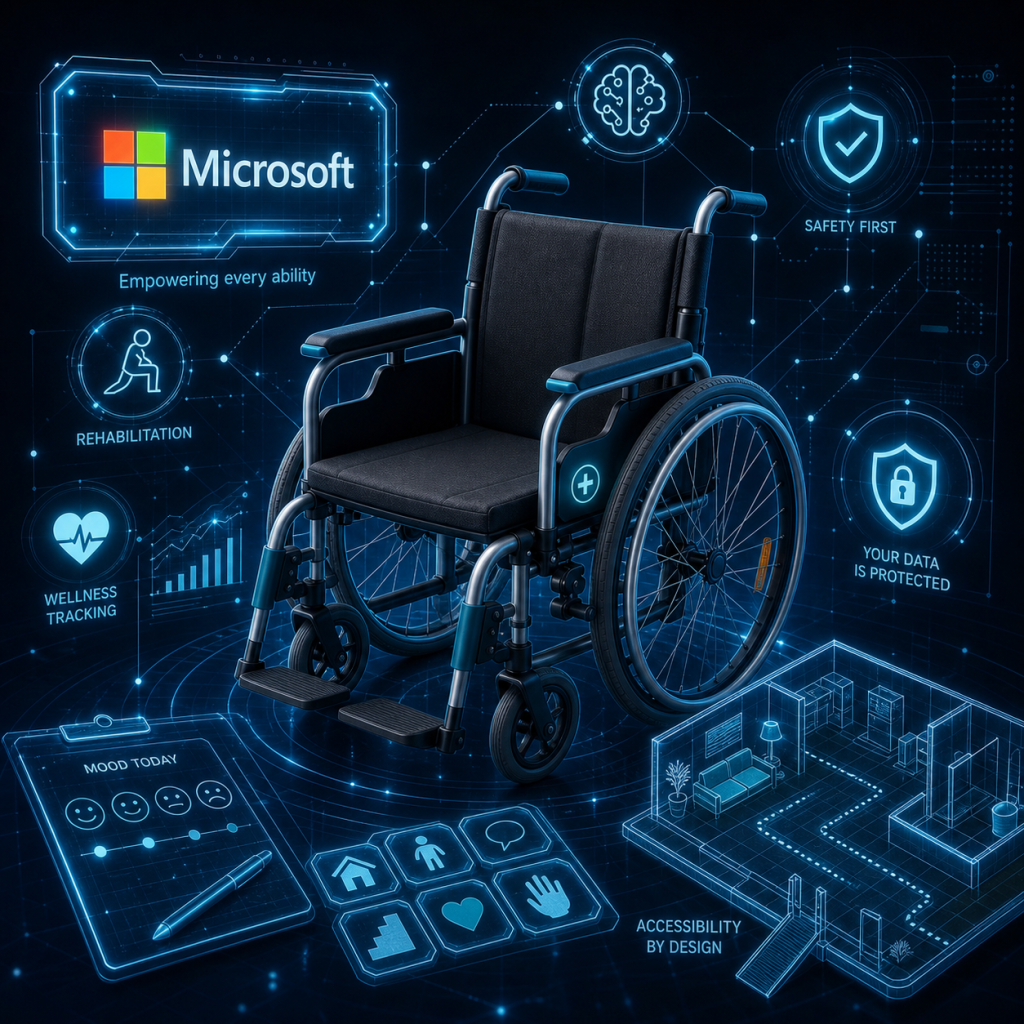
For therapists, 3D generation may provide new ways to create visual and interactive materials. An occupational therapist, for example, could create a model of a chair, kitchen tool, wheelchair, or bathroom. This model could help patients understand safety issues, practise daily activities, or discuss changes to their home environment.
Three-dimensional models may be especially helpful for patients who learn better through pictures and objects than through spoken explanations. Therapists could use them to demonstrate how to hold an object, move through a room, or use an assistive device. This may support children and people with communication, cognitive, or learning difficulties.
The technology could also support education and research. Students and professionals might create virtual homes, workplaces, or community spaces to study accessibility, balance, mobility, attention, and problem-solving. However, a realistic-looking model is not always accurate. AI may create objects with incorrect sizes, shapes, or details, so therapists must check every model before using it.
Open-source access may allow researchers to study the system more carefully and explain how it was used. Nevertheless, open source does not mean that the technology is automatically safe or clinically tested. Results depend on the image, instructions, and editing process. Privacy is also important when using patient photographs, home images, or body scans.
Therapists remain responsible for all professional decisions. AI should support clinical judgment, not replace it. Professionals should record how each model was created, explain AI use when appropriate, protect patient information, and make sure the final material is understandable and suitable for the patient.
Microsoft’s 3D-generation system may become useful in therapy, education, and research. Its value lies in helping professionals create personalised and interactive materials more easily. Safe use will require careful checking, privacy protection, clear documentation, and further research into its benefits and limitations.