
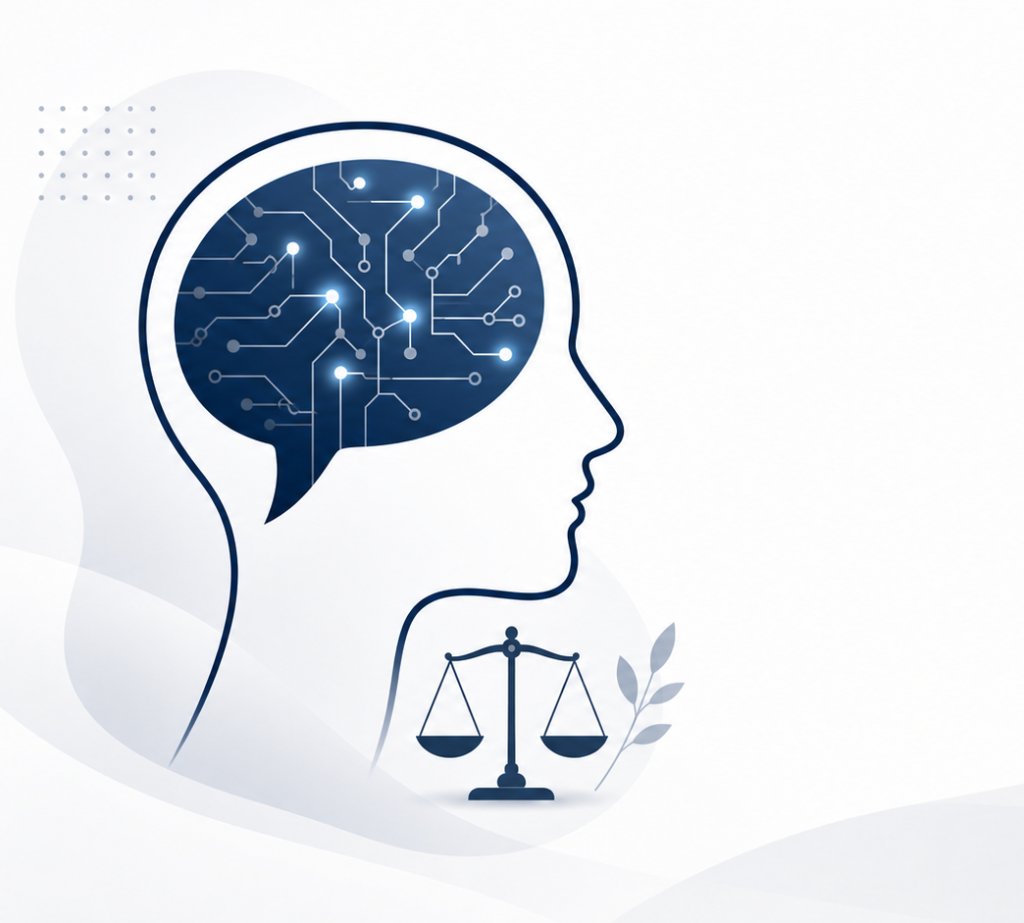
Are we ever going to stop the development of AI? As these systems become increasingly intelligent, a deeper question emerges: when do we decide that enough is enough for humanity?
In May 2026, Pope Leo XIV contributed to this global debate by warning that artificial intelligence must not take moral decision-making out of human hands. While his message speaks broadly, it resonates strongly within clinical practice, where efficiency, innovation, and ethical responsibility are already tightly intertwined.
In everyday care, AI often appears in subtle ways. It summarizes patient histories, drafts reports, or suggests diagnoses. These tools can ease administrative burden, but their influence is not neutral. Over time, they begin to shape how clinicians organize information and approach decisions.
This raises a critical question: where does clinical judgment truly reside? Clinical reasoning has traditionally been a reflective process grounded in human experience and patient interaction. As AI provides ready-made interpretations, there is a growing risk that parts of this reasoning become less deliberate, even if unintentionally.
Responsibility, however, remains fully human. Clinicians are still accountable for evaluating and deciding whether to trust AI-generated outputs. This requires active engagement, asking not only “what does this suggest?” but also “why, and should I rely on it?”
Beyond healthcare, some experts and voices within the AI industry have already called for slowing development, emphasizing the need for society to adapt. The debate is no longer just about capability, but about the pace of integration.
Transparency adds another layer of concern. Many AI systems cannot clearly explain how they reach their conclusions. In clinical care, where decisions must be understandable, this creates tension, especially as patients seek meaning, not just outcomes.
Bias and inequality further complicate the picture. AI systems reflect the data they are built on, which can carry social and cultural biases. At the same time, access to advanced tools remains uneven, raising questions about fairness in care quality.
At its core, the rapid expansion of AI challenges the relational nature of clinical work. Therapy is not just about information, it is about presence, attunement, and human connection. Increasing reliance on AI risks filtering patient experiences through predefined systems rather than fully exploring them.
So the question is not whether AI should continue to develop, but how far it should go without clearer ethical limits. Stopping it is unrealistic, but moving forward without reflection carries real consequences.
For clinicians, this means maintaining an active, critical stance, using AI as support, not substitute, and staying transparent with patients. More broadly, it calls for a collective effort to ensure that innovation does not outpace responsibility.
Ultimately, this is not just a technological shift, but a human one. The challenge is not only to understand what AI can do, but to decide, carefully and consciously, where we choose to draw the line.