
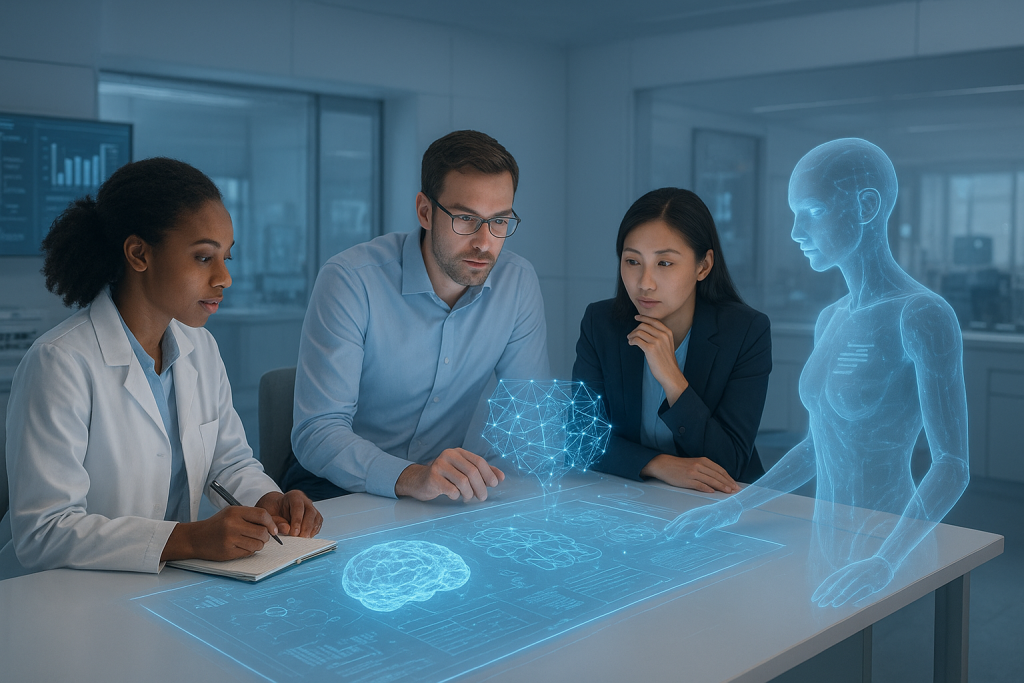
The scientific community stands at the threshold of a transformative shift. By September 2026, OpenAI plans to introduce AI systems capable of functioning as research interns—tools that go beyond simple data analysis to actively assist in literature synthesis, hypothesis generation, and experimental design. This development marks more than just a technological upgrade; it represents the first step toward a future where artificial intelligence becomes an integral partner in the research process. For psychologists, neuroscientists, and educators, this shift could mean faster insights, more efficient studies, and unprecedented opportunities for discovery—but it also demands a fundamental rethinking of how we conduct, validate, and apply scientific knowledge.
The concept of an AI research intern might sound abstract, but its practical applications are both immediate and profound. Consider a clinical psychologist investigating new therapies for anxiety disorders. Today, the process begins with months of literature review, sifting through hundreds of studies to identify gaps and opportunities. An AI intern could accomplish this in hours, not only summarizing existing research but highlighting unexplored connections—perhaps noticing that certain demographic groups respond differently to mindfulness-based interventions, or that combination therapies show promise in understudied populations. From there, the AI might propose specific hypotheses (“Would adding a social skills component improve outcomes for adolescents with comorbid anxiety and autism?”) and even draft preliminary study designs, complete with sample size calculations and methodological considerations. For researchers accustomed to the slow, labor-intensive nature of academic work, this level of support could dramatically accelerate the pace of discovery, allowing them to focus on the creative and interpretive aspects of their work rather than the mechanical.
Yet the introduction of AI interns isn’t just about efficiency—it’s about changing the very nature of research collaboration. Traditional scientific work relies on human intuition, serendipitous connections, and deep domain expertise, qualities that AI currently lacks. The most effective use of these tools will likely emerge from a hybrid approach, where AI handles the repetitive and data-intensive tasks while human researchers provide contextual understanding, ethical oversight, and creative problem-solving. For instance, an AI might identify a statistical correlation between early childhood screen time and later attention difficulties, but it would take a developmental psychologist to interpret whether this reflects causation, confounding variables, or cultural biases in the data. Similarly, in special education research, an AI could analyze vast datasets on reading interventions, but an experienced educator would need to determine how those findings apply to individual students with complex, multifaceted needs.
The integration of AI interns also raises critical ethical and practical questions that the scientific community must address proactively. One of the most pressing concerns is validation. How do we ensure that AI-generated hypotheses are rigorous and reproducible rather than artifacts of flawed data or algorithmic bias? Peer review processes may need to adapt, incorporating AI literacy as a standard requirement for evaluators. Funding agencies might develop new criteria for AI-assisted research, ensuring that proposals leverage these tools responsibly. And journals will face the challenge of authorship and transparency—should AI systems be credited as contributors? If so, how do we distinguish between human-led and AI-driven insights?
Another significant consideration is equity. While AI interns could democratize research by giving smaller labs and underfunded institutions access to powerful analytical tools, they could also exacerbate existing disparities if only well-resourced teams can afford the most advanced systems. OpenAI and similar organizations have a responsibility to prioritize accessibility, perhaps through open-source models or subsidized access for academic researchers. Similarly, there’s a risk that AI systems trained primarily on data from Western, educated, industrialized populations could overlook or misrepresent other groups, reinforcing biases in scientific literature. Addressing this requires diverse training datasets and inclusive development teams that understand the limitations of current AI models.
Perhaps the most profound impact of AI research interns will be on the next generation of scientists. Graduate students and early-career researchers may find themselves in a radically different training environment, where traditional skills like manual literature reviews become less essential, while AI literacy, prompt engineering, and critical evaluation of machine-generated insights grow in importance. Academic programs will need to evolve, teaching students not just how to use AI tools, but how to think alongside them—when to trust their outputs, when to question them, and how to integrate them into a human-centered research process. This shift could also reshape mentorship, with senior researchers guiding juniors not just in experimental design, but in navigating the ethical and practical challenges of AI collaboration.
As we approach the 2026 milestone, the scientific community would be wise to prepare rather than react. Researchers can begin by experimenting with current AI tools, such as literature synthesis platforms like Elicit or data analysis assistants like IBM Watson, to understand their strengths and limitations. Institutions should develop guidelines for AI-assisted research, addressing questions of authorship, validation, and bias mitigation. And perhaps most importantly, we must foster interdisciplinary dialogue, bringing together computer scientists, ethicists, domain experts, and policymakers to ensure that these tools are designed and deployed responsibly.
The arrival of AI research interns isn’t just a technological advancement—it’s a cultural shift in how we pursue knowledge. If we embrace this change thoughtfully, it could liberate researchers from tedious tasks, accelerate meaningful discoveries, and open new frontiers in science. But if we fail to engage with its challenges, we risk creating a system where the speed of research outpaces its quality, where algorithmic biases go unchecked, and where human expertise is undervalued. The choice isn’t between rejecting AI or accepting it uncritically—it’s about shaping its role in a way that enhances, rather than diminishes, the pursuit of truth. The countdown to 2026 has begun; the time to prepare is now.