
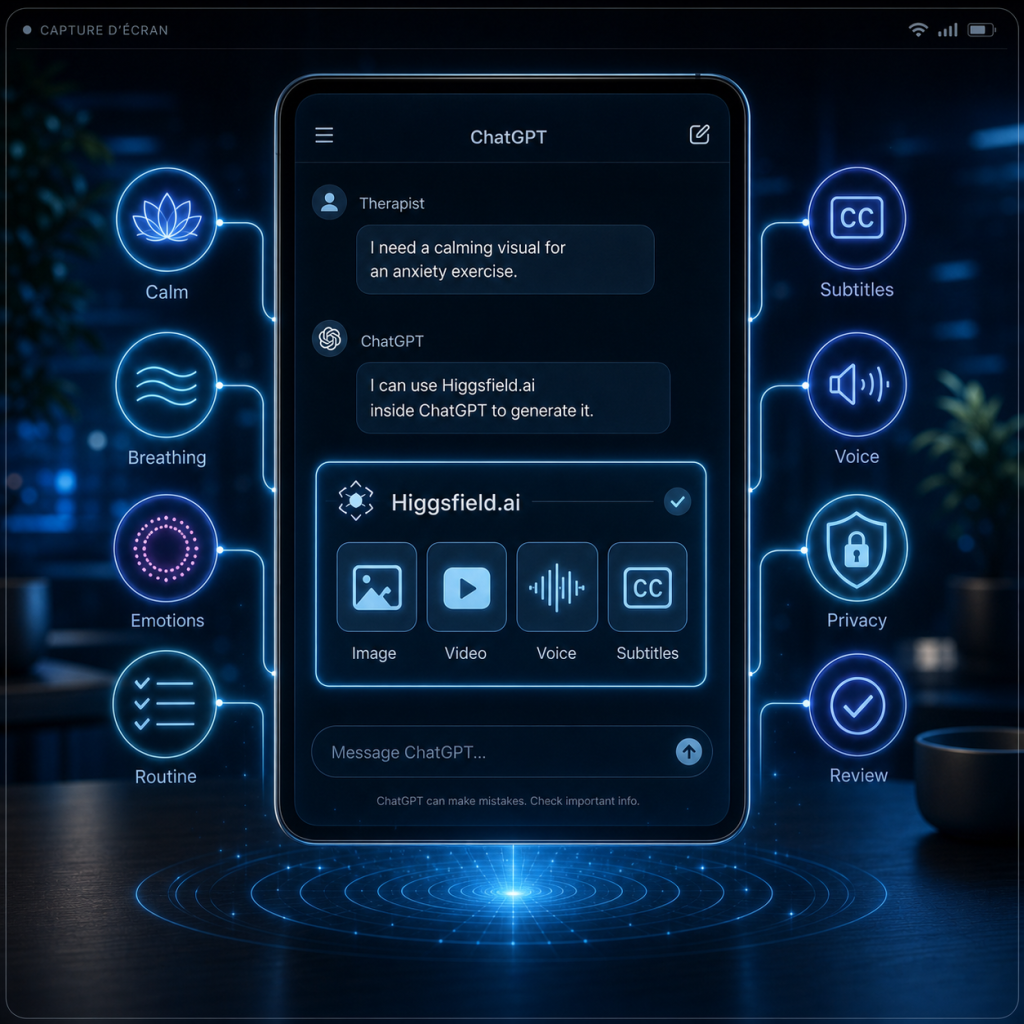
Higgsfield.ai is now available inside ChatGPT, allowing users to create images and videos without moving between different applications. Through a conversation, users can develop visual materials, short videos, voiceovers, and captions. The system can also connect with creative models such as Seedance, Seedream, GPT Image, and Kling, as well as tools for narration, subtitles, and faceless video creation.
One important advantage is that therapists do not need to learn how to use Higgsfield.ai or understand the differences between all the available models. Instead of choosing between different video, image, or narration tools, users can simply describe what they want and provide a clear prompt. ChatGPT can then help select the most appropriate model or option for the requested result. This makes the creative process easier and more accessible, especially for therapists who do not have a technical or video-editing background.
For therapists, this may be useful because many patients understand information more easily when it is presented visually. For example, a therapist working with a child could create a short story about identifying emotions, calming down, or solving a social problem. With an adult patient, the therapist might create a simple visual explanation of anxiety, stress, sleep difficulties, or relaxation techniques.
These tools may also support patients who have communication, learning, attention, or memory difficulties. A visual sequence could show the steps of a daily routine. A narrated video could explain a coping strategy. Subtitles may help patients who have hearing difficulties or who understand written information better than spoken instructions. The material can be adapted to the patient’s age, language level, culture, and therapeutic goals.
However, the quality of the technology does not automatically make the material clinically useful. A video may look professional but still contain confusing, inaccurate, or culturally inappropriate content. Therapists should review every image, video, voiceover, and caption before sharing it with a patient. The material should support therapy, not replace clinical explanation, professional judgment, or the therapeutic relationship.
Higgsfield.ai may also help therapists prepare psychoeducational materials more quickly. A therapist could ask ChatGPT to suggest a simple script, create a visual metaphor, or design a short educational video. This may be especially helpful when preparing materials for children, families, groups, or patients with different learning needs. Still, therapists should use these tools as assistants rather than as independent decision-makers.
Privacy is one of the most important concerns. Therapists should not enter patient names, clinical notes, identifiable photographs, voice recordings, or private personal information into these systems unless the service has been approved by their organization and meets relevant privacy requirements. When possible, therapists should use general examples and fictional characters instead of real patient information.
It is also important to tell patients when a resource has been created with AI. This promotes honesty and helps patients understand that the material is a digital support, not a human-created clinical opinion. Therapists remain responsible for checking the accuracy, safety, and appropriateness of anything they use. AI cannot take responsibility for diagnosis, treatment decisions, informed consent, or possible harm.
Overall, Higgsfield.ai inside ChatGPT may make it easier for therapists to create accessible and engaging materials. Its greatest value is not simply producing attractive videos or images, but helping therapists explain ideas in ways that patients can see, hear, and understand. Used carefully, transparently, and with strong attention to privacy, it can become a useful addition to clinical practice rather than a replacement for professional expertise.