
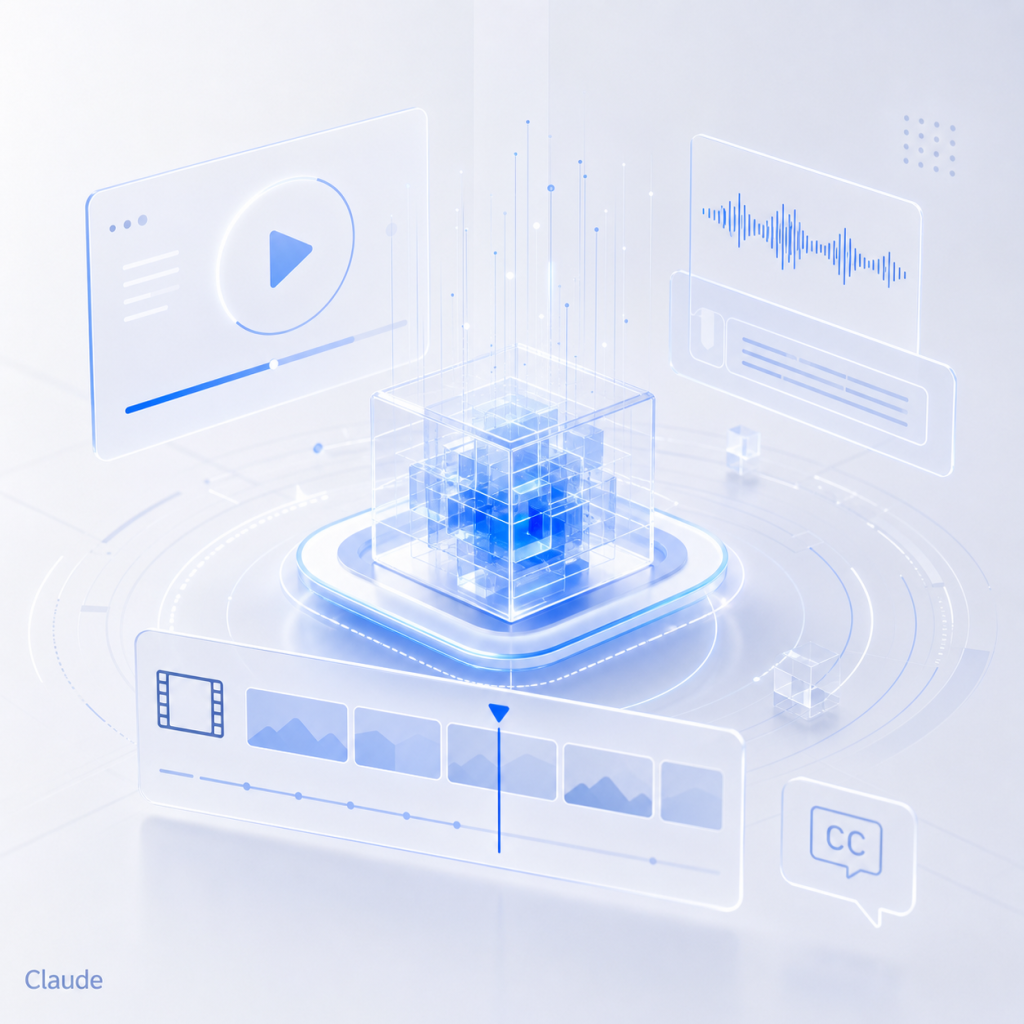
Many clinicians and educators are now expected to create video content, whether for patient education or teaching. For many, editing has always been a barrier—time-consuming, technical, and sometimes overwhelming. New tools built around systems like Claude are starting to make this process feel more manageable.
Recent updates have made this even more noticeable. Claude’s AI agents can now take on larger parts of the editing process, helping structure content and refine videos with less manual effort. For those already using tools like ChatGPT Plus/Pro or Claude Pro, this opens up more advanced and practical ways to work with video.
Another shift comes from tools like Palmier, designed specifically for AI-driven editing. With a single prompt, users can guide the entire video process, trimming clips, reorganizing scenes, adding B-roll, and working directly within a timeline. It feels less like traditional editing and more like guiding the process through conversation.
This changes the workflow in a meaningful way. Instead of focusing on technical steps, you describe what you want to communicate. The system helps shape the structure, visuals, and pacing, and you can refine it through feedback. The process becomes more iterative and less dependent on technical expertise.
From a cognitive perspective, this reduces the load of managing multiple small tasks at once. The detailed mechanics of editing move into the background, allowing more attention to stay on the message itself. For clinicians and researchers, this can make content creation feel more approachable.
In practice, this can be especially helpful. A therapist creating a psychoeducational video can focus on explaining a concept clearly, while the system supports how it is presented. This can ease time pressure and make it easier to produce consistent, high-quality content.
At the same time, these tools don’t replace professional judgment. Decisions about what to include, how to frame information, and what fits a specific audience still rely on human expertise. AI can assist with execution, but it doesn’t fully understand clinical nuance.
There is also a tendency to trust polished outputs too quickly. Even when something looks complete, it still needs careful review. In clinical and educational contexts, small details matter, and accuracy remains essential.
For teams, these tools can support faster collaboration and content development. Ideas can move more quickly from concept to final product. Still, speed shouldn’t come at the expense of reflection or quality.
Limitations are also worth keeping in mind. AI systems are shaped by existing data, which can include gaps or biases. This means outputs may not always reflect diverse perspectives or fully accurate information, making review and adjustment necessary.
Ethically, transparency and responsibility remain key. Understanding how these tools contribute to the final output helps maintain trust and accountability, especially in clinical contexts.
Overall, tools like Claude are making video creation more accessible and less technical. They open new possibilities for communication, while still relying on thoughtful use and professional oversight. Their real value lies in supporting clearer, more effective ways to share knowledge—not replacing the expertise behind it.