Author name: Admin

English

AI in Therapy: Cognitive and Clinical Impacts for Speech, Occupational, Physical, Psychomotor Therapists, and Psychologists

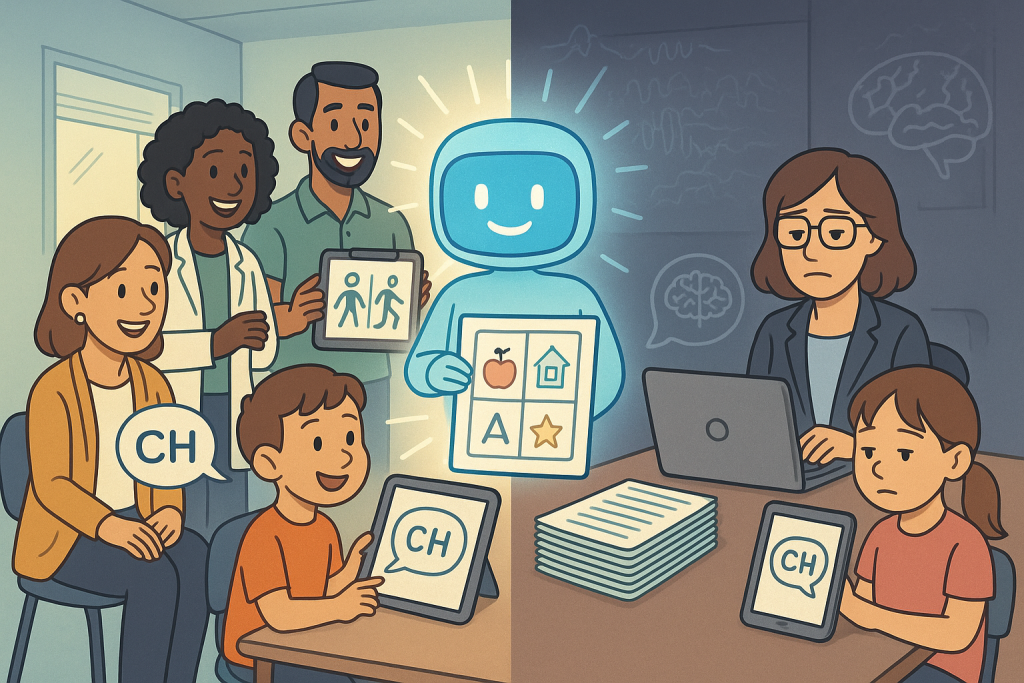
Introduction: AI’s Expanding Role in Therapy Artificial intelligence (AI), especially large language models (LLMs) such as ChatGPT, is rapidly reshaping the landscape of healthcare and therapy. From generating therapy materials and automating documentation to providing real-time feedback and supporting client communication, AI promises greater efficiency, personalization, and accessibility for practitioners across speech therapy, occupational therapy, physical therapy, psychology, and psychomotor therapy. However, as AI becomes more embedded in daily practice, emerging research urges therapists to consider not just the practical benefits, but also the cognitive and clinical implications for both therapists and clients (Kosmyna et al., 2024). Cognitive Engagement: What Happens When We Use AI? Recent experimental research has shown that the way therapists and clients interact with AI tools can significantly affect cognitive engagement and learning outcomes. In a study by Kosmyna et al. (2024), participants were assigned to write essays using either only their own knowledge, a traditional search engine, or an LLM like ChatGPT. EEG brain activity was measured, and participants were interviewed about memory, ownership, and satisfaction with their work. The findings reveal that those who relied on LLMs exhibited the weakest neural connectivity, particularly in brain regions involved in memory, attention, and deep processing. By contrast, participants who used only their own brains demonstrated the strongest, most widespread brain activity, while those using search engines were intermediate. This suggests that LLMs, while effective at reducing immediate cognitive load and making tasks feel easier, may also encourage more passive engagement and less deep processing of information (Kosmyna et al., 2024; Sweller, 2011). Moreover, LLM users reported lower ownership over their work and struggled to recall or quote from their essays, compared to those who used search engines or worked unaided. This impaired memory and reduced sense of authorship may have important implications for therapy, where engagement, self-reflection, and memory are central to progress and learning (Kosmyna et al., 2024). Clinical Implications for Therapy Disciplines For Speech and Language Therapists:AI can generate prompts, exercises, and language models for clients, but over-reliance on these tools may reduce clients’ active participation and expressive language development. The process of generating one’s own ideas and sentences is crucial for language acquisition and memory formation (Kosmyna et al., 2024; Yang et al., 2024). For Occupational and Physical Therapists:AI is increasingly used in physical therapy for movement analysis, remote monitoring, and personalized exercise planning. Wearable sensors and AI-driven platforms can track gait, range of motion, and exercise adherence, providing real-time feedback and automating progress documentation. However, optimal motor learning and transfer to daily life require clients to be actively involved in planning, reflection, and problem-solving. Passive following of AI-generated routines may not engage the cognitive and motor systems as robustly as therapist-guided or self-directed activities (Sweller, 2011). For example, a PT might use AI to suggest a progression of exercises, but the best outcomes occur when clients set goals, reflect on their progress, and adapt routines in collaboration with their therapist. For Psychologists and Psychomotor Therapists:AI tools can assist with psychoeducation, cognitive-behavioral interventions, and emotional support. However, therapists must be vigilant about “cognitive offloading”—the tendency to let AI do the thinking, which can diminish clients’ critical thinking, emotional processing, and self-reflection (Kosmyna et al., 2024; Yang et al., 2024). For All Disciplines:AI-generated documentation and treatment plans can save time, but therapists may feel less connected to these records and may struggle to recall details later. This can impact continuity of care, clinical judgment, and professional satisfaction. Furthermore, the homogenization of AI-generated content risks undermining the creativity and individualized care that are hallmarks of effective therapy (Kosmyna et al., 2024; Niloy et al., 2024). Balancing Benefits and Cognitive Risks AI tools offer clear advantages: they reduce extraneous cognitive load, streamline information retrieval, and can increase productivity (Kosmyna et al., 2024; Sweller, 2011). For PTs, this means more efficient data collection, progress tracking, and even predictive analytics for injury risk or recovery. However, these benefits come with trade-offs. Lower cognitive effort may lead to less deep engagement, weaker memory encoding, and reduced development of problem-solving skills. Studies in educational settings have found that students using AI for writing or programming tasks perform worse on measures of long-term learning, self-efficacy, and creative thinking compared to those using traditional methods (Yang et al., 2024; Niloy et al., 2024). Moreover, the tendency for AI-generated outputs to be more similar to each other—less diverse in language and thought—may limit the range of perspectives and approaches explored in therapy. This is especially concerning in fields that value creativity, individualized care, and holistic understanding of clients (Kosmyna et al., 2024). Practical Recommendations for Therapists Conclusion: Navigating the AI Era in Therapy AI is a powerful tool for therapists, including PTs, but it is not a replacement for the human mind or the therapeutic relationship. The latest research demonstrates that while AI can make tasks easier and more efficient, it may also reduce cognitive engagement, memory, and creativity if overused or used uncritically. Therapists across all disciplines must strive for a thoughtful balance—leveraging AI’s strengths while actively protecting the cognitive, creative, and relational skills that define effective therapy. By doing so, both therapists and clients can continue to grow, learn, and thrive in an increasingly AI-augmented world. References Kosmyna, N., Hauptmann, E., Yuan, Y. T., Situ, J., Liao, X.-H., Beresnitzky, A. V., Braunstein, I., & Maes, P. (2024). Your Brain on ChatGPT: Accumulation of Cognitive Debt when Using an AI Assistant for Essay Writing Task. MIT Media Lab. Sweller, J. (2011). Cognitive Load Theory. Psychology of Learning and Motivation, 55, 37-76. Yang, S., Li, J., & Chen, X. (2024). The Impact of ChatGPT on Student Learning: Evidence from a Programming Course. Computers & Education, 205, 104889. Niloy, S., Rahman, M., & Sultana, S. (2024). Effects of ChatGPT on Creative Writing Skills among College Students. Journal of Educational Technology Development and Exchange, 17(1), 15-28.
English

OpenAI’s Latest ChatGPT Updates: A Leap Forward for Therapists, Educators, and Allied Health Professionals

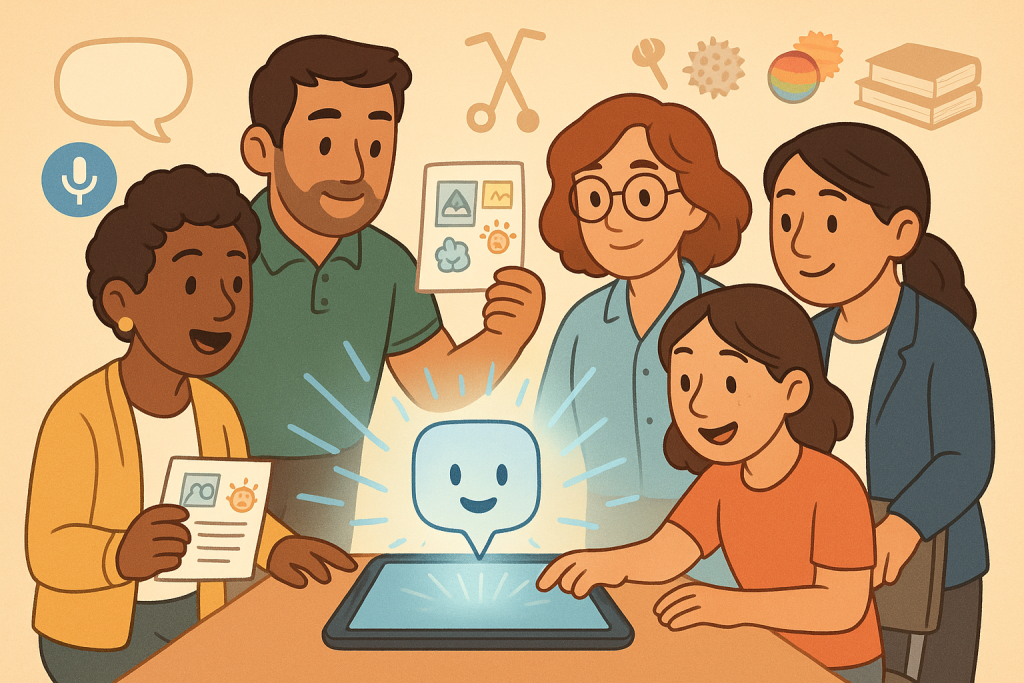
The world of artificial intelligence (AI) continues to evolve at a breathtaking pace, and OpenAI’s recent update to ChatGPT is a prime example. Announced just days ago via the @chatgptricks Instagram page, these changes bring ChatGPT closer to being an everyday assistant for professionals across multiple fields—including speech-language pathologists (SLPs), occupational therapists (OTs), physical therapists (PTs), psychologists, psychomotor therapists, and special educators. This article explores the key updates and demonstrates how each professional group can apply them to enhance therapy planning, communication, documentation, and client engagement. 1. Image Generation in WhatsApp (via 1-800-ChatGPT) OpenAI now enables image generation directly within WhatsApp. By messaging 1-800-ChatGPT, professionals can create high-quality AI-generated visuals on the go. This allows therapists and educators to: This seamless integration with WhatsApp is ideal for communicating with families and aides in real-time. As Khanna et al. (2023) note, integrating AI into familiar platforms reduces tech resistance and promotes real-world utility. 2. Custom GPTs on All Models: Personalized AI for Every Budget Custom GPTs—essentially specialized AI assistants—can now run on any ChatGPT model, including the faster and more affordable GPT-4 mini. This means that: By enabling personalization across all models, OpenAI is empowering practitioners to innovate without needing premium access (Park & Prabhakaran, 2024). 3. Projects Update: Deep Research, Memory, and Voice ChatGPT’s new Projects feature is perhaps the most powerful update for therapists and educators. Features include: Imagine an SLP who uploads weekly session notes and asks ChatGPT to summarize progress or generate session reports. Or a psychologist using voice input to log observations after a session while driving. According to Xie et al. (2023), memory-enhanced AI significantly improves continuity, reducing time spent on repetitive tasks and increasing focus on clinical reasoning. Applications Across Professions Professional How to Use the Updates SLPs Visual cards, home carryover plans, social scripts, and dynamic assessments OTs Visual schedules, motor planning boards, sensory diet suggestions, adaptive tasks PTs Exercise demonstrations, movement sequences, and balance/stability progression visuals Psychologists Therapeutic visuals, journaling prompts, emotion regulation tools, and CBT reflections Psychomotor Therapists Body scheme illustrations, bilateral coordination games, and session recaps Special Educators Differentiated content creation, reading supports, visual timetables, and gamified learning These updates make AI more practical, inclusive, and therapeutic—not just “smart.” The ability to store information across sessions brings ChatGPT closer to functioning like a case manager or clinical assistant (Mitchell et al., 2023). Ethical Use in Clinical and Educational Settings The ethical integration of AI remains paramount. Practitioners must ensure data privacy, informed consent, and age-appropriate content. As noted by the European Commission (2022), AI systems must be transparent, trustworthy, and non-biased. Custom GPTs used in therapeutic contexts should be evaluated for safety and accuracy, especially when interacting with children or individuals with cognitive challenges. Monitoring and review are essential to avoid over-reliance or misinformation. Conclusion: A Future of Partnership OpenAI’s latest ChatGPT updates signal a move toward intelligent collaboration, not automation. These tools are designed to amplify the expertise of professionals—supporting more personalized, efficient, and innovative service delivery. Whether you’re crafting social-emotional learning tools as a psychologist, adapting motor tasks as a PT, or preparing visuals for an AAC user, these new capabilities bring real-time support to your fingertips. The question is no longer if AI belongs in therapy and education, but how we can best harness it to meet the needs of diverse learners and clients. References European Commission. (2022). Ethics guidelines for trustworthy AI. Publications Office of the European Union. https://digital-strategy.ec.europa.eu/en/library/ethics-guidelines-trustworthy-ai Khanna, R., D’Mello, S., & Caine, K. (2023). Human-AI Collaboration in Education: A Meta-Analysis of Benefits and Barriers. Computers & Education: Artificial Intelligence, 4, 100143. https://doi.org/10.1016/j.caeai.2023.100143 Mitchell, M., Wu, S., Zaldivar, A., Barnes, P., Vasserman, L., Hutchinson, B., … & Gebru, T. (2023). Model Cards for Model Reporting. Communications of the ACM, 66(1), 56–65. https://doi.org/10.1145/3522499 Park, A., & Prabhakaran, V. (2024). Tailoring Lightweight Language Models for Equity and Access. Journal of Artificial Intelligence Research, 76, 321–342. https://doi.org/10.1613/jair.1.13933 Xie, M., Yu, Y., & Yin, Z. (2023). Memory-Augmented Dialogue Systems: A Survey. Journal of Computational Linguistics, 49(2), 221–248. https://doi.org/10.1162/coli_a_00480

English

Typing, Texting, and Aphasia: Rethinking Writing in the Digital Age

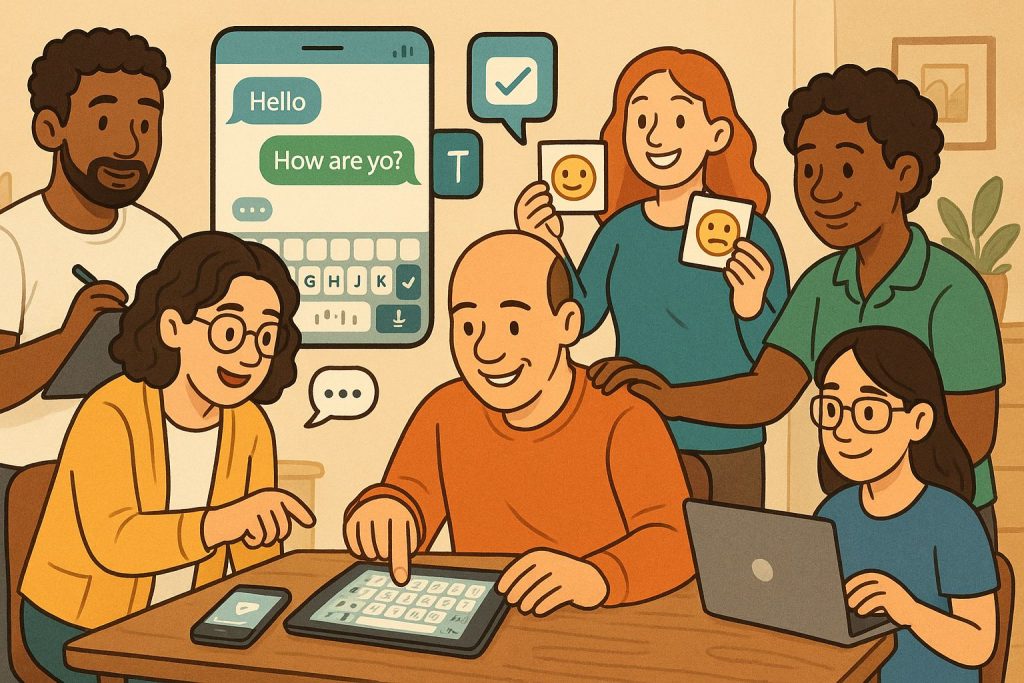
The shift toward digital communication has reshaped how we think about writing—not only for the general population but also for individuals with aphasia (PwA). Traditional writing practices such as handwriting are increasingly supplemented or replaced by texting, typing, and other digital modalities. For interdisciplinary therapists supporting clients with neurological conditions, this shift demands a broader clinical lens. Digital writing is no longer optional—it is a lifeline for communication, independence, and social participation. Yet, the impact of these tools varies across individuals and must be assessed with nuance and inclusivity. Why Digital Writing Matters in Aphasia Care Texting and typing have become dominant forms of everyday communication. People send appointment requests, update caregivers, and maintain friendships through written digital messages. For individuals with aphasia, difficulty with writing—already a major barrier—can be compounded by the challenges of navigating modern platforms and interfaces. As Dietz et al. (2011) noted, integrating technology into therapy offers new ways to support language recovery and social engagement. Today’s norms also accept spelling shortcuts, emojis, and even incomplete phrases. This more flexible standard can reduce pressure and expand opportunities for communicative success in therapy. Typing vs. Handwriting: Same Goals, New Mediums Recent studies suggest that at the group level, PwA show comparable performance in typing and handwriting regarding correct information units and utterances (Obermeyer et al., 2024). However, individual differences are important. Typing often results in slower output, more deletions, and higher spelling error rates. These effects can vary based on lesion site, motor planning issues, and familiarity with digital interfaces (Lee et al., 2024). This insight is critical for therapists choosing the most effective and functional writing modality for their clients. Applications for Speech-Language Pathologists SLPs can integrate texting and typing into language therapy to target functional writing goals. AI tools like predictive text and autocorrect can scaffold word retrieval. DAAWN (Menger et al., 2021) allows therapists to assess typing skills through structured tasks and receive automatic reports on output quality. Additionally, using the Texting Transactional Success Scale (Lee & Cherney, 2022) lets SLPs evaluate whether clients can successfully complete communication exchanges using messages. This is ideal for social communication goals and generalization into everyday contexts. Applications for Occupational Therapists For OTs, keyboarding and touchscreen typing are functional ADLs. Fine motor planning, sensory regulation, and visual-spatial processing are all part of successful digital writing. The Technology Survey (Kinsey et al., 2022) is a helpful tool to determine clients’ device usage, confidence, and motivation. OTs can incorporate texting tasks into broader technology use goals, such as accessing medical portals or coordinating with caregivers. Interventions might include adapting stylus grips, adjusting typing settings, or exploring voice-to-text as compensatory strategies. Relevance for Physical Therapists While digital writing might seem outside a PT’s scope, the motor aspects of typing and digital device use are crucial for clients with upper limb motor impairments or coordination difficulties. PTs can collaborate with OTs and SLPs to improve postural support, arm control, and endurance for sustained writing or typing tasks. Moreover, communication tools like texting can support PT-led home programs. For example, patients with aphasia may benefit from receiving simplified text instructions, images, or reminders in therapy-friendly formats. Psychomotor Therapists and Cognitive-Motor Integration Psychomotor therapists support the integration of body movement with cognitive and emotional processing. Typing and texting tasks offer rich opportunities to address cognitive-motor planning, visual tracking, bilateral coordination, and timing—all within a communication-focused framework. Integrating free text tasks, emoji use, or sequencing writing prompts into psychomotor sessions can build self-regulation and executive function while reinforcing meaningful communication. Supporting Special Educators and Assistive Communication Special educators working with students with acquired brain injury or developmental language disorder also benefit from these tools. Platforms like DAAWN and texting scale assessments allow for personalized, adaptive written expression tasks. AI tools can be used to co-create stories, label images, or send simulated text messages to characters—turning literacy tasks into interactive, communicative learning experiences. For older students or transition-aged youth, these tools foster digital literacy, independence, and social-emotional expression. Conclusion: Beyond Traditional Writing As Thiel and Conroy (2022) argue, writing remains deeply personal and powerful for people with aphasia. It’s not just a skill—it’s a means of reconnecting with the world. By integrating texting and typing into therapy, we make communication more real, more modern, and more relevant. For therapists across disciplines, this means adapting goals, tools, and expectations to reflect the way people live, learn, and communicate today. Writing is no longer just about paper and pen—it’s about access, agency, and connection. References Dietz, A., Ball, A., & Griffith, J. (2011). Reading and writing with aphasia in the 21st century: Technological applications of supported reading comprehension and written expression. Topics in Stroke Rehabilitation, 18(6), 758–769. https://doi.org/10.1310/tsr1806-758 Kinsey, L. E., Lee, J. B., Larkin, E. M., & Cherney, L. R. (2022). Texting behaviors of individuals with chronic aphasia: A descriptive study. American Journal of Speech-Language Pathology, 31(1), 99–112. https://doi.org/10.1044/2021_AJSLP-20-00287 Lee, J. B., & Cherney, L. R. (2022). Transactional success in the texting of individuals with aphasia. American Journal of Speech-Language Pathology, 31(5S), 2348–2365. https://doi.org/10.1044/2022_AJSLP-21-00291 Lee, J. B., Kinsey, L. E., & Cherney, L. R. (2024). Typing versus handwriting: A preliminary investigation of modality effects in the writing output of people with aphasia. American Journal of Speech-Language Pathology, 33(6S), 3422–3430. Menger, F., Forshaw, M., Morris, J., & Osselton, R. (2021). Digitised Assessment for Aphasia of WritiNg. https://daawn.ncldata.dev Menger, F., Morris, J., & Salis, C. (2016). Aphasia in an internet age: Wider perspectives on digital inclusion. Aphasiology, 30(2–3), 112–132. https://doi.org/10.1080/02687038.2015.1100702 Obermeyer, J., Edmonds, L., & Morgan, J. (2024). Handwritten and typed discourse in people with aphasia: Reference data for sequential picture description and comparison of performance across modality. American Journal of Speech-Language Pathology, 33(6S), 3170–3185. Thiel, L., & Conroy, P. (2022). “I think writing is everything”: An exploration of the writing experiences of people with aphasia. International Journal of Language & Communication Disorders, 57(6), 1381–1398.

Shopping Cart